RSS

Category Archives: preparation

Big Binoculars: The Advantages

images22Back in the 1970s, an uncle once told me that one of the most useful things any big-game hunter could own was a binocular in the 15×60 range. He said he never went elk hunting without one, and because I always did everything he said, I rushed right out and bought a Zeiss porro prism glass in 15×60 and it was exactly as he said, a highly specialized but invaluable tool if the circumstances were right.  Of course, like a jerk, I sold them some years later, but recently I traded a lot of stuff and coughed up some cash and got another big glass in the same power range.

What a major binocular will do is let you see when it is very dark, and let you see in detail at long range, or in great detail at medium range. On my recent trip to Kansas, the hunter who shared the blind with me had a 10×40 binocular of the first caliber, and I had a 15×60. In practical terms, what it would do was this:

At last light, when it was too dark to shoot, if we could see a deer I could tell if it was a buck or a doe. Fifteen minutes earlier, when he could see if it was a buck or a doe I could see if it was a big buck or a little buck. Fifteen minutes before that, if he could see whether it was a big buck or a little buck, I could count the points and evaluate the rack in excruciating detail.

images33

In some cases, a spotting scope is better. If you’re glassing miles of country, there is nothing that can take the place of 40X. However, at the intermediate ranges, say, 300 to 1,000 yards, a big binocular lets you spot things faster, lets you use both eyes, and is a lot smaller and lighter than most spotting scopes. They’re not cheap, but under the right conditions, big glasses are more than worth it.

Follow our FISHING BLOG

WEB   RATES     FISH    HUNT    CABINS    PHOTOS
TESTIMONIALS    BROCHURE    HUNT BOOKLET

Enter your email address to subscribe to this blog and receive notifications of new posts by email.

← Back

Thank you for your response. ✨

Email Me....


Tags: , , , , , , , , ,

How to Make Your Own Scent-Free Deodorant

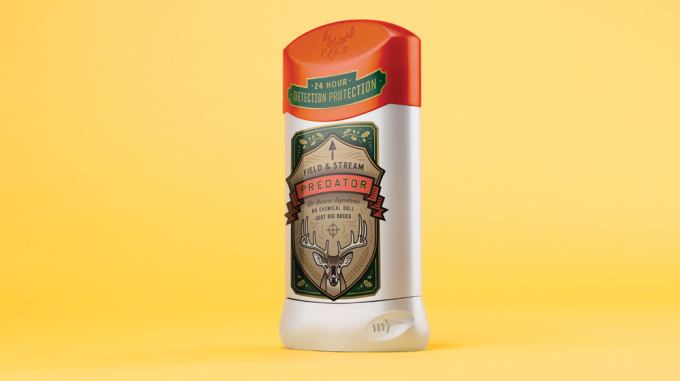
Think organic deodorant isn’t for you? It’s actually perfect for deer hunters, because it battles sweat and odor, and gives off no unnatural scent of its own. Buy ingredients in bulk and make three 2.5-ounce sticks—a season’s worth—for only $2 each. Here’s how.

scentstick

What You’ll Need

● 1⁄4 cup coconut oil
● 2 Tbsp. shea butter
● 2 Tbsp. cocoa butter
● 1⁄4 cup beeswax pellets
● 3 capsules 400-IU Vitamin E
● 21⁄4 tsp. baking soda
● 1⁄4 cup organic arrowroot powder
● 2 capsules Vitacost Probiotic 10-20

The Brew 
Heat a small saucepan of water and remove just before boiling. Combine coconut oil, shea butter, cocoa butter, and beeswax pellets in a mason jar, and place it in the hot water, double-boiler style, until melted. (Warning: If you’ve ever had a severe reaction to a bee sting, don’t handle beeswax.) Leave the jar in the bath and add the Vitamin E capsules, baking soda, arrowroot powder, and probiotics, which introduce good bacteria into the skin to battle the bad stuff that causes BO Stir gently until mixed well.

The Cure
Pour the warm mixture into empty, used stick-deodorant containers, new containers (sold online), or lined muffin tins, and let harden overnight. Then, perform your own sniff test: The only scent noticed is a trace of beeswax.

Follow our FISHING BLOG

WEB   RATES     FISH    HUNT    CABINS    PHOTOS
TESTIMONIALS    BROCHURE    HUNT BOOKLET

Enter your email address to subscribe to this blog and receive notifications of new posts by email.

← Back

Thank you for your response. ✨

Email Me....


Tags: , , , , , , ,

Bow Shooting – Stance and Grip

Bow Shooting – Stance and Grip

a3ec154f78392339882e90b6cb5ae210

Follow our FISHING BLOG

WEB   RATES     FISH    HUNT    CABINS    PHOTOS T
ESTIMONIALS
    BROCHURE    HUNT BOOKLET

Enter your email address to subscribe to this blog and receive notifications of new posts by email.

← Back

Thank you for your response. ✨

Email Me....


Tags: , , , , , , , , , , ,

Backpackers Checklist

backpack2 

The Means of A Check List

Packing a backpack seems like an easy task, until you are on the trail and forget one of the most essential items. We have prepared this infographic as well as the corresponding text to help you always pack exactly what you need. So go ahead and check it out. If you want to put it on your site there is code at the bottom as well.
2

backpack

Follow our FISHING BLOG

WEB   RATES     FISH    HUNT    CABINS    PHOTOS
TESTIMONIALS    BROCHURE    HUNT BOOKLET

Enter your email address to subscribe to this blog and receive notifications of new posts by email.

← Back

Thank you for your response. ✨

Email Me....


Tags: , , , , , , , ,

4 Ladder Stands To Consider

Whether you hunt with a bow or a rifle, want to hide in the treetops or stay closer to the ground, one of these four ladder stands has you covered. A hunting buddy and I started with six models and after a full day of setting up, climbing, sitting, and tearing down chose these four favorites. Here are our picks for an all-around stand, a bow stand, a best bargain, and a gun stand.

All-Around

Ladder-1_0

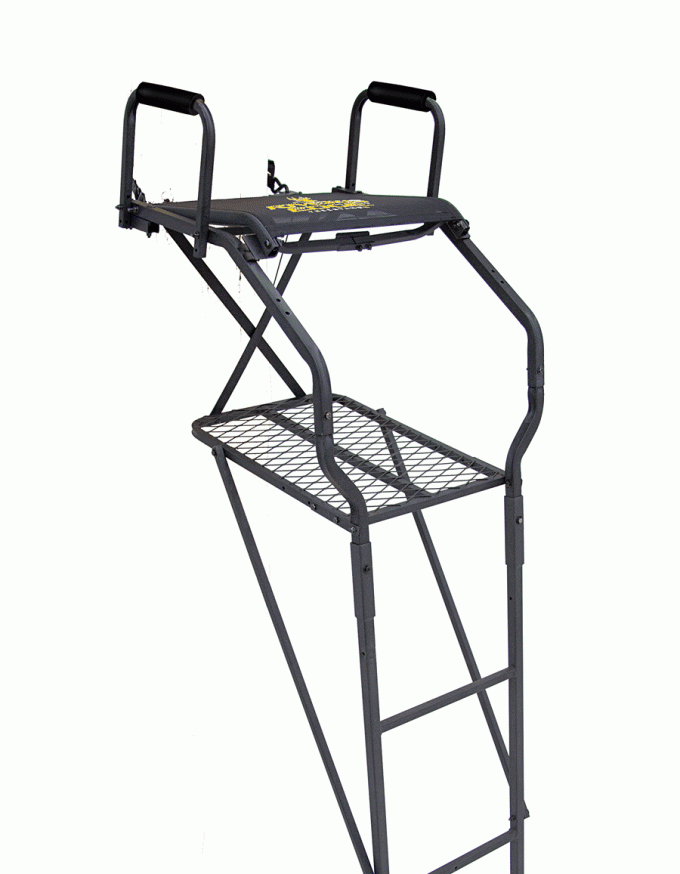
Ol Man 15′ Bowlite

Specs 15′ high • 25″ x 171⁄2″ platform • 45 lb.

What’s SpeciaL With its mesh seat and narrow ladder, my test partner, a veteran New York hunter, thought the streamlined Bowlite was the best of the test. Two points of contact to the tree made it the most secure by far, and it proved the fastest to assemble.

Bottom Line Easy to build, comfortable, and rock solid. We docked points only for the narrow ladder, which allowed just one foot per rung—not good for XL hunters ($150; olmanoutdoors.com).


Bow

Ladder2

Rivers Edge Bowman

Specs 19′ high • 24″ x 17″ platform • 64 lb.

What’s SpeciaL Tall, with a big 17 inches between rungs, the Bowman is a young person’s treestand. The large platform and skyscraper height is ideal for maneuvering and drawing on deer undetected. Yet we felt it needed a second (not included) ratchet strap to feel secure.

Bottom Line With almost 2 square feet of platform 19 feet up, this is a killer bow stand, but the pins were noisy ($170; huntriversedge.com).


Budget

Ladder-3

Summit Crush Series Solo Performer

Specs 151⁄2′ high • 19″ x 121⁄2″ platform • 40 lb.

What’s SpeciaL For just one Benjamin you get this light, easy-to-set-up, comfortable, do-it-all option. The ladder assembles with bolts and lock nuts, so it’s deathly quiet compared with the others in the test, which use locking pins. But the platform feels small.

Bottom Line Lots of value, plus it’s the lightest and quietest system in the test. Another $30 gets you a backrest and shooting rail ($100; summitstands.com).


Gun

Ladder-4

Big Game NextGen Stealth DX

Specs 15′ high • 25″ x 181⁄2″ platform • 55 lb.

What’s Special Big Game hit the sweet spot of price and performance with the Stealth DX. The ladder is wide, with short 13-inch spacing between the rungs for easy climbing, even in the heavy clothing typical of gun season. There’s a cushy backrest and an adjustable shooting rail.

Bottom Line A comfortable all-day sitter that can be found online for well below the list price. We would have liked the gun rest to elevate a little higher ($220; biggametreestands.com).

Follow our FISHING BLOG

WEB   RATES     FISH    HUNT    CABINS    PHOTOS
TESTIMONIALS    BROCHURE    HUNT BOOKLET

Enter your email address to subscribe to this blog and receive notifications of new posts by email.

← Back

Thank you for your response. ✨

Email Me....


Tags: , , , , , ,

Improve the Effectiveness of Trail Cams

The easiest way to enter the bow hunting season with false expectations about early season success is to use cameras wrong—or at least—lazily. Taking your camera out to the edge of a food plot or a soybean field, hanging it, and then checking it every week or two may feel like you’re scouting correctly, however you’re probably under-utilizing these new-age tools.

ravine-crossings_1

Instead, consider hanging your cameras to answer questions about deer movement. For example, it’s Whitetail 101 to know that deer are going to use prime food sources throughout the summer. How they get to and from those food sources, where they bed, where they water, and where they browse are all questions that are far more difficult to answer. And they are perfect for scouting cameras.

Aside from taking inventory and getting some sweet pics of velvet-racked bucks, setting cameras in easy spots doesn’t do you much good as a hunter. Cameras hung on places that aren’t easily observable will tell you things that can lead to quality fall hunting spots, which is the goal. They’ll also tell you whether the deer use those places at all, which is like pre-fishing for a bass tournament and eliminating dead water until a pattern or hotspot emerges.

visual-follow-up_1

If you plan to run cameras next summer, start thinking about where you’re going to place them now. Although a subtle trail in a wooded finger leading to an alfalfa field or clover plot might not be as exciting as hanging the camera directly on the field edge, it might just tell you when and where a mature buck likes to travel before and after he eats. That’s a good step toward getting an arrow into him, especially since he is likely to reduce daytime movement once he sheds his velvet.

Follow our FISHING BLOG

WEB   RATES     FISH    HUNT    CABINS    PHOTOS
TESTIMONIALS    BROCHURE    HUNT BOOKLET

Enter your email address to subscribe to this blog and receive notifications of new posts by email.

← Back

Thank you for your response. ✨

Email Me....


Tags: , , , , , ,

Learn Rack Size By the Signs

You know what a buck rub looks like. You know that bigger bucks tend to rub bigger trees, and you’re probably aware that a buck travels in the direction facing the rubbed side of a tree. But there’s more to be gleaned from a savaged sapling. The right rub can tell you the size of a buck’s rack, whether he has any beauty points, and how to hunt him.

signofthetines
1. Time of Day
In hilly country, buck rubs that are visible when facing uphill were likely made in the morning as the buck traveled back to his high-ground bedding area. Likewise, the ones you see when looking downhill were probably made in the evening. Wherever feeding areas are open and obvious, such as crop fields, rubs that show when you’re facing into the woods are morning rubs. Their opposites are evening rubs.

2. Velvet Proof
Where there’s off-track ATV travel, it can be difficult to distinguish between a tree that’s been debarked by a buck and one that’s been scraped by a four-wheeler. During preseason and early-season scouting, look for shed velvet on the ground beneath the rub. You won’t always find it—velvet dries quickly and bucks sometimes eat it—but it’s a sure sign when it’s there.

3. Big Tree, Big Buck
This familiar rule of thumb is valid. But remember, there are plenty of exceptions. A mature buck with a narrow tip-to-tip spread or other unusual rack configuration may not be able to rub a large-diameter tree in the usual way.

4. High Rub, Big Buck
Though far less familiar, this is a good rule of thumb, too. A mature buck is taller and stronger and therefore tends to rub higher off the ground. Caveat: This only applies to fresh rubs in fall. Snowpack can affect rub height, giving you a false reading late in the season.

5. Non-typical Marks
Sticker points, split brow tines, and other odd pieces of bone commonly leave corresponding deep, off-center gouges on the tree trunk, branches, or adjacent trees, which can help you identify a specific buck.

6. Rack Width
Wherever you find rubs on multi trunked or closely clumped trees, look for scars or broken branches on saplings and shrubs adjacent to the main rub. They can tell you how wide a buck’s rack is.

7. Tine Length
Look on the underside of branches, too. A tall-tined buck may leave nicks or scraped bark on branches a foot or more above the main rub.

8. Color Clues
Keep an eye peeled for old rubs. A mixture of light-colored new rubs, gray weathered rubs, and often blackish healing-over rubs reveals a perennial favorite buck route and also suggests that the animal making them is now mature.

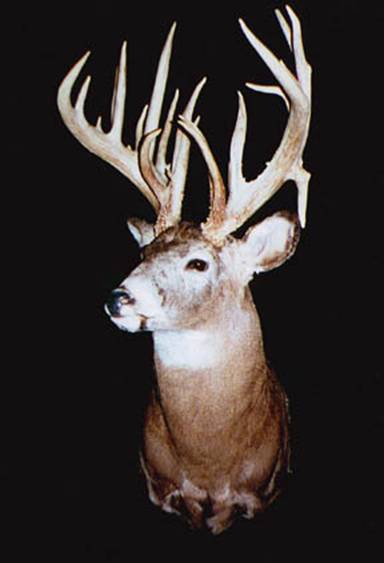
"The Beatty Buck" taken with a compound bow by Michael Beatty in Ohio in 2000. 40 Points on a 10 point mainframe

“The Beatty Buck” taken with a compound bow by Michael Beatty in Ohio in 2000. 40 Points on a 10 point mainframe

Follow our FISHING BLOG

WEB   RATES     FISH    HUNT    CABINS    PHOTOS
TESTIMONIALS    BROCHURE    HUNT BOOKLET

Enter your email address to subscribe to this blog and receive notifications of new posts by email.

← Back

Thank you for your response. ✨

Email Me....


Tags: , , , , ,

Gear: A Cure for Cold Feet

ThermaCELL’s electronically heated insoles aren’t perfect, but they are the best cure for my biggest late-season deer hunting problem: cold feet. When temperatures drop into the teens,  toes can start to burn with the cold unless wearing heavy felt-lined boots. If hiking to a stand or do some still-hunting, however, pac boots make feet sweat, which guarantees  toes will be cold when standing still.Thermacell-Insole-1

The best thing about ThermaCELL’s heated insoles is the fob-like remote and built-in control board and battery. Unlike chemical toe warmers, which start out hot and gradually cool down, these let you wirelessly select “No Heat” when you don’t need any supplemental warmth, then either “Medium” (100 degrees F) or “High” (110 degrees F) heat when you do, all without clumsy external batteries or switches.

That allows for wearing a favorite pair of lightweight, moderately insulated knee-high rubber boots when on the go, with the assurance that the heat can be vamped up if on a stand or stop for whatever reason. And even if wearing heavier boots, the control board acts like a thermostat and temporarily shuts off power to the heating element when it reaches the selected temperature.

B_5v_OnVAAAS60U

It’s genius—though not without a few flaws.

  • For starters, the molded, cushioned insoles are much thicker than the insoles that come standard with most boots and can only use them with light socks in boots that are large to begin with. Otherwise the fit is way too snug.
  • They could also be a little warmer, and the battery life is disappointing. The lithium-ion unit built into the heel of each insole recharges quickly, but it does not come close to the advertised five-hour run time at medium heat.
  • And they’re pricey, at about $130. If the battery lives up to its promised 500 charges, that works out to only about $0.26 per use, which is about one-quarter what chemical toe warmers cost. At this point, though, that’s still a big “if.”

imagesPO5E8D77

But the biggest complaint is with the remote. It doesn’t confirm what setting the insole is at. Sometimes it’s off when it should be on and on when it should be off. A positive on-off switch, or even better a setting and battery level indicator, would be a huge improvement. So for now we’ll have to wait for the perfect cure. Until then, these are still pretty darn good, and a second pair would be convenient so they can be swap out on all-day hunts.

Follow our FISHING BLOG

WEB   RATES     FISH    HUNT    CABINS    PHOTOS
TESTIMONIALS    BROCHURE    HUNT BOOKLET

Enter your email address to subscribe to this blog and receive notifications of new posts by email.

← Back

Thank you for your response. ✨

Email Me....


Tags: , , , , , ,

Balancing Your Back Pack

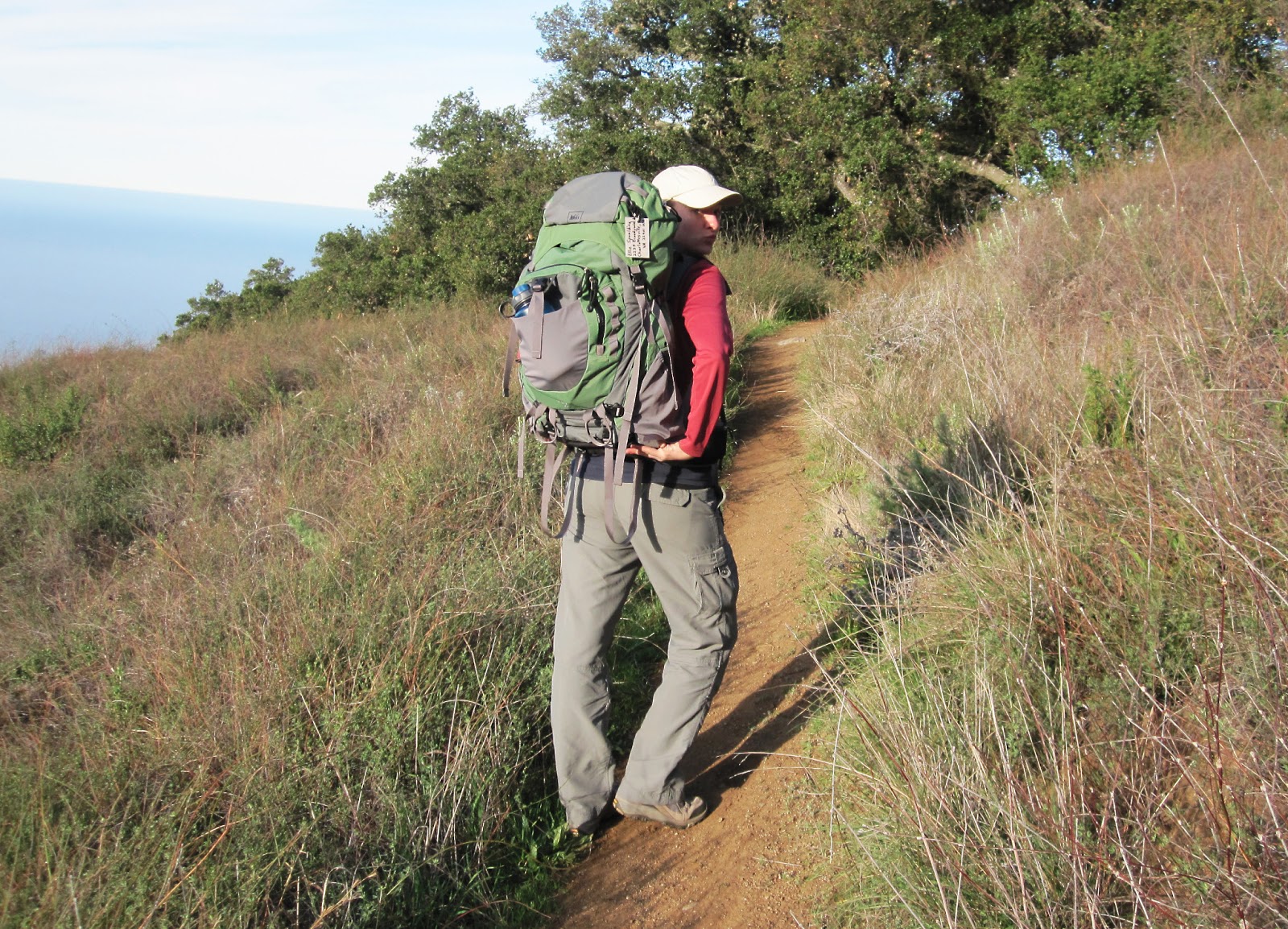
In hurry and trying to hastily pack out a deer from the backcountry in one trip, a hunter carried a heavy, irregular pack too low and in the process damaged a spinal disc, pinched nerves in his hip, and lost feeling in his ham hocks for quite some time.

Packman_0


Here are a few tips to help you shoulder a heavy load comfortably and safely—and avoid the physical therapy and chiropractic sessions the hunter had to go through.

From the bottom up
Stuff your sleeping bag, pad, and tent in the bottom of the pack.

Heavy load
Place the heavy freight—like a meat quarter—above the light cargo and against your back. It should sit above your hips and between your shoulder blades.

Cram Session
Surround the heavy stuff with lighter gear, such as clothing and food, followed by cooking gear, water filter, and the like. Pack the lightest gear like a hat and gloves in any remaining space at the top.

At the ready
Stash gear like a GPS, flashlight, or other items you might need to access quickly in the pack’s lid.

It’s a cinch
Now that it’s packed right, here’s how to carry your pack:

Follow our FISHING BLOG

WEB   RATES     FISH    HUNT    CABINS    PHOTOS
TESTIMONIALS    BROCHURE    HUNT BOOKLET

Enter your email address to subscribe to this blog and receive notifications of new posts by email.

← Back

Thank you for your response. ✨

Email Me....


Tags: , , , , ,

The Bear Facts – What You Should Know

Despite divided opinion about the political correctness of bear hunting, it is something every hunter should try at least once. But a word of caution, if you want to make the most of your outings, there are a few key things you should know. The more knowledgeable you are, the better your chances of tagging a trophy.

WawangBear2

Black Bear can be found roaming the woods in every northern state, all provinces and many eastern and western states. The smallest member of the bear family in North America, black bears are the most populated. Thriving in almost every jurisdiction, populations are on the rise across the continent.

Black bear can be hunted only in the fall at Wawang Lake. Each state and province has specific regulations dictating when and how bears can be hunted. If you want to spend more time in the woods, black bears make the perfect prey during the fall. With thick coats in prime condition, fall is the preferred choice of bear hunters that are looking for that trophy bear. If you’re fortunate enough to connect with a trophy-sized black bear chances are you’ll end up with a beautiful specimen, well worth making into a rug or head mount.

Over-the-counter tags are only available in certain states and provinces. Some states issue tags only through a limited entry draw/lottery process.

In many ways black bears are misrepresented and misunderstood. Ironic but true, bruins are gentle by nature. This stands in contrast to their stereotypically vicious reputation.

Found in a variety of color phases, pelage can range from white through yellow, with black, brown and cinnamon being the most common. Their ominous looking dark shiny coat is the obvious contributor to their malignant image; it may also be the black bear’s slow, methodical and calculated gestures. Whatever the reason, these quiet, yet dominant nomads of our coniferous and mixed forests, are worthy of both admiration and respect.

A sow will typically accompany her cubs for 16 or 17 months. At the end of this period she will sever ties, forcing the youngsters to go off on their own.

Females will reach their maximum size at six years, and boars continue to grow to a maximum size at 12 years of age. On average, most bears taken by hunters weigh somewhere between 175 and 300 pounds. Any black bear topping the 300-pound mark is considered large.

Aside from body weight, black bears are judged by the size of their skull, with a Boone & Crockett minimum eligibility score of 21 inches and a Pope & Young score of 18 inches.

We often hear of bears being territorial and, in a sense, this is true. While there exists a distinct hierarchy within the ranks of bear world, it is not uncommon to find many individuals residing in a given geographic area. Home ranges can span from two to 10 miles and resident populations will often hold a variety of boars, sows and cubs.

Heavily timbered forests near logging areas often sustain good bear densities.  With blueberry areas, black bear favor the accessibility and abundance of such forage and often reside in proximity.

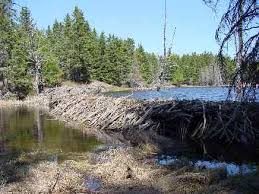
As forest dwellers, black bear are omnivorous. Predominantly feeding on a variety of plants and berries throughout the summer, springtime offers a feast of dandelion and fresh grasses. Opportunists extraordinaire, black bear  will also feed on carrion. Consistent with this and the fact that bears favor beavers as a staple food source in some regions, areas with spruce and poplar mixed forest and cascading beaver dams can be dynamite locations for the hunter to focus his/her attention.dam2
As with ungulate species, black bears undergo an annual rut cycle. Beginning in late May and continuing on through most of June, boars go in search of breeding partners. It is during this approximate six to eight week period that most large bears are taken by savvy hunters. Just as with members of the deer family, the larger, educated and otherwise reclusive boars become more visible as they readily cross roadways, clear-cuts and feed in open areas as they look for sows in estrus.

Black bears den up in late October and drift into a state of torpor. This is not a true state of hibernation, but rather of slowed metabolism, during the cold winter months. In this suspended state, they cease to defecate, urinate or eat for the next 5-6 months. They do however periodically awaken from this sleep to stretch and walk around. Usually only a brief interlude, black bears soon return to the den to wait out the long winter. Sows will deliver and nurse their cubs in the den and as the snow begins to melt and spring arrives, they’ll leave the den to begin their search for food.

Bear meat brings mixed reviews. Some savor every morsel, and others grimace at the very mention of it. Its greasy, coarse texture and sweet flavor requires a certain kind of palate. A word of caution however, bear meat should be thoroughly cooked as it can carry a parasitic infection known as trichinella, a potentially dangerous disease to humans.

Black bear have relatively poor eyesight, but an outstanding sense of smell and an uncanny hearing ability.

When hunting black bear, consider food source. Focus on areas with a sufficient forage base. There should be water nearby along with good cover. With the aid of topographic maps, look for spots with streams, rivers and ample low ground to provide damp, dark and cool cover. In boreal forest regions, this will be dense moss-laden areas bordering swamps and isolated marshy wetlands. In mountainous regions, this will often be found in drainages along creeks and other waterways.

Once a general area is identified, begin your search by looking at trees. Claw marks on deciduous trees are the most obvious indicators. In mixed forest areas mature poplars wear the battle scars revealing claw marks of days gone by. While rarely do you stumble upon fresh markings, these lasting scars unveil a historical presence.

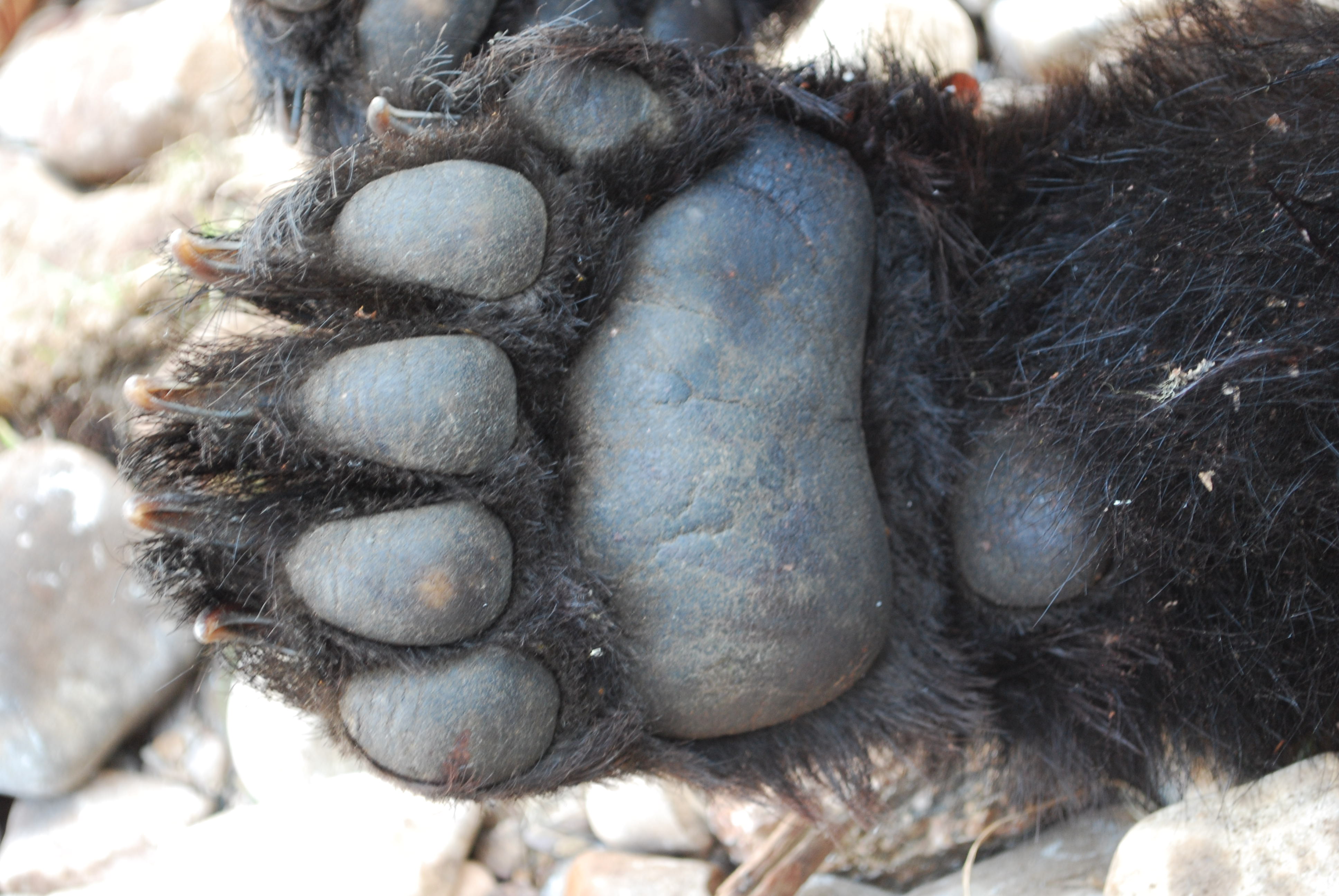
Bear leave tracks. A great place to look for these is in the wet sand and soil along shorelines of rivers, streams and lakes. Most often at least one or two old or new tracks are found, keeping in mind that bears frequently use these movement corridors. A 5″ or better pad/track can suggest a good bear is in the area.DDW-Bear-Hunt-086
Nomadic creatures, bears commonly travel traditional trails along ridges, in valleys, and along drainages. Finding fresh scat can instill further confidence in your pursuit and help you identify the size of a particular bear.

A variety of strategies and techniques are proven effective in pursuing spring black bears. Whether floating down a river, walking cut-lines, spot and stalk hunting, baiting or calling, black bears are very huntable. Each strategy has its own merits.

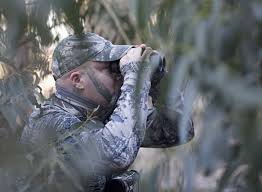
A good set of binoculars is a must when spot and stalk bear hunting. Once spotted, the stalk begins. The regular rules apply – keep the wind in your face; remember bears rely heavily on their sense of smell. The best time to spot and stalk black bears is the five to 10 day window just prior to, or just as the deciduous trees begin to bud. With little food available in the woods, they can frequently be seen browsing on cut-lines and south-facing slopes where the first green grasses begin to sprout.bin
Baiting is far from easy, and holds no guarantees! From time to time you get lucky and have one move in cautiously to inspect the provisions, but this is frequently more the exception than the rule. Perhaps the biggest advantage I see in baiting is that, if and when a bear finally does come to the bait, it can allow the hunter time to assess size and stature. This is advantageous for the trophy hunter, allowing the option to pass up smaller bears, thus diminishing the odds of falling victim to ground shrink.

Predator calling bears has come into its own in recent years. A myriad of videos and how-to articles are available to hunters looking for an alternative approach to hunting bears. I sometimes carry a Lohman wounded rabbit call for scenarios where calling might come in handy. While patience is required in this game of calling, it can take some time before a big old bruin responds favorably. But when they do, be ready, because they’re coming in for dinner!wawanglakebear
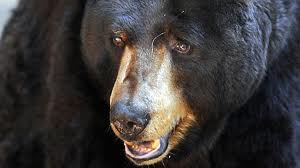
As a rule, black bears want no more to do with you than Superman does with kryptonite. The fact is, it’s important to treat them with due respect, be aware they possess immense strength and are able to cause considerable damage. To get an accurate picture on the nature of bears, I highly recommend a book entitled, Bear Attacks – Their Causes and Avoidance written by Dr. Stephen Herrero. Having heard him speak at a conference, the clear message I gleaned was that if, and when, black bears show aggression, most often they’ll bluff charge … stop 10 yards away and bounce on their front legs. Periodically they’ll stand up, but this is usually to help them get a better look at what is going on. This is intimidating, but most often harmless.

The only thing predictable about black bears is that they are unpredictable. Although many will avoid humans at all cost, there are some that have no fear at all. Caution and respect should always be exercised.

Follow our FISHING BLOG

WEB   RATES     FISH    HUNT    CABINS    PHOTOS
TESTIMONIALS    BROCHURE    HUNT BOOKLET

Enter your email address to subscribe to this blog and receive notifications of new posts by email.

← Back

Thank you for your response. ✨

Email Me....


Tags: , , , , , , , , , , , , ,