RSS

Category Archives: moose

Our Best Moose Hunting Tips Will Increase YOUR Success…


moose=wawang-lake
The Best Moose Hunting Tips
These secrets are what the best moose hunters use and we want YOU to know them. Believe me if you do not know these tips, you are not seeing the most moose.

If you use these hunting tips not only you will see more moose, you will get closer to them and quite possibly harvest the moose of a lifetime.

Do you want to increase your chances of getting a moose this fall? I suggest you read about and put to practice these best tips for getting moose.

We see a lot of other hunters out in areas where we hunt moose, the majority seem to just drive around, hoping that by some chance they might see a moose within a reasonable distance of the road. Unbelievably, they do not even get out of their vehicles!

To increase your success rates you have to get out and look where the moose live… preferably away from human traffic.

We have to admit though (sheepishly); we have done some road hunting and taken a few moose this way too. Actually road hunting is a good way to get familiar with a new area. The point is, if you get out of your truck and get away from the roads and people you are going to see more moose.

For your information in many provinces it is illegal to hunt over bait (enhanced food).

Read on to find out how to apply some of our best moose hunting tips.

calling-moose-250Moose Hunting Tips Revealed

Simple Tips
Concentrate on one area.  Use the wind to your advantage, and use a wind indicator to detect the direction from which the air is flowing.

  • During the rut or breeding season, hunt near lakes and ponds.
  • Hunt for moose near food sources and water.
  • Hunt the fringe areas, away from where other hunters are, away from the roads and traffic.
  • Do not setup your camp on the edge of a likely hunting spot. Your noise and smells will chase any nearby moose away.
  • Study and learn about the difference between Core Areas and Home Range.
  • Learn to recognize the difference between fresh and old moose sign.
  • If you see or hear a moose just before or after dark, leave the area quietly and return early the next morning. The moose, if not spooked it will likely still be in the area.
  •  Preseason Scouting and Calling will definitely be to your advantage.


Seasons to Hunt

  • Hunt during the moose rut… whenever possible.
  • Hunt higher elevations during the early season.
  • Late season moose hunting requires you to go deeper into the forest away from the openings. Be sure to carry a GPS or at the very least a compass for to ensure your safe return.
  • Moose Hunting in November
  • Identify and learn to hunt the prime moose habitat.

Tools to Use
The Moose Hunting Tips eBook – The Ultimate Guide to Moose Hunting can help you. Quite simply it’s the largest collection of moose hunting tips and techniques available in one place.

We’ve run into more than one hunter over the years who mentioned the fact that they had to go to town for WiFi service to read up on hunting tips. Well no more.

Download them, print them out or install them onto your electronic device. That way you can have them with you even in the field.

The following are some great tips to observe:

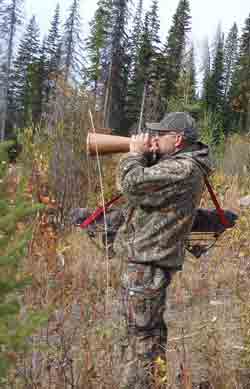
  • Use a Moose Call and learn how to use a call. Then put moose calling to the test.
  • Use an old shoulder blade bone to rake trees (to imitate a bull moose thrashing a tree with his antlers).
  • Use a Montana Moose Decoy. The cow moose decoy can be used to get the attention of a bull moose. Especially useful when you need to stalk a bull out in the open or when you have an incoming bull. Get the bull moose concentrating on the decoy and not you the shooter.
  • Make use of a trail camera for moose hunting. 
  • Maximize your advantage by using elimination scents.
  • Carry 30 feet of rope in your pack. This can be used as an aid when field dressing. 

Hunting Clothing will make a Difference

  • Wear clothing that does not make any noise while you move.  Fleece or wool is best. Also check out the entire line of Sitka Hunting Clothes. We have switched because the patterns make you invisible!

Cow and Calf Moose Hunting Tips

  • Tip for hunting cow and calf moose, stay close to water sources. They use these areas for safety reasons. The biggest bulls will be attracted to these areas during the rut.
  • Learn how to mimic a calf moose in distress. Often, cow moose within hearing distance will come to investigate even when it is not her own calf.

Moose Hunting Safety

  • Drink clean water… be sure the water you drink is free of beaver fever.
  • Of course moose hunters always need to keep bear safety in mind while traveling in the woods.

Tell someone where you are hunting. Leave a map and time of expected return

rutmoosewawangBefore and After the Shot

When tracking moose learn to recognize the circling patterns.

  • Decide on the best shot placement for moose.
  • Field dress your moose right away. It is very important to cool the meat as soon as you can; this helps prevent spoilage and gamey flavors.

As a moose hunter, it doesn’t matter if you are a novice or an expert, we all strive for the same result. Get close enough to a moose (bull, cow or calf) and make the shot. If we know enough it’s easier to close the distance, what if we don’t? How can we get just a few more ideas on closing the gap?


Follow our FISHING BLOG

WEB   RATES     FISH    HUNT    CABINS    PHOTOS
TESTIMONIALS    BROCHURE    HUNT BOOKLET

Enter your email address to subscribe to this blog and receive notifications of new posts by email.

← Back

Thank you for your response. ✨

Email Me....


Tags: , , , , , ,

Moose Fajitas


moose

Mexican food is even better when made with game meat. Here’s a great way to stretch out some tender steaks and accentuate the wonderful rich flavours only game can bring to the table. This recipe works well with any venison. Serves 4 (2 to 3 fajitas per person).

Serves: 4

Ingredients

  • 1 to 1½ lb moose steak
  • 1 cup fajita sauce
  • ¼ cup canola oil
  • Salt and black pepper, to taste
  • 2 cloves garlic, minced
  • 2 yellow onions, thinly sliced
  • 2 sweet red, green or yellow peppers, thinly sliced
  • 12 flour tortillas

Preparation

  • Trim all fat from steak. Slice thinly across the grain into 1×2-inch strips. Marinate in fajita sauce for several hours or overnight in refrigerator.
  • Preheat oven to 350°F. Remove meat from marinade (keep marinade). Heat 2 tablespoons of oil in a cast iron skillet over high heat. Add meat and brown, taking care not to overcook. After 4 to 5 minutes, add fajita sauce marinade and season with salt and pepper. Simmer for 5 minutes or until sauce thickens slightly.
  • In a separate pan, sauté garlic, onions and peppers in 2 tablespoons of oil over medium heat. Season with salt and pepper. Meanwhile, warm tortillas in a covered dish in oven.
  • Fill one platter with moose strips and another with vegetables. Serve tortillas in the warming dish, along with small bowls of grated Monterey Jack cheese, tomato, salsa, sour cream and guacamole.
  • For the glassMexican beer is a natural choice for this summer feast; hearty red wines such as Zinfandel or Spanish vintages are also good.

Follow our FISHING BLOG

WEBSITE    RATES     FISH    HUNT    CABINS    PHOTOS
TESTIMONIALS    BROCHURE    HUNT BOOKLET

Enter your email address to subscribe to this blog and receive notifications of new posts by email.

← Back

Thank you for your response. ✨

Email Me....


Leave a comment

Posted by on January 22, 2015 in moose, recipe, Wawang Lake Resort


Tags: , , , , , , ,

Moose Hunting in NW Ontario

Successful moose hunters must have detailed and sophisticated knowledge of the animal.  mastering skills of the hunt is essential for success, but equally important is knowing how to show respect for the animal, its spirit, and its home.

moose

The language of Moose
In any human culture, people need specialized language to describe every part of their environment that is important to them. This is especially true for people who live directly from the land and waters, because they need very specific words to talk about every facet of their world.

Eye of the Hunter
Moose can be challenging animals to hunt, especially in areas where they are scarce or highly mobile. For traditional people it is essential to have a thorough understanding of moose movements—and this comes by studying the animal and its environment, by sharing information between hunters, and by telling stories passed on to family & friends.

For example, hunters know that during the protracted, harsh northern winter moose are often stressed and skinny, so their meat is not especially desirable. But spring and summer bring long days and lush growth, so, moose can pack in up to 50 pounds of food per day. By the time fall comes, the animals are in prime condition, especially the bulls and cows that have no calves to nurse and protect (known as a dry cow).

To find moose, first a person needs to know where the animals are most likely to be at any given time and when moose are in the best condition. For example, in the fall rutting (breeding) season, moose often congregate in the river valleys where willow thickets still provide fresh browse.

During the rut, bulls sometimes have spectacular battles—pushing and shoving, clashing their enormous antlers—to establish dominance. These contests take tremendous amounts of energy at a time when the bulls eat little or nothing because of their single-minded focus on mating. They become skinny and smelly their meat is hardly edible.

Before the fall rut begins, some hunters arrive in the area to scout, looking for signs of moose—fresh tracks, broken branches in the thick brush, scraped bark on shrubs and trees, or shadowy movements in the brush.

When a hunter finds a set of tracks, he checks them closely to determine the sex and condition of the moose—and most importantly, the age of the track. It’s important to know how long ago the moose walked here and whether the animal is staying put or traveling on.

Aging tracks in our terrain can be very challenging. A fresh track has clean sharp edges, and within a day or so these edges may begin to dry out, or they might be softened by rain or wind. Depending on weather conditions the track could look quite fresh for several days or more.

A sharp eye might find a track where the moose entered the water, and if it’s partially filled with water, this could help the hunter determine how long ago the moose made it. When the water is still muddy, the animal came by within perhaps half-a-day or less. But if the sediment has settled and the water is clear, it means the track is older.

Moose leave other signs too. Rutting bulls scrape off bark when they rub their antlers on trees or shrubs. They sometimes paw the ground, leaving an obvious patch of scattered vegetation and raw ground.

Besides looking for visible signs of moose, hunters keep very quiet, to avoid frightening the moose and to hear any sounds the animals make. Bull moose challenge other bulls by noisily thrashing their huge antlers against trees and brush. Cows and bulls make low grunting sounds during the mating season. People also listen for any movement in the thickets and for the surprisingly loud sounds of a moose chewing and snapping off leaves.

A bull moose acquires a strong, musky scent from rolling in leaves soaked in his own urine. This smell can linger in calm air for up to half an hour, indicating that the bull has passed through recently—or that he is still close by.

If a hunter believes moose are nearby, he might try to draw one closer by imitating the sound of antlers scraping against the brush. For this, he can use the dried shoulder blade of a moose or sometimes even a large stick. If a bull is in the area, he may decide another bull is challenging him and come to investigate, or he might reveal himself by grunting or thrashing his antlers.

A hunter trying to lure a bull closer will sometimes make low grunting sounds, imitating either a cow moose looking for a mate, or a bull looking for a challenge. The hunter watches and listens closely, waiting for the moose to appear.

The most likely time to find a moose is during the dusk and dawn hours, when moose are most active. They will feed in the early morning and then might sleep for an hour or so. They lie down for much of the day to rest and ruminate, and they are very hard to approach. In the evening they will feed again.

In areas with high concentrations of moose, hunters avoid the bone scraping method because it might call too many bulls to them. Also, they are very careful when snapping twigs for campfires—this too could bring an aggressive bull into camp.

Follow our FISHING BLOG

WEBSITE    RATES     FISH    HUNT    CABINS    PHOTOS
TESTIMONIALS    BROCHURE    HUNT BOOKLET

Enter your email address to subscribe to this blog and receive notifications of new posts by email.

← Back

Thank you for your response. ✨

Email Me....


Tags: , , , , , , , , ,

Moose Stir Fry

8

This delicious moose dish is low in fat. The amount of each ingredient is proportional to how many people you’re serving. Using half a pound of moose, as this recipe does, makes two large servings.

Ingredients

  • 1/2 lb. moose steak
  • 1/2 cup carrots
  • 1/2 cup bean sprouts
  • 1/4 cup celery
  • 1/2 cup snow peas
  • 1/2 cup broccoli
  • 1/4 cup unsalted peanuts
  • 2 cloves of garlic, minced
  • 1/2 cup soy sauce
  • 1 tbsp crushed red pepper
  • 1 tbsp cumin
  • Cooked noodles (excluding seasoning packet)

Preparation

  • Slice steaks cross grain and marinade in soy sauce for one day. Throw a little oil into a hot wok to avoid sticking. Stir in moose for about 1 minute.
  • Add other ingredients, including seasoning, stirring frequently. Add additional soy sauce to coat all ingredients.
  • Stir in noodles and serve immediately.

Follow our FISHING BLOG

WEBSITE    RATES     FISH    HUNT    CABINS    PHOTOS
TESTIMONIALS    BROCHURE    HUNT BOOKLET

Enter your email address to subscribe to this blog and receive notifications of new posts by email.

← Back

Thank you for your response. ✨

Email Me....


Leave a comment

Posted by on January 6, 2015 in moose, recipe, Wawang Lake Resort


Tags: , , , , , , , ,

Moose Hunting – After the Hunt

moose-wawang-lakeHunters who take a moose and are camping out often have a feast—chunks of prime meat roasted on sticks over a campfire—a delicious and savory reward for their hard work. Butchering one of these big, heavy animals takes a lot of time and effort. A prime bull can yield more than 500 pounds of meat and fat. Traditional foods include many other edible parts of the moose such as the head, liver, heart, some other internal organs, and the highly valued fat. So it takes not only a lot of work to butcher a moose, but also specialized skills and a detailed knowledge of the animal’s anatomy.


moose=wawang-lakeA Delicious Feast

Moose meat and fat are staple foods in most many people who live in the northern regions of Ontario.

Fat is a very important part of a traditional diet because it stokes the metabolism and adds flavor to meat and organs. Unlike beef, moose meat is not marbled with fat, but rather the fat is separate. A favorite kind of fat is found in the sheath-like mesentery membranes that hold the organs together.

In times past, even the bones of moose were ground and boiled to make a fatty broth. If they didn’t use the bones immediately, they could store them as a potential source of food during times of scarcity.

Delectables include brisket, short ribs, heart, and tongue. Thin slices of meat may be fried. A delicious gravy is made from the fat.

A regular favorite is moose meat simmered in a big pot along with some combination of rice, noodles, or potatoes and sometimes vegetables. The result is a thick meaty, delicious stew. Bone marrow is also used in tasty, nutritious broths.

moose=wawang-lake

Follow our FISHING BLOG

WEBSITE    RATES     FISH    HUNT    CABINS    PHOTOS
TESTIMONIALS    BROCHURE    HUNT BOOKLET

Enter your email address to subscribe to this blog and receive notifications of new posts by email.

← Back

Thank you for your response. ✨

Email Me....


Leave a comment

Posted by on December 29, 2014 in moose, moose hunting, Wawang Lake Resort


Tags: , , , , , , , , , , ,

Shooting A World Record MOOSE

If you are in search of a record book moose because he has survived many previous hunts, and you as a hunter respect the survivability of the animal, then you have set a high standard for yourself.

Pursuing any type of world record is not something that many aspire to do.   for the trophy hunter, shooting a world record moose is the ultimate goal. Are you a trophy hunter? Or a meat hunter?

Do we need to continue to search for the ever bigger? Then when we find it, is it right to destroy it? Should we limit the very essence of the mighty beast; snuff out the possibility of procreation? These are tough questions?

giant-moose
Canadian World Record Moose 2013

Hunter Heinz Naef shot what he believes could be the largest moose ever harvested in the Yukon(Sept. 2013). 

His moose, scored 263 1/8 inches after the required drying time of 60 days. The official scoring will be made in Nevada in early 2014.

Heinz is not a trophy hunter, he wasn’t looking to harvest a world record moose. No, he is a meat hunter… by his own admission. He was just out looking for any legal moose to fill his freezer. It just so happened to be this one.

Human beings have pushed everything to its limits. The Guinness Book of World Records is a testament to this. We strive to better ourselves, to beat our predecessors, going beyond what anyone has done in the past. Is it wrong to have the desire to be better, to do it bigger? Is our only purpose to get our names in a book?

When entering animals into record books, who deserves the respect? You or the animal? It is vitally important to include all relevant information about said trophy… the hunters name however may not be so important.

Many hunters have a few trophies on the wall, but most are not world record moose, but all of them are trophies to the hunter.  Many hunters do not go hunt with the sole purpose to acquire a trophy, and likely many of you, may scoff at some of the animals that have been shot. They are not in any record book, nor are they of that class, but to the hunter, they are a reminder of the hunt and a way for to show appreciation for the animal.

No animal should be killed for the sole purpose to raise a hunters social status, to do so is crossing the ethical line for hunters.

Where does one find a world record moose? This question is one that no one person can answer for sure. Through research and dialogue you may be able to locate moose habitat that will contribute to the growth of these monsters. A hunter in search of a world class moose will spend a lot of money and time to achieve his goal. These big animals are not going to be easily accessible. Days, weeks even years of pursuit to harvest a moose that can make the record books will be the required 22dedication.  Hunting the most remote areas of the planet is what it will most likely take and never discount luck. Luck is a huge part of hunting.

As an example the latest world record moose taken with a rifle, shot by Jay Link in 2001. Jay travelled to Russia, to the very remote regions to get this moose. He has stated it cost him $20,000.00 to do this hunt (before shipping and taxidermy). Jay may not have been looking for a world record when he shot this one, but he was certainly looking for a world class moose. Unfortunately for Jay, because the moose was taken in Russia, it is not eligible for Boone and Crockett.

Aaron Folk killed this state record North Dakota moose in October 2012, with a green score of 166 and a 53-inch spread.

Aaron Folk killed this state record North Dakota moose in October 2012, with a green score of 166 and a 53-inch spread.

Real Langlois, who's been dubbed "The Rackman" for all his moose hunting exploits, bagged this world record bull in the Yukon with his bow in 2008. With a score of 249 1/8, The Rackman beat out Michael Cusack, whose 1973 bull moose scored 248. The most amazing thing about Langlois' kill? You can watch the whole thing on YouTube, where he makes a breathtaking five yard shot on this behemoth.

Real Langlois, who’s been dubbed “The Rackman” for all his moose hunting exploits, bagged this world record bull in the Yukon with his bow in 2008. With a score of 249 1/8, The Rackman beat out Michael Cusack, whose 1973 bull moose scored 248.

Eric Arnette killed this Yukon monster in 2004, with a B&C score of 236 and a span of 75 inches.

Eric Arnette killed this Yukon monster in 2004, with a Boone & Crockett score of 236 and a span of 75 inches.

The world record moose, Boone and Crockett scored 261 5/8 and was taken by John A. Crouse in 1994 near Forty-mile River Alaska.

Hunters value the opportunities to venture out into the outdoors and hunt. The chase is wonderful and exhilarating. To some degree the kill is saddening as a wild animal has paid the ultimate sacrifice and many hunters pause to give thanks for any animal that they just harvested.   They truly appreciate it!

Many hunters don’t hunt for a trophy – after all the antlers will make poor soup. Given the opportunity though, if a world record moose were to walk out in front of you, and assuming you recognize it as a trophy. Would you shoot…?   Would You?

Follow our FISHING BLOG

 WEBSITE    RATES     FISH    HUNT    CABINS    PHOTOS
TESTIMONIALS    BROCHURE    HUNT BOOKLET

Enter your email address to subscribe to this blog and receive notifications of new posts by email.

← Back

Thank you for your response. ✨

Email Me....


Tags: , , , , , , , , ,

Moose Hunting at Wawang Lake

Deeply imbedded in the Canadian Boreal Forest we offer the very finest in Moose habitat for our hunters.  Look no farther than Wawang Lake for accommodations for your next BIG game hunt!

WawangMoose

Our hunts accommodations ONLY for Ontario Resident Moose Hunters.

If your looking for a great hunting area that has a high population of moose then look no farther than Wawang Lake Resort as we’re in the middle of the best moose hunting area in all of NW Ontario.

At Wawang Lake we offer comfortable accommodations to Resident Ontario Moose Hunters only.  Presently we don’t have any tags available and unable to take any non-resident hunters during the Moose Hunt season.

Things Moose Hunters Should Consider:

Crossbows
• Draw length must be al least (11.8 in.)
• Draw weight must be at least (119 lbs.)
• Bolt head must be at least (0.9 in.) at the widest point, and there must be at least two cutting edges of straight, sharp, un-serrated, barbless steel.

Longbows
• Draw weight must be at least (48.5 lbs.) at draw length of (27.6 in.) or less.
• Arrow length must be at least (23.6 in.).
• Broad head must be at least (0.9 in.) at the widest point, and there must be at
least two cutting edges of straight, sharp, un-serrated, barbless steel.

Rifle
We suggest using at the minimum one of the following:
300 Magnum
30-06
7MM Magnum with bullet weights in the 180 grain range
A rim-fire rifle, a shotgun smaller than 20 gauge when loaded with shot, or any shotgun loaded with shot smaller than SG or No. 1 buck cannot be used for hunting Moose.


Clothing requirements
During the rifle season hunts, a minimum of 400 square inches of uninterrupted Hunter Orange must be worn at all times.  Camouflage or open mesh orange does not meet these requirements.  An orange jacket or vest as well as an orange hat do meet these requirements.

Hunters should also have a compass or hand held G.P.S., as well as a good pair of binoculars, thermos, flashlight, lighter, warm clothing, good quality rain gear, waterproof insulated boots, gloves/mitts, long underwear.   Two-way portable radios are also recommended.  Fall hunting weather can be warm & dry to cold, wet and snowy within a few hours; so it is best to be prepared for all variables.

We trust that this information will prove to be useful in planning your next Big Game Hunt in beautiful, exciting NW Ontario.  We invite you to enjoy our ‘True Wilderness Hospitality’ while participating in a remote hunting experience.

 WEBSITE    RATES     FISH    HUNT    CABINS    PHOTOS
TESTIMONIALS    BROCHURE    HUNT BOOKLET

Enter your email address to subscribe to this blog and receive notifications of new posts by email.

← Back

Thank you for your response. ✨

Email Me....

 
Leave a comment

Posted by on November 25, 2014 in moose, moose hunting, Wawang Lake Resort


Tags: , , , , , , , , , , ,

Animal rights vs The right to hunt….who’s right?

Right to Hunt vs. Animal Rights: Legends of the Fall
A Daily Reckoning Special Position Paper
by Jim Amrhein

“The encouragement of a proper hunting spirit, a proper love of sport, instead of being incompatible with a love of nature and wild things, offers the best guaranty for their preservation.”

– U.S. President and Nobel Prize winner Theodore Roosevelt

I ONCE WROTE an essay in this forum that I’m still getting feedback about. It dealt with the touchy subject of animal rights (or rather, the lack thereof). In the closing paragraph of that piece, I promised to expose the animal rights crowds for the hypocrites they are at a later date — and to demonstrate that the best friend any wild animal ever had is the hunter who exercises his or her personal freedom to stalk the woods, mountains, meadows, or marshes with gun or bow in hand….

P1040006

Right to Hunt vs. Animal Rights: Hunting for Reason — and Respect

And now that it’s the crisp and colorful fall, and time once again for those who are so inclined to hang some healthy wild game on the ol’ meat hook, it’s time for me to make good on that promise. I’ll also offer a “sacrificial lamb” to some critics who claim some of my columns have little financial component to them. To those folks, I say this: What you’re about to read should slake your thirst for numbers. But as you read, I urge you to keep in mind my larger point — that there’s a negative fiscal impact whenever personal freedoms are compromised.

Here’s a fact the animal rights crowd doesn’t like to hear, or to admit:

There wouldn’t be nearly as many (if any) vast tracts of publicly owned land to hike, bike, bird-watch, dog-walk, horseback ride, or generally gambol around on if regulated hunting did not exist. Funds generated by license fees and federal excise taxes on outdoor gear pay for these lands by an overwhelming margin. In fact, these monies dwarf all other sources combined — including the nearly nonexistent contributions of animal rights organizations (more on this in a minute). That means outdoor sportsmen are overwhelmingly the largest source of conservation funding in the United States….

Right to Hunt vs. Animal Rights: “Hunter-Vationists” Are Paying for Everyone’s Party

Here are the numbers, according to the U.S. Fish and Wildlife Service, the International Association of Fish and Wildlife Agencies, and other public sources:

** $746 million — Annual amount of money spent by hunters in the United States on licenses and public land access fees alone. Sportsmen’s licensing revenues account for more than half of all funding for state natural resource agencies

** $300 million — Additional monies contributed to wildlife conservation every year by the more than 10,000 private hunting-advocate organizations, like the National Wild Turkey Federation, Ducks Unlimited, and the Rocky Mountain Elk Foundation

** $4.2 billion — Amount of money sportsmen have contributed to conservation through a 10% federal excise taxes on firearms, ammunition, and gear since the 1937 Pittman-Robertson Act established the tax. Millions of acres of public-use land has been purchased, preserved, and maintained with this money.

From an ecological point of view, here’s what all this translates into– The needs of wild animals — especially endangered and threatened species — are immeasurably better served by the millions of acres of well-maintained, patrolled habitat that hunters’ dollars are paying for than the lies and propaganda dished out by animal rights groups. In fact, their efforts are among the most destructive forces facing wildlife of all types today…

Why? Because if the animal rights crowd got its way and hunting were outlawed, there’d be no money for the preservation and expansion of the habitat that houses not only game species, but the endangered, threatened, and recovering species as well. Like it or not, and believe it or not, sportsmen’s dollars are in large part what has made possible the wildly successful re-establishment of the wild turkey, black bear, bison, elk, and the bald eagle. Yes, it was vast tracts of public, protected land and plenty of dollars for reintroduction efforts that made these miracles of conservation a reality — not to mention the 20-fold increase in the number of wild elk, the 133-fold increase in the wild turkey flock, and the roughly 70-fold increase in  the national whitetail deer herd over the last century.

If sport hunting and/or sport fishing were outlawed (animal rights groups are gunning for them both), many of these species would dwindle once again — because sooner or later, the government would no doubt pony up a lot of these lands for development. They’d have to; who else would pay for their upkeep and regulation? The animal rights crowd?

Uh, no.

imagesCA2JP2XV

Right to Hunt vs. Animal Rights: A-Hunting They Will Go — for Headlines and Hype

In case you’re wondering how much money animal rights groups devote to habitat preservation and the welfare of wild species, take a gander at PETA’s 2004 financials. Straight from its Web site, I discovered that PETA’s prodigious revenue of over $29 million bought:

** 2,700 media interviews

** 703 organized demonstrations

** Nearly 11,000 mentions in print

** Coverage on at least seven major TV networks

** 150,000 “vegetarian starter kits” disseminated to the public

** Enough “educational materials” for 235,000 teachers and 11,000,000 students…

But not a single acre of land for wildlife preservation — not even for endangered species!

Hmmm. Seems that PETA and friends just don’t realize that what critters of every stripe need more than billboards, picket lines, ad campaigns, and celebrity advocates are places to live and thrive. Without the immense revenue of hunting-related dollars, these lands simply would not exist. That’s a hard pill for them to swallow. And as if it isn’t bad enough that animal rights groups — for all their high-profile anti-hunting bluster — don’t seem to pay for ANY true wildlife conservation efforts, they also spend a good deal of their time and resources obfuscating the truth about where conservation money does come from. Case in point:

In a 2003 news release aimed at opposing the New York Bureau of Wildlife’s plans to promote hunting and trapping in publicly owned sections of the Catskill Mountains, the notoriously militant Fund for Animals (ironic name, since I could find no evidence that they spend any money on wildlife conservation, either), stated that: “Although [the Bureau of Wildlife] is financed by millions of dollars of the public’s tax money, the nonhunting public’s viewpoint is consistently ignored…”

Yet according to the New York Bureau of Wildlife’s own financials, its primary source of funding is hunting, fishing, and trapping license fees, public land usage fees, and fines for violations of fisheries and wildlife management policies. Less than 12% of its operating budget comes from state tax revenues. This is a similar ratio to other states’ natural resources agencies’ funding. In fact, nationwide, sportsmen’s dollars outpace tax dollars for conservation efforts by a ratio of 9-to-1!

Can you think of ANY other federal government program that divines only 10% of its budget from the general fund?

But what’s really mind-boggling about the whole shebang is this: Even if animal rights groups could match the $3 million a day American sportsmen contribute directly to wildlife conservation and protection through license fees, land usage fees, and excise taxes, it still wouldn’t even come close to justifying the outlawing of hunting from a dollars-and-sense perspective, personal freedom issues notwithstanding.

Right to Hunt vs. Animal Rights: Stalk Softly and Carry a Big Stack (of Cash)

We’ve established that sportsmen’s dollars are the engine driving wildlife conservation, habitat protection and expansion, and public use lands. But this really only scratches the surface of how important hunting is to the American way of life. A lot of people probably don’t realize exactly how vital sport hunting is to the U.S. economy (animal rights groups know it, they just don’t want YOU to). Here are just a few examples:

** $24.7 billion — Amount of money hunters spend every year on their sport at the retail level. This money reaches all retail segments, including hard goods, travel, gas, trips, food and drink, supplies, vehicles, leases, lodging, and guide services

** $955.4 million — Annual amount of sales and fuel tax revenue directly attributable to hunting in the U.S.

** 575,000 — Number of American jobs sustained entirely by hunting

** $16.7 billion — Total annual salaries and wages paid to those who hold hunting-related jobs in the U.S.

** $2.25 billion — Dollar amount of combined state and federal income tax revenue generated by hunted-related employment in the United States every year.

How do these numbers compare with other high-participation outdoor sports? For some perspective, compare hunting with another popular gear- and travel-intensive sport, skiing. According to the Census Bureau’s Statistics of U.S. Businesses and other sources, the skiing industry annually:

** Employs approximately 127,000 people (less than a quarter as many as hunting)

** Pays gross salaries of around $1 billion (about 6% of what hunting pays)

** Yields just over $500 million in ski equipment sales (hunters spend more than this on their DOGS).

See what I mean? Hunting is big business in the United States. So big that animal rights groups could never even come close to matching, dollar for dollar, the positive impact sportsmen have on America’s bottom line.

Success!

Success!

Right to Hunt vs. Animal Rights: Tyranny of the Majority Cuts Both Ways

Animal rights organizations are quick to sling the word “majority” around in making their case against the blood sports. They make the absurd leap that since the majority of Americans don’t hunt, that the will of the people is that hunting should be outlawed. Let’s examine this kind of logic for a second…

More Americans don’t ski than do hit the slopes every winter. More of us don’t own cats than do. Fewer Americans ride motorcycles than do, and more Americans have cell phones than don’t. Does this mean that skiing should be illegal, cat ownership abolished, motorcycles outlawed, and cell phones made mandatory?

Of course not. If the “majority rule” model applied to matters of personal freedom instead of solely to matters legislative and elective, NOTHING would be allowed, and no new technologies or activities would ever flourish or even take hold. Imagine how that would affect the economy. Beyond that, the whole point of personal freedoms is to be able to resist the tyranny of the majority if you’re so inclined.

And what’s really ironic is that if the majority in America really did wield the power in all things, animal rights organizations themselves would not be allowed. Far, far more people don’t belong to or support the goals of animal rights activists than do. But despite what PETA and friends say, the same cannot be said of hunting…

An independent polling organization (Roper and Starch) found in 2000 that 85% of American adults feel that hunting has a legitimate place in modern society. A full 62% agreed that hunters are the world’s leading conservationists.

And they’re right.

Right to Hunt vs. Animal Rights: The Talking Heads are out for Blood

What’s really lamentable to me is the fact that the left-leaning media have so skewed their portrayal of hunting that I feel compelled to write an article like this to defend it.

Seriously, do the media ever write or broadcast stories about the economic benefits of hunting or the billions of dollars hunters contribute to conservation efforts? PETA gets tens of thousands of mentions and plugs in the mainstream media — how many does the Rocky Mountain Elk Foundation or Ducks Unlimited get?

And how about the hundreds of tons of meat donated every year by hunters to the homeless and impoverished — do you hear about that on the evening news? Last season, in Virginia alone, over a third of a million pounds of lean, high-quality venison was given by hunters to those less fortunate. I wonder how many tons of vegetarian food the animal rights crowd gave to these same folks? I’ll bet not one ounce (if they had, it would have been front-page news)….

The bottom line is this: Like it or not, sport hunting is an incredible boon to American society on multiple levels. But even if it weren’t, every true American should be in support of it (thankfully, most are — not that you’d ever discover this from the meat-hating media). Why? Because it’s perhaps the most vivid example in our culture of the exercise of multiple personal freedoms: to carry a gun on public land, to kill within the law, and to consume meat without interference from the USDA or FDA. That’s awhole lot of freedom bundled up in one activity.

Bottom line: Whether you agree with hunting or not, you should support it on principle. After all, how would you feel if the government outlawed something YOU love to do because some PR-savvy fringe group managed to spread enough lies about it through an activist media to make you a minority in the public’s eye?

So the next time you see a hunter by the side of the road unloading his gear or loading up his kill, give him ahonk and a wave out of basic respect for exercising his freedom and paying for the out-of-doors areas we all enjoy. And if you’re an animal rights activist, pull over, park and give him a great big kiss, because he’s doing more to help animals than you ever will.

Better yet, buy a gun, some gear, a truck, and a hunting license and start really contributing to animal welfare — and your economy….

Always hunting for the endangered species of reason and fairness,

Jim Amrhein

hunters


← Back

Thank you for your response. ✨

Email Me....

 
Leave a comment

Posted by on November 17, 2014 in black bear, moose, Wawang Lake Resort


Tags: , , , , , , , , ,

Quartering your moose for transport (with video)

Quartering your moose for transport (with video)


Here is a fantastic how to video for quartering a moose for transport.  It isnt unusual to have a moose down where removing it with this method is mandatory.  Great care must be taken of any wild game to ensure there is no spoilage and that no waste is had.

Enjoy!

If you are an Ontario resident and would like more information regarding our accommodations for the 2015 season, please feel free to contact us 🙂

moosehuntersjpg

 
Leave a comment

Posted by on November 15, 2014 in moose, Wawang Lake Resort


Tags: , , , , , , , ,

An adrenaline filled archery moose hunt!

Sometimes the thrill of the hunt gets escalated that much more!  This is one of the most adrenaline filled hunts we have seen in years.  This hunt was filmed in the Yukon and was executed with great skill…while we promote hunting, we suggest unless you have the skill necessary, do not try this out in the field 🙂

Are you an Ontario resident with a tag for 15A or 15B?  We have centrally located accommodations.  Book early to avoid disappointment!

moosehuntersjpg

Follow our FISHING BLOG

WEB   RATES     FISH    HUNT    CABINS    PHOTOS
TESTIMONIALS    BROCHURE    HUNT BOOKLET

Enter your email address to subscribe to this blog and receive notifications of new posts by email.

← Back

Thank you for your response. ✨

Email Me....


Tags: , , , , , , , , ,