RSS

Category Archives: bow hunting

Benefits of Practicing to Hold a Full Draw

Benefits of Practicing to Hold a Full Draw

If you practice shooting your bow all spring and summer by casually flinging arrows at a target from 30, 40, and 50 yards, you should be full prepared to shoot a tight group into a 3D target by the fall.

But if you want to get yourself hunt-ready, you have to practice for hunting scenarios: sitting, kneeling, shooting quickly, and holding at full draw. This video is all the proof you need.

This moose hunter was able to keep his cool and make a good shot … but just barely.

Follow our FISHING BLOG

WEB   RATES     FISH    HUNT    CABINS    PHOTOS
TESTIMONIALS    BROCHURE    HUNT BOOKLET

Enter your email address to subscribe to this blog and receive notifications of new posts by email.

← Back

Thank you for your response. ✨

Email Me....


Tags: , , , , , , , , , , ,

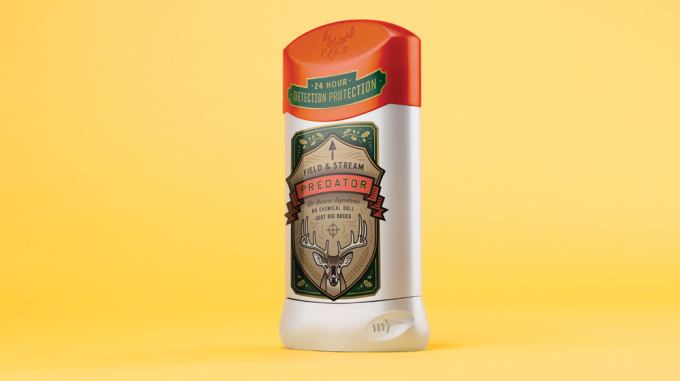
How to Make Your Own Scent-Free Deodorant

Think organic deodorant isn’t for you? It’s actually perfect for deer hunters, because it battles sweat and odor, and gives off no unnatural scent of its own. Buy ingredients in bulk and make three 2.5-ounce sticks—a season’s worth—for only $2 each. Here’s how.

scentstick

What You’ll Need

● 1⁄4 cup coconut oil
● 2 Tbsp. shea butter
● 2 Tbsp. cocoa butter
● 1⁄4 cup beeswax pellets
● 3 capsules 400-IU Vitamin E
● 21⁄4 tsp. baking soda
● 1⁄4 cup organic arrowroot powder
● 2 capsules Vitacost Probiotic 10-20

The Brew 
Heat a small saucepan of water and remove just before boiling. Combine coconut oil, shea butter, cocoa butter, and beeswax pellets in a mason jar, and place it in the hot water, double-boiler style, until melted. (Warning: If you’ve ever had a severe reaction to a bee sting, don’t handle beeswax.) Leave the jar in the bath and add the Vitamin E capsules, baking soda, arrowroot powder, and probiotics, which introduce good bacteria into the skin to battle the bad stuff that causes BO Stir gently until mixed well.

The Cure
Pour the warm mixture into empty, used stick-deodorant containers, new containers (sold online), or lined muffin tins, and let harden overnight. Then, perform your own sniff test: The only scent noticed is a trace of beeswax.

Follow our FISHING BLOG

WEB   RATES     FISH    HUNT    CABINS    PHOTOS
TESTIMONIALS    BROCHURE    HUNT BOOKLET

Enter your email address to subscribe to this blog and receive notifications of new posts by email.

← Back

Thank you for your response. ✨

Email Me....


Tags: , , , , , , ,

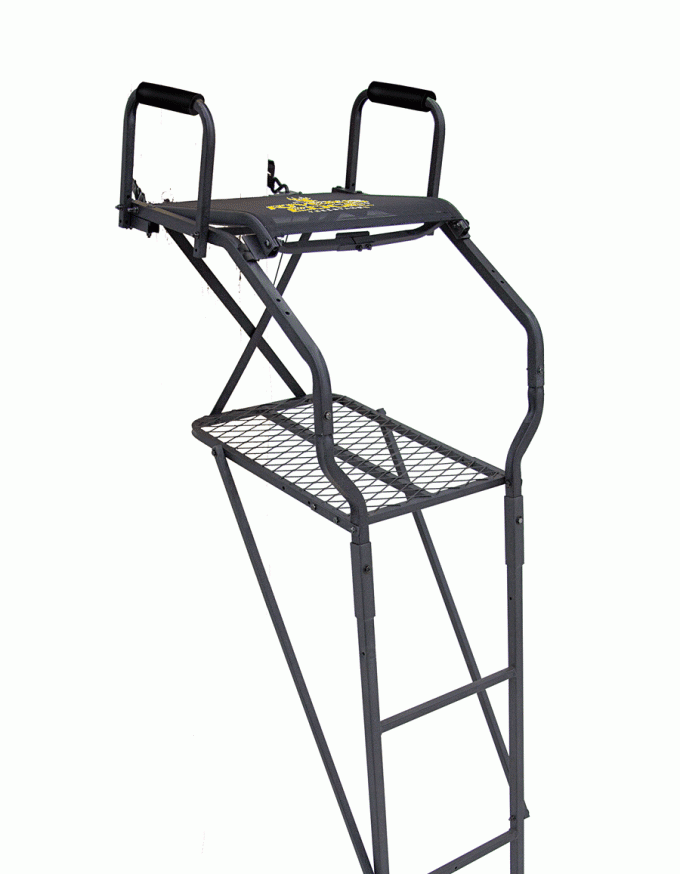
4 Ladder Stands To Consider

Whether you hunt with a bow or a rifle, want to hide in the treetops or stay closer to the ground, one of these four ladder stands has you covered. A hunting buddy and I started with six models and after a full day of setting up, climbing, sitting, and tearing down chose these four favorites. Here are our picks for an all-around stand, a bow stand, a best bargain, and a gun stand.

All-Around

Ladder-1_0

Ol Man 15′ Bowlite

Specs 15′ high • 25″ x 171⁄2″ platform • 45 lb.

What’s SpeciaL With its mesh seat and narrow ladder, my test partner, a veteran New York hunter, thought the streamlined Bowlite was the best of the test. Two points of contact to the tree made it the most secure by far, and it proved the fastest to assemble.

Bottom Line Easy to build, comfortable, and rock solid. We docked points only for the narrow ladder, which allowed just one foot per rung—not good for XL hunters ($150; olmanoutdoors.com).


Bow

Ladder2

Rivers Edge Bowman

Specs 19′ high • 24″ x 17″ platform • 64 lb.

What’s SpeciaL Tall, with a big 17 inches between rungs, the Bowman is a young person’s treestand. The large platform and skyscraper height is ideal for maneuvering and drawing on deer undetected. Yet we felt it needed a second (not included) ratchet strap to feel secure.

Bottom Line With almost 2 square feet of platform 19 feet up, this is a killer bow stand, but the pins were noisy ($170; huntriversedge.com).


Budget

Ladder-3

Summit Crush Series Solo Performer

Specs 151⁄2′ high • 19″ x 121⁄2″ platform • 40 lb.

What’s SpeciaL For just one Benjamin you get this light, easy-to-set-up, comfortable, do-it-all option. The ladder assembles with bolts and lock nuts, so it’s deathly quiet compared with the others in the test, which use locking pins. But the platform feels small.

Bottom Line Lots of value, plus it’s the lightest and quietest system in the test. Another $30 gets you a backrest and shooting rail ($100; summitstands.com).


Gun

Ladder-4

Big Game NextGen Stealth DX

Specs 15′ high • 25″ x 181⁄2″ platform • 55 lb.

What’s Special Big Game hit the sweet spot of price and performance with the Stealth DX. The ladder is wide, with short 13-inch spacing between the rungs for easy climbing, even in the heavy clothing typical of gun season. There’s a cushy backrest and an adjustable shooting rail.

Bottom Line A comfortable all-day sitter that can be found online for well below the list price. We would have liked the gun rest to elevate a little higher ($220; biggametreestands.com).

Follow our FISHING BLOG

WEB   RATES     FISH    HUNT    CABINS    PHOTOS
TESTIMONIALS    BROCHURE    HUNT BOOKLET

Enter your email address to subscribe to this blog and receive notifications of new posts by email.

← Back

Thank you for your response. ✨

Email Me....


Tags: , , , , , ,

Tree Stand Preparation

The satisfaction one gets out of any endeavor is usually proportional to what one puts into it. Preparation leads to confidence, and confidence leads to success. And nothing prepares us for a hunt like a do-it-yourself attempt. Not only will you gain a lot more satisfaction from the hunt, you’ll also acquire a learning experience you can use for the rest of your life, and even pass down.
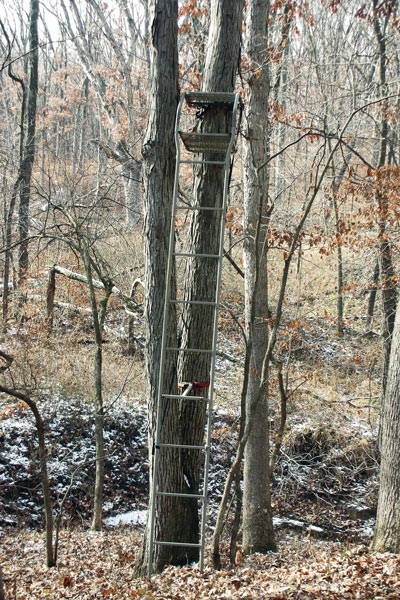
6One of the most important aspects of the right tree for a tree stand is an entrance/exit that will create as little disturbance as possible. In almost all cases, we are better off hunting undisturbed animals that are moving with some predictability. This is a fundamental truth.

A low-impact entrance/exit is vital, and the smart hunter must consider sight, sound, and scent during their approach and departure. Let’s use an example of each in illustration.

  • Often, your stand placement is just off the crest of a ridgeline. Human nature is for old logging/skid roads to follow the crest of the ridge because it makes sense for ease of travel for humans and equipment. But it doesn’t make sense for the deer.
  • Although not always the case, game will usually shy away from being sky lined on a ridge top. They’ll tend to walk parallel to the crest on the downwind side. It sometimes depends on the angle of the terrain and visibility (density), but usually they will prefer just far enough off to the side so their silhouette is less obvious, and where they can see downhill just as well as if they were on the crest. You’ll also notice their passage will tend to be on the downwind side of the crest. Think about it — they can see downhill and can scent-check areas upwind, and still not be silhouetted.

We, as hunters, must do the same thing. When entering a stand site along a ridgeline, it’s easy to walk the logging road on the top. This is fine when it’s dark (another advantage of stand approach before light). But when it’s already light, or in the afternoon, you’re usually better off picking your way in by walking parallel to the crest.

Walk in on a logging road, try to walk in the “tire track” of the downwind side. For example, say the logging road is running north/south and the wind is coming from the west. You walk in the east tire track so the wind carries your residual ground scent off the road. This ensures any deer that happen to be walking the road later will be less likely to smell your passage.

In addition to this, if you use a scent drag on approach, you will notice it will benefit you even more so. Tie a scent-soaked rag to a short cord off a four-foot switch (or your bow tip), and drag it down the west tire track while you walk the east (downwind) track.

Because most hunters tend to sweat, carry extra clothing/gear in a backpack. When you get to within 100 yards or so of the stand,  stop and put the layered jacket, facemask, gloves, and safety harness on. It’s an obvious advantage having your scent on your final approach blowing away from the direction you think the deer will be coming/going.
bear4To ensure a silent approach, rake out a footpath to the stand. For those of you who have hunted bear over a bait site, you may have noticed that when multiple bears are hitting the bait, they will approach it via specific footprints.


This is a dominant/subordinate situation. A subordinate bear knows if he is caught by a dominant bear on his approach to the bait, he will likely get his butt kicked. And it could even be a fatal mistake. Therefore, if you look closely around the bait site, you may find distinct, separate footprint/pad marks that bears will actually place their pads in, in order to guarantee a silent entry. Do the same thing when approaching the stand site.

After the foliage drops, you’ll often have dry leaves covering the ground. Walking through dry leaves silently is hopeless. If there is any cadence/rhythm to your gait, it’s almost impossible to keep your entrance/exit covert. At this point leaving your ambush silently is just about as important as entering it silently, and in both cases use the “bear trick” to my advantage.

  • After the majority of leaves drop, face the fact that you will be disturbing the area and go for it. Time your entrance for midday, knowing what you’ll gain will be worth it in the long run. You can use a regular garden rake with the stiff teeth, but a garden hoe actually works better, because you won’t have to constantly clean leaves from the teeth. Clear away the leaves every couple of feet in order to place your boots on solid ground rather than six inches of leaves.

Yes, continued foliage dropping will fill in the raked spots somewhat, but you can just kick them away with your boot tip if needed. Quiet foot placement is especially important on quiet days, or if you are within hearing distance and/or sight of a known bedding area.

You’ll know it was all worth it when after quietly entering and settling in you see the flick of an ear and notice a deer bedded within eyesight. That probably won’t happen on a calm day if you don’t pre-rake your approach.

Break out the trusty ratchet belt hand pruners to open and clear the understory of brushy twigs, both from where the deer will be walking as well as your own approach. An opening through the brush will shift the deer to the path of least resistance, and they will adapt to it in short order. At the same time, you want to eliminate brush and twigs in my entrance path to reduce scent retention and the noise clothing may create as you pass by.
sunset bear

On approaching a stand setup, try not to cross the main travel pattern you’re hunting. Sometimes there are situations where you have to do that. In these cases, plan your approach to the stand right in a precut shooting lane. That way if the deer cuts your entrance trail on approach and stops to smell your minimal ground scent, at least he is standing in a shooting lane.

Some of this may be hard to follow along with unless you are actually shown. The bottom line is there will be a lot of satisfaction for your efforts. Not only will you watch a deer react exactly as you wanted and intended him to, but your efforts will hopefully shift his movement to a position where you almost can’t miss the shot. And that alone will boost your bow hunting success rates tremendously.

Follow our FISHING BLOG

WEB   RATES     FISH    HUNT    CABINS    PHOTOS
TESTIMONIALS    BROCHURE    HUNT BOOKLET
Enter your email address to subscribe to this blog and receive notifications of new posts by email.

← Back

Thank you for your response. ✨

Email Me....


Tags: , , , , , ,

Learn Rack Size By the Signs

Learn Rack Size By the Signs

You know what a buck rub looks like. You know that bigger bucks tend to rub bigger trees, and you’re probably aware that a buck travels in the direction facing the rubbed side of a tree. But there’s more to be gleaned from a savaged sapling. The right rub can tell you the size of a buck’s rack, whether he has any beauty points, and how to hunt him.

signofthetines
1. Time of Day
In hilly country, buck rubs that are visible when facing uphill were likely made in the morning as the buck traveled back to his high-ground bedding area. Likewise, the ones you see when looking downhill were probably made in the evening. Wherever feeding areas are open and obvious, such as crop fields, rubs that show when you’re facing into the woods are morning rubs. Their opposites are evening rubs.

2. Velvet Proof
Where there’s off-track ATV travel, it can be difficult to distinguish between a tree that’s been debarked by a buck and one that’s been scraped by a four-wheeler. During preseason and early-season scouting, look for shed velvet on the ground beneath the rub. You won’t always find it—velvet dries quickly and bucks sometimes eat it—but it’s a sure sign when it’s there.

3. Big Tree, Big Buck
This familiar rule of thumb is valid. But remember, there are plenty of exceptions. A mature buck with a narrow tip-to-tip spread or other unusual rack configuration may not be able to rub a large-diameter tree in the usual way.

4. High Rub, Big Buck
Though far less familiar, this is a good rule of thumb, too. A mature buck is taller and stronger and therefore tends to rub higher off the ground. Caveat: This only applies to fresh rubs in fall. Snowpack can affect rub height, giving you a false reading late in the season.

5. Non-typical Marks
Sticker points, split brow tines, and other odd pieces of bone commonly leave corresponding deep, off-center gouges on the tree trunk, branches, or adjacent trees, which can help you identify a specific buck.

6. Rack Width
Wherever you find rubs on multi trunked or closely clumped trees, look for scars or broken branches on saplings and shrubs adjacent to the main rub. They can tell you how wide a buck’s rack is.

7. Tine Length
Look on the underside of branches, too. A tall-tined buck may leave nicks or scraped bark on branches a foot or more above the main rub.

8. Color Clues
Keep an eye peeled for old rubs. A mixture of light-colored new rubs, gray weathered rubs, and often blackish healing-over rubs reveals a perennial favorite buck route and also suggests that the animal making them is now mature.

Follow our FISHING BLOG

WEB   RATES     FISH    HUNT    CABINS    PHOTOS
TESTIMONIALS    BROCHURE    HUNT BOOKLET

Enter your email address to subscribe to this blog and receive notifications of new posts by email.

← Back

Thank you for your response. ✨

Email Me....


Tags: , , , , ,

Master the Moon Phases

We all understand that hunting or fishing near sunrise or sunset is almost always the most productive. Well, the same goes for the moon, along with its effects of overhead and underfoot periods. Just as the sun has its yearly cycle of 365 days, the moon has a yearly cycle as well, but in much less time of 29.5 days.

2015 lunar calendar

The effects the lunar cycle has on tides and weather is well documented, these effects carry over into wildlife movements as proven through record harvest studies.

Next time you hear about a big buck being taken at noon or the next time you’re looking at trail camera pictures of the one you’re after, the chances are it was during one of these times; moonrise, moonset overhead or underfoot.

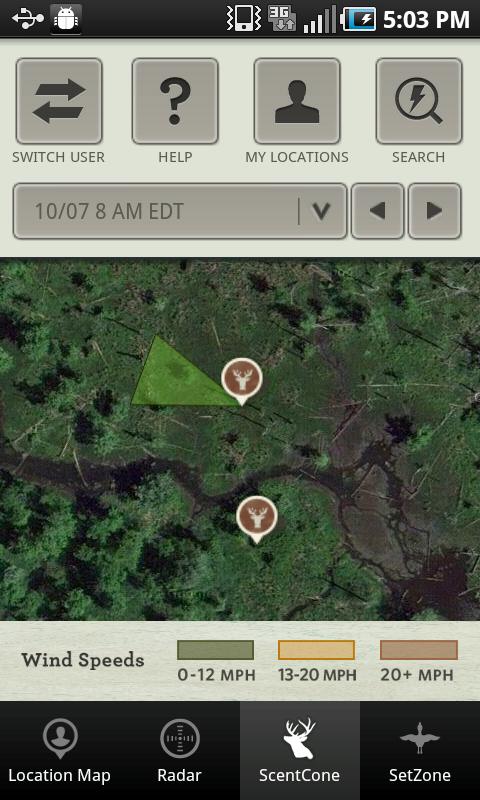
app

Hunting Weather App


We are entering a favorite hunting time, waxing gibbous through full moon; 10 a.m. until noon and 3 p.m. until dark are your best times to hunt during this moon phase.

It will be especially good if weather factors you’re following on co-operate. Track the weather where you hunt and fish at ACCUWEATHER

Follow our FISHING BLOG

WEB   RATES     FISH    HUNT    CABINS    PHOTOS
TESTIMONIALS    BROCHURE    HUNT BOOKLET

Enter your email address to subscribe to this blog and receive notifications of new posts by email.

← Back

Thank you for your response. ✨

Email Me....


Tags: , , , , , ,

Master the Moon Phases

We all understand that hunting or fishing near sunrise or sunset is almost always the most productive. Well, the same goes for the moon, along with its effects of overhead and underfoot periods. Just as the sun has its yearly cycle of 365 days, the moon has a yearly cycle as well, but in much less time of 29.5 days.

2015 lunar calendar

The effects the lunar cycle has on tides and weather is well documented, these effects carry over into wildlife movements as proven through record harvest studies.

Next time you hear about a big buck being taken at noon or the next time you’re looking at trail camera pictures of the one you’re after, the chances are it was during one of these times; moonrise, moonset overhead or underfoot.

app

Hunting Weather App


We are entering a favorite hunting time, waxing gibbous through full moon; 10 a.m. until noon and 3 p.m. until dark are your best times to hunt during this moon phase.

It will be especially good if weather factors you’re following on co-operate. Track the weather where you hunt and fish at ACCUWEATHER

Follow our FISHING BLOG

WEB   RATES     FISH    HUNT    CABINS    PHOTOS
TESTIMONIALS    BROCHURE    HUNT BOOKLET

Enter your email address to subscribe to this blog and receive notifications of new posts by email.

← Back

Thank you for your response. ✨

Email Me....


Tags: , , , , , ,

Camouflage Won’t Help IF…….

You’re invisible. Or at least you think you are. After all, you’ve done all the right things: bought that pricey camo that matches your surroundings, painted your face with lots of greasy face paint, and you are even wearing camo boots. Now all you have to do is sit there, soak in a little sunshine, and wait for a big boar to show himself.

SAM_0066

But when a bear does come in, he spots your position and blows out for the next county.  The problem? You set up in the sunlight

A common mistake that has ruined plenty of big-game hunters’ chances is setting up where direct sunlight can reach them. Sunshine turns a camouflaged hunter from an indistinct shadowy figure into a glowing beacon. Dappled sunlight shining through a canopy of leaves isn’t usually a problem. But direct sunlight can reveal your whereabouts and end your hunt.

SAM_0057

Camouflage clothing’s basic function is to break up our outline – tricking our prey’s eyes into passing over us in their constant search for danger. The human silhouette is incredibly distinct in the wilderness – there is no other form like it. To fool game, it is essential to reduce our human outline. The best camo patterns utilize starkly contrasting colors in their design, thus changing us from a human form into something indistinct and non-threatening. Interestingly, for those of you traditional hunters like me – a good plaid pattern like Fred Bear often wore can work almost as effectively as modern camouflage.

jamie

Remember that sunlight moves as the earth rotates. Set up your ambush in a location that allows you to remain shadowed as the light moves around you. If you are still-hunting or stalking, move efficiently through areas of sunshine and then pause to watch and listen when in the shadows.  Set up in dark shade that offers good shooting lanes. Remember to keep your hands and face camo’d up as well – if left uncovered, they are a dead giveaway even in the shadows.

Follow our FISHING BLOG

WEB   RATES     FISH    HUNT    CABINS    PHOTOS
TESTIMONIALS    BROCHURE    HUNT BOOKLET
Enter your email address to subscribe to this blog and receive notifications of new posts by email.

← Back

Thank you for your response. ✨

Email Me....


Tags: , , , , , , , , , , , , ,

Tips for Choosing the Right Outfitter

What kind of a hunt do you want?
The first question you need to ask yourself is what type of a hunt you want.  There are baited hunt, spot & stalk hunts, and even combinations of these. Think about your physical capabilities, your shooting ability, experience and desires. Scenery, number of bears you want to see, frantic action or lack of it, and climate. These things and more go into your choice of a hunt. If you start talking to an outfitter and you realize this isn’t exactly what you are looking for, don’t hesitate to back out.

image[2] (2)

Websites are one of the best places to learn more about a hunt. You can read about the outfitter, the guide and importantly, how long they’ve been in business. You can look at an album of photos and have a candid discussion that will give you a real gut feeling for the hunt and the people you will entrust with your money and in some cases your life. In the course of the search you will think of questions to ask so ask them on the spot in your email or phone conversation, you will think of even more questions to ask so write them down and ask at a later time.

If you do not meet the outfitter in person then plan to have a good phone conversation and ask the tough questions. Get references of successful and unsuccessful past clients and call them.

h2

Define your Expectations
Realistically, an outfitter can’t offer you the hunt you really want unless they know exactly what you want. Many people have had a bad experience because they went on a hunt that wasn’t a good fit because they didn’t specifically tell the outfitter what they wanted. If an outfitter says they have fishing available, but you get there and find out its only fly fishing and you don’t know how to fly fish; that’s your fault, you should have clarified it before you left home.

Be honest about your physical limitations. Don’t go on a spot & stalk hunt if you can’t hike up a steep hill. Likewise, if you are 400 pounds and can’t get into a tree stand, it would be a good idea to tell the outfitter that ahead of time so he can get a ground blind in place. Don’t surprise your outfitter when you pull into camp. He will be asking questions and expecting honest answers and you should be too.

404

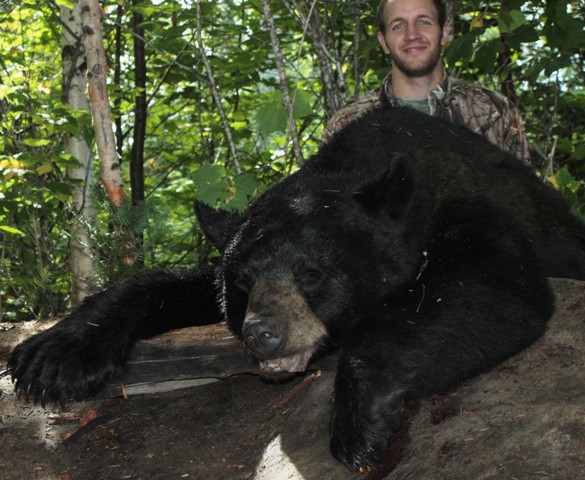
Are you looking for a truly big black bear? Make sure you are going to a place that has them. There are a lot of places that specialize in getting everyone a bear, but the top end of them is about 300 pounds. If you want to bag a giant, you have to ask the questions that will help you understand the type of operation you are dealing with. Looking for a color phase bear? Ask the specific questions about percentages of color bears. Then ask exactly how many and what colors were bagged there in the past three years. Trust your gut, if it doesn’t feel right, back off.bear3

Make your needs and preferences known. If you have health issues as simple as a lactose intolerance or an allergy, tell them so they can pass it along to the cook. If you don’t like baloney sandwiches, tell them that. Or don’t complain if you find yourself in a tree stand for six hours with nothing but a baloney sandwich to eat.

Ask specific questions about the temperatures, clothing you should bring and footwear. Not much is worse than having nothing but leather hunting boots when you have to slog through a swamp to get to your stand. Wet, smelly feet can ruin a trip as fast as anything. Ask about outerwear, mosquito protection, long johns and headwear.

Many baited hunts mean long hours in the stand during the afternoon and evening, but having something to do during the mornings can make a hunt much more enjoyable.  What if you shoot your bear early in the hunt? Learn what might be available to take up your time while you wait for a buddy to get his bear.

Check out our 24 pg. HUNT BOOKLET

Check out our 24 pg. HUNT BOOKLET

Get to know the area well before leaving for the hunt. Look at the area on Google Earth, check the weather for the hunt on accuweather.com, spend some time on the outfitter’s website.

The theme in this article is communication. That’s because the vast majority of bad experiences can be traced back to bad communication; either yours or the outfitter’s. Make sure it isn’t yours.

Follow our FISHING BLOG

WEB   RATES     FISH    HUNT    CABINS    PHOTOS
TESTIMONIALS    BROCHURE    HUNT BOOKLET

Enter your email address to subscribe to this blog and receive notifications of new posts by email.

← Back

Thank you for your response. ✨

Email Me....


Tags: , , , , , , , , , ,

Hi Bear!

wolf2Nathan was unsure of what to expect when he arrived at Wawang Lake.  He knew first hand that we produce nice bear as his father-in-law Randy had taken one the year before.  Randy had planned his return visit as soon as he landed his bear and knew he just had to bring Nathan.

Nathan had a very eventful first night with plenty of action….from the wolves!  As he returned to camp the first night, he was so excited to tell us that he was ‘almost eaten by a wolf!’.  As he sat his stand, there was a full wolf symphony surrounding him and echoing in the trees.  At the last minute, he caught a flash of white from the corner of his eye and caught the tail end of a wolf leaving his bait site.

On the second day of their hunt Nathan got his bear.  A nice 175 lb black bear and very credible with beautiful black/blue cape and all.174
While waiting for the others in his group to come by to pick him up Nathan amused himself by walking out to the road to see what he could see, when suddenly he saw a HUGE black bear walking right towards him.  Quickly thinking, he made himself bigger by raising his arms above his head and yelled ‘Hi Bear!!”, however, his voice cracked from anxiety and came out in a high-pitched, girly, squeal instead .  Just as the bear veered and went into the bush Nathan turned around and noticed a couple more bear walking out from the other side of the road towards his bait site but these ones paid him no mind.

bear (2)It was beginning to get dark and Nathan started walking towards the junction where he was to meet up with his hunt party, he turned and shuddered – ANOTHER BEAR and this one was glaring right at him from out of the brush just behind where he stood.  The hairs on the back of his neck stood right up as again Nathan said in a high pitched voice while waving his arms high above his head, ‘Hi bear!!’ hoping to scare it off.   The bear disappeared back into the dark abyss of the shadowing timber.

After seeing numerous bear all around he abuptly went into a hunting stance, now alert as he pointed and aimed his bow, swinging in all directions – getting ready for the attack.  It didn’t happen and at that very same moment the truck drove up as Nathan sighed in relief – it was a welcome sight.

It was a tense moment there for a while, one we’re sure Nathan will never forget and that he’ll repeat over and over for years to come of his encounter with multiple bear during his first black bear hunt at Wawang Lake.

The truth is the bear were only interested in the bait site and the alluring, delicious smells it was emitting.  It goes to show just how active our baits really are, and, Nathan got to see first hand when we say our baits have multiple bear on the baits – we’re not stretching the truth – not one bit!
multiple bear

Follow our FISHING BLOG

WEB   RATES     FISH    HUNT    CABINS    PHOTOS
TESTIMONIALS    BROCHURE    HUNT BOOKLET

Enter your email address to subscribe to this blog and receive notifications of new posts by email.

← Back

Thank you for your response. ✨

Email Me....


Tags: , , , , , , , , , , , , , , ,