RSS

Category Archives: black bear

Black Bear Outfitters

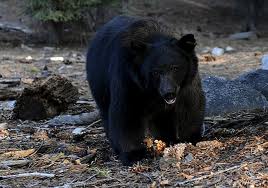
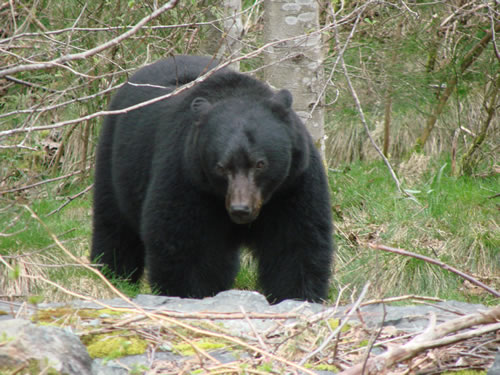
Andy's 475 lb (dressed)

Andy’s 475lb (dressed)

Black  Bear  are  known  predators  and  Ontario  has  the  largest  population of black bear than anywhere in the world. Furthermore, north-western Ontario leads in the concentration of these animals than elsewhere in Ontario, and, rates highest in population concentration  for all of Ontario that also allows for bating practices.

Many deem baiting unfair, giving the hunter a considerable advantage. But contrary to what some would have us believe, it’s far from easy and holds no guarantees!  Bear can sneak in undetected, grab a morsel of food and disappear as fast as they arrived. Bear can also skulk around the bait for hours, never showing themselves. As experienced outfitters we’ve learned that many of our bear will move in cautiously to inspect the provisions. The advantage of hunting in the fall is bear are eager to fatten up for the winter.  The biggest advantage to baiting is that, if and when a bruin finally commits to the bait, it allows the hunter a  an opportunity to assess size, stature and time for shot placement.

About Bear
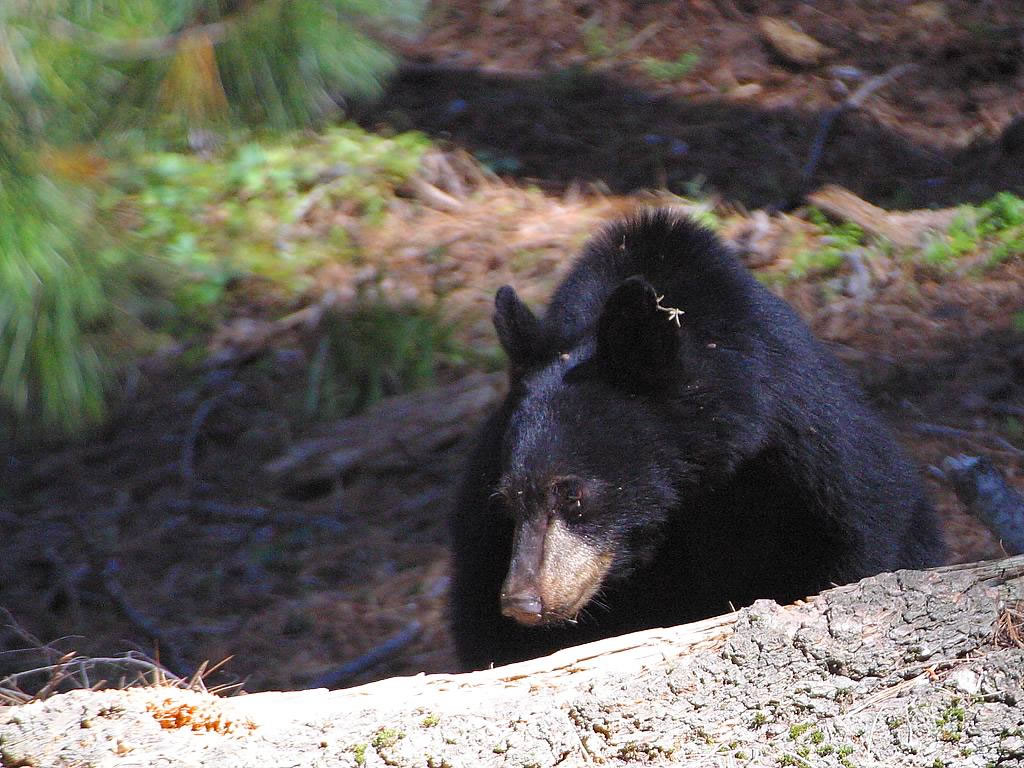
Black bear habitant range can span from two to 10 miles and resident populations often hold a variety of boars, sows and cubs, so it’s not uncommon to have multiple bears visiting the baited site.  Ontario only offers a FALL BEAR HUNT therefore the chance for the large TROPHY bear is increased dramatically.  Most hunters fear poor coats or hides due to the fall hunt but our area does not suffer that fate. With little to no burrs or ticks, our bear don’t succumb to ticks causing ‘rub’ or dry patchy fur.  We also are known for our high number of white chevrons (patches) to make your trophy even more unique. Black bear

Jon Hanson - Tiffin, IA 440 lb. black bear

Jon Hanson – Tiffin, IA 440 lb. black bear

Black bear have relatively poor eyesight, but outstanding hearing and acute sense of smell. Once they get a taste of your bait, and, as long as it is replenished regularly, they will be reluctant to leave the area.  In fact, once a site is established properly, you can and will see the same bruin day after day.

Location is Critical
Our bait stations have been established for many years (since 1972) and placed along the bear’s natural movement corridor. Heavily  timbered forests near cutovers and waterways often sustain good bear densities.  With berry crops like wild blueberries and raspberries nearby, black bear favor the accessibility and abundance of such forage and most often reside in the proximity.

Claw marks on deciduous trees and there may even be fresh markings, these lasting scars unveil a historical presence. Nomadic creatures, bear commonly travel traditional trails along waterways and natural movement corridors like valleys and ridges.  Finding fresh scat can instill further confidence that bear have frequented the bait.  Keep in mind that well established bait stations offer much more success than new stations since bear follow these game trails year after year.

 WEBSITE    RATES     FISH    HUNT    CABINS    PHOTOS
TESTIMONIALS    BROCHURE    HUNT BOOKLET

Enter your email address to subscribe to this blog and receive notifications of new posts by email.

← Back

Thank you for your response. ✨

Email Me....


Tags: , , , , , , ,

How to Size a Black Bear

……… WHEN SIZING UP A BEAR

WawangLakeBear
A big bear swaggers and walks with attitude. He doesn’t jump at every sound like a small bear will.  A big bear doesn’t have to; he believes he’s got nothing to fear. Once you’ve spotted your bear on the bait site, it’s time to get serious about analyzing how that bear is behaving.

It is important to note that long before you judge the size of the bear, you must judge the sex of that bear and here are some things to take into consideration:

A big, old sow will have all, or more correctly, almost all of the physical characteristics of a big, old boar. She’ll have the nasty looking face that’s seen one too many years in the ring, the potbelly and the sway back.

Watch to see if the bear stands on his hind legs and rubs his back on a tree, that’s a boar.  If it walks along and straddles small trees, wiping its scent on that tree, it’s a boar.  If it stands up and breaks saplings over its shoulder, it’s a boar.  If it encounters another bear and gives chase, it’s a boar and if it is following a smaller bear, it’s a boar.

SCALE:  There is one last general appearance tip to judging black bear that makes the top three in importance, and that is scale.   A big bear looks big . . . but so does a closer, smaller bear.   Here’s a help tip on how to gauge more accurately.  If the bear is 150 yards away but the hunter thinks the bear is 200 yards away, the hunter will overestimate the bear’s relative size by somewhere near 25 percent.   In other words, the hunter is in for a serious case of ground shrink when he walks up to his bear.  TIP:  Let the bear get as close to you as possible and preferably on the bait itself.   The closer the bear, the less chance there is of misjudging the distance to relative size.

SPECIFIC TIPS FOR JUDGING BLACK BEARS: If the bear fails any one of the above general conditions, then it’s advisable to pass up on it or let the bear walk. It’s tough and you could be wrong, but at least there isn’t a dead small bear lying on the ground.   Call it a personal aversion to guilt.

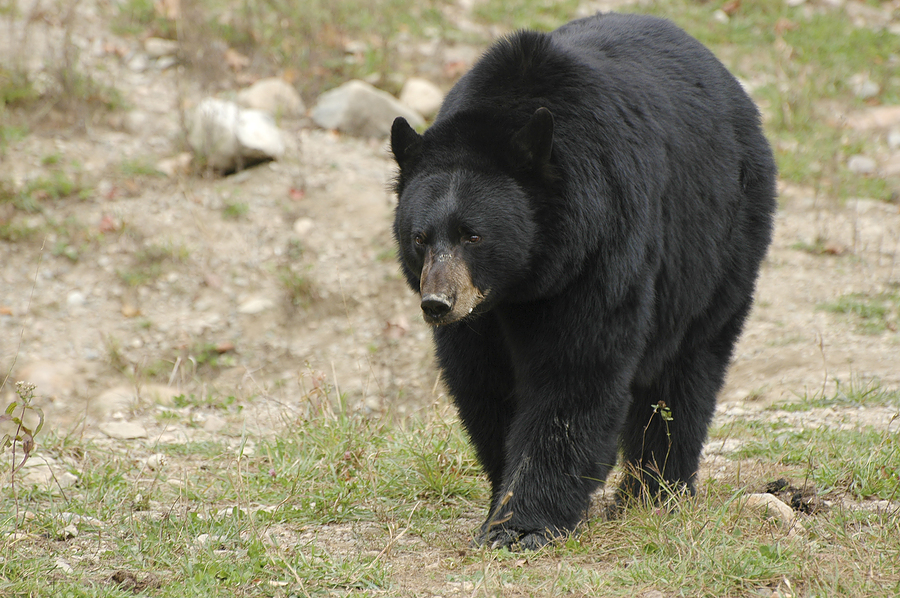
BODY SHAPE:    Bigger bear are older bears, and like most of us, they don’t have the svelte bodies they once did. They tend to look “heavy” and out of shape. Remember, they monopolize the best feed and habitat, and therefore exert less energy to live.

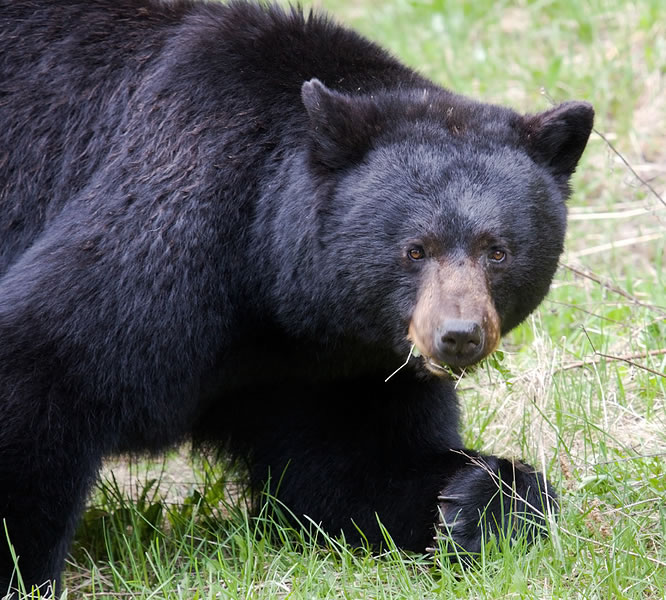
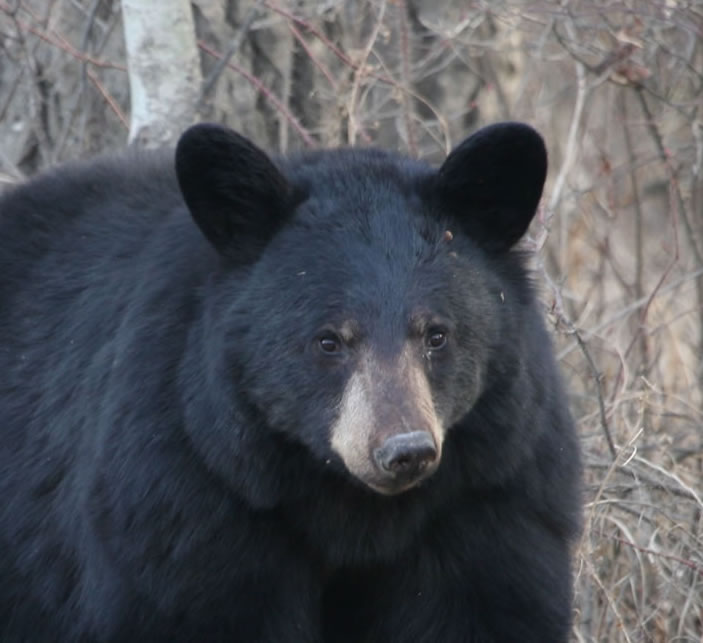
HEAD SHAPE:   A big bear (boar) will have a deeper, wider and longer snout than a smaller bear or a female. His ears will appear to be wide apart and small. If he is aware of you and looking your way, his ears won’t stand up on top of his head like a dog’s ears, they’ll seem to be aimed out to the side of his head. A big bear will have well developed “bulging” muscles on the top of his head.


WawangBear2

LEGS:   A big bear will have massively developed front shoulders. His shoulders will look big and burly. A sow’s wrist will pinch in directly above the foot. Not so with a boar. The lower forearm, wrist and the foot on a big boar are all the same width. A big bear often appears to have shorter legs because the body is so much thicker, but keep in mind that the best-scoring bears for the records book are often the lankier looking, longer-bodied bears.

There are bear that have meatier heads; bear that look great and are great trophies, but that don’t score well.  There are others that have short skulls, block- headed beasts that look impressive, but that don’t score well at all and there are lanky, skinny bears with donkey faces that score like the devil, but that a hunter seriously looking for  a  records book bear wouldn’t walk across the street for. Black bear morphology is just too darn diversified to make a science out of judging.

The best way to hunt for a record boar is to simply shoot the bear that looks good to you and that hopefully  you’ll  appreciate all the time and effort you put in for the hunt.  If it’s got a nice hide, be happy with your animal. If it has long claws and weighs a ton, good for you and congratulations. If it isn’t as big as  you’d like, don’t fret, you’re not alone and the rug on your wall will still look great. If it happens to be one of those rare few bears that has grown a skull that qualifies for the record books, thank your guide for the good fortune that made that bear come to the bait site.

To easily judge, remember:

  • Check out the ear size in relation to the head
  • Mickey Mouse ears means a small bear.
  • Watch to see if the belly is low to the ground
  • Legs that appear short means big bear.

Watch the bear’s behavior around the bait – small bears will be skittish and afraid of a larger bruin in the area.

Look for a log around the bait and use it as a reference, check to see the length and height of the log before climbing into your stand. When the bear enters the bait site use the size of the log to help determine the overall size of the bear.


SKULL MEASURING


WawangSkull

Hope this information helps develop your judging skill on your next hunt, and,  good luck out in the field.

For further information, or, to book your next bear hunt please contact us at:
1-888-534-9217 or EMAIL

 WEBSITE    RATES     FISH    HUNT    CABINS    PHOTOS
TESTIMONIALS    BROCHURE    HUNT BOOKLET

Enter your email address to subscribe to this blog and receive notifications of new posts by email.

← Back

Thank you for your response. ✨

Email Me....


Tags: , , , , , , ,

2014 Black Bear Hunt Video

Our 2014 season was both rewarding for us as outfitters and successful for our hunters as well.  Our hunts consists of an average of 14 hunters annually and our guide Terry (owner of Wawang Lake Resort) works hard each season to provide active baits for each and every hunter.  His objective is for every hunter to harvest a bear – if they opt to do so – so is it any wonder that much of his day is spent out in the field during the black bear season to ensure a positive outcome..

The following video are of the highlights of our 2014 hunt.

ENJOY!


If you enjoyed this video please visit our page on YouTube for more clips on Wawang Lake Resort

WEBSITE    RATES     FISH    HUNT    CABINS    PHOTOS
TESTIMONIALS    BROCHURE    HUNT BOOKLET

Check out our 24 pg. HUNT BOOKLET

Hunt Booklet – Information

pg 01 Cover

Brochure (rates for the 2015 season)


Enter your email address to subscribe to this blog and receive notifications of new posts by email.

← Back

Thank you for your response. ✨

Email Me....


Tags: , , , , , , , ,

Black Bear Hunting – at Wawang Lake Resort

Working hard to provide active baits for each individual hunter is how we operate our hunts, and is what keeps our sportsmen coming back year after year.

IMG_6110 - Copy

We have a very large bear hunt area (1,200 sq miles) surrounding our resort with a good healthy bear population due to years of black bear management.

Our hunts usually begin the Saturday on or after August 15th and continues for three weeks. Since we have consistently managed our bear population for several years we determine the number of hunters we will take according to the bear population we observe the previous year. We average 14 hunters per year.

What We Need to Know Upon booking, please inform us of each party members contact information, weapon (archery or gun) and will they be bringing a tree or ground stand. We need to know what type of weapon each member in the hunt party will be hunting with and whether they will be hunting from tree stand or would prefer a ground stand. More on our website

Days to Hunt (7 days) – Arrive Saturday and depart the following Saturday. Arrive Saturday and depart the following Saturday. If you would like to hunt upon your arrival, please check in between 11am-12pm (EST) and have all of your equipment prepared in advance (tree stands as assembled as possible, weapons/ammunition cased)

Transportation Requirements Since most of our baits are very remote, groups should anticipate driving their members to and from the sites. Most of our baits are road access and we provide private areas for each hunting group so that

dropping members off and picking them up will be systematic and easy. We advise to have 1 vehicle per every two hunters (three max) to ensure as little disruption to each party member’s hunt.


Rates
For a complete list of our Bear Hunt Rates please visit our website at: www.wawangresort.com/Rates.htm A $500.00  non-refundable deposit is required at the time of reservation to guarantee a hunt.

Other Costs Hunting license Canadian Funds (approximately). It’s MANDATORY to provide a current or prior hunting license FROM YOUR HOME STATE, or a hunter safety certificate, as qualification to obtain a hunting license in Ontario. Export Permit – $35.00 Canadian Funds (available at designated locations in the area)

Things to Remember Bring your own tree stand as we do not provide them. Comfortable climbers are the most popular and screw in peg types are acceptable, however, whatever type you bring bear in mind that our trees have very loose bark.

What is Included in our Bear Hunts

  • Modern Housekeeping Cottage for 7 nights
  • Pre-baited Sites & all baiting supplies during your stay & Freezer Service
  • Orientation trip to bait site
  • Experienced guide’s knowledge and advice (use it!)
  • Canadian Firearms Regulations All Firearms (does NOT include bows) being brought into Canada must be registered at the Canadian Customs at the time of entry into Canada. A one- year permit costs $50.00 Canadian, or there is a long term permit as well. If you would like further information, you can visit the Canadian Firearms Website through the link on our website or call toll free, 1-800-731-4000

Passport Cards (similar to a Passport) Information can be obtained at this website: http://www.travel.state.gov/passport/ppt_card/ppt_card_3926.html

Our season begins Saturday on or after August 15th

For further information, or, to book your next bear hunt please contact us at:
1-888-534-9217 or EMAIL

 WEBSITE    RATES     FISH    HUNT    CABINS    PHOTOS
TESTIMONIALS    BROCHURE    HUNT BOOKLET

Enter your email address to subscribe to this blog and receive notifications of new posts by email.

← Back

Thank you for your response. ✨

Email Me....


Tags: , , , , , , , , ,

Animal rights vs The right to hunt….who’s right?

Right to Hunt vs. Animal Rights: Legends of the Fall
A Daily Reckoning Special Position Paper
by Jim Amrhein

“The encouragement of a proper hunting spirit, a proper love of sport, instead of being incompatible with a love of nature and wild things, offers the best guaranty for their preservation.”

– U.S. President and Nobel Prize winner Theodore Roosevelt

I ONCE WROTE an essay in this forum that I’m still getting feedback about. It dealt with the touchy subject of animal rights (or rather, the lack thereof). In the closing paragraph of that piece, I promised to expose the animal rights crowds for the hypocrites they are at a later date — and to demonstrate that the best friend any wild animal ever had is the hunter who exercises his or her personal freedom to stalk the woods, mountains, meadows, or marshes with gun or bow in hand….

P1040006

Right to Hunt vs. Animal Rights: Hunting for Reason — and Respect

And now that it’s the crisp and colorful fall, and time once again for those who are so inclined to hang some healthy wild game on the ol’ meat hook, it’s time for me to make good on that promise. I’ll also offer a “sacrificial lamb” to some critics who claim some of my columns have little financial component to them. To those folks, I say this: What you’re about to read should slake your thirst for numbers. But as you read, I urge you to keep in mind my larger point — that there’s a negative fiscal impact whenever personal freedoms are compromised.

Here’s a fact the animal rights crowd doesn’t like to hear, or to admit:

There wouldn’t be nearly as many (if any) vast tracts of publicly owned land to hike, bike, bird-watch, dog-walk, horseback ride, or generally gambol around on if regulated hunting did not exist. Funds generated by license fees and federal excise taxes on outdoor gear pay for these lands by an overwhelming margin. In fact, these monies dwarf all other sources combined — including the nearly nonexistent contributions of animal rights organizations (more on this in a minute). That means outdoor sportsmen are overwhelmingly the largest source of conservation funding in the United States….

Right to Hunt vs. Animal Rights: “Hunter-Vationists” Are Paying for Everyone’s Party

Here are the numbers, according to the U.S. Fish and Wildlife Service, the International Association of Fish and Wildlife Agencies, and other public sources:

** $746 million — Annual amount of money spent by hunters in the United States on licenses and public land access fees alone. Sportsmen’s licensing revenues account for more than half of all funding for state natural resource agencies

** $300 million — Additional monies contributed to wildlife conservation every year by the more than 10,000 private hunting-advocate organizations, like the National Wild Turkey Federation, Ducks Unlimited, and the Rocky Mountain Elk Foundation

** $4.2 billion — Amount of money sportsmen have contributed to conservation through a 10% federal excise taxes on firearms, ammunition, and gear since the 1937 Pittman-Robertson Act established the tax. Millions of acres of public-use land has been purchased, preserved, and maintained with this money.

From an ecological point of view, here’s what all this translates into– The needs of wild animals — especially endangered and threatened species — are immeasurably better served by the millions of acres of well-maintained, patrolled habitat that hunters’ dollars are paying for than the lies and propaganda dished out by animal rights groups. In fact, their efforts are among the most destructive forces facing wildlife of all types today…

Why? Because if the animal rights crowd got its way and hunting were outlawed, there’d be no money for the preservation and expansion of the habitat that houses not only game species, but the endangered, threatened, and recovering species as well. Like it or not, and believe it or not, sportsmen’s dollars are in large part what has made possible the wildly successful re-establishment of the wild turkey, black bear, bison, elk, and the bald eagle. Yes, it was vast tracts of public, protected land and plenty of dollars for reintroduction efforts that made these miracles of conservation a reality — not to mention the 20-fold increase in the number of wild elk, the 133-fold increase in the wild turkey flock, and the roughly 70-fold increase in  the national whitetail deer herd over the last century.

If sport hunting and/or sport fishing were outlawed (animal rights groups are gunning for them both), many of these species would dwindle once again — because sooner or later, the government would no doubt pony up a lot of these lands for development. They’d have to; who else would pay for their upkeep and regulation? The animal rights crowd?

Uh, no.

imagesCA2JP2XV

Right to Hunt vs. Animal Rights: A-Hunting They Will Go — for Headlines and Hype

In case you’re wondering how much money animal rights groups devote to habitat preservation and the welfare of wild species, take a gander at PETA’s 2004 financials. Straight from its Web site, I discovered that PETA’s prodigious revenue of over $29 million bought:

** 2,700 media interviews

** 703 organized demonstrations

** Nearly 11,000 mentions in print

** Coverage on at least seven major TV networks

** 150,000 “vegetarian starter kits” disseminated to the public

** Enough “educational materials” for 235,000 teachers and 11,000,000 students…

But not a single acre of land for wildlife preservation — not even for endangered species!

Hmmm. Seems that PETA and friends just don’t realize that what critters of every stripe need more than billboards, picket lines, ad campaigns, and celebrity advocates are places to live and thrive. Without the immense revenue of hunting-related dollars, these lands simply would not exist. That’s a hard pill for them to swallow. And as if it isn’t bad enough that animal rights groups — for all their high-profile anti-hunting bluster — don’t seem to pay for ANY true wildlife conservation efforts, they also spend a good deal of their time and resources obfuscating the truth about where conservation money does come from. Case in point:

In a 2003 news release aimed at opposing the New York Bureau of Wildlife’s plans to promote hunting and trapping in publicly owned sections of the Catskill Mountains, the notoriously militant Fund for Animals (ironic name, since I could find no evidence that they spend any money on wildlife conservation, either), stated that: “Although [the Bureau of Wildlife] is financed by millions of dollars of the public’s tax money, the nonhunting public’s viewpoint is consistently ignored…”

Yet according to the New York Bureau of Wildlife’s own financials, its primary source of funding is hunting, fishing, and trapping license fees, public land usage fees, and fines for violations of fisheries and wildlife management policies. Less than 12% of its operating budget comes from state tax revenues. This is a similar ratio to other states’ natural resources agencies’ funding. In fact, nationwide, sportsmen’s dollars outpace tax dollars for conservation efforts by a ratio of 9-to-1!

Can you think of ANY other federal government program that divines only 10% of its budget from the general fund?

But what’s really mind-boggling about the whole shebang is this: Even if animal rights groups could match the $3 million a day American sportsmen contribute directly to wildlife conservation and protection through license fees, land usage fees, and excise taxes, it still wouldn’t even come close to justifying the outlawing of hunting from a dollars-and-sense perspective, personal freedom issues notwithstanding.

Right to Hunt vs. Animal Rights: Stalk Softly and Carry a Big Stack (of Cash)

We’ve established that sportsmen’s dollars are the engine driving wildlife conservation, habitat protection and expansion, and public use lands. But this really only scratches the surface of how important hunting is to the American way of life. A lot of people probably don’t realize exactly how vital sport hunting is to the U.S. economy (animal rights groups know it, they just don’t want YOU to). Here are just a few examples:

** $24.7 billion — Amount of money hunters spend every year on their sport at the retail level. This money reaches all retail segments, including hard goods, travel, gas, trips, food and drink, supplies, vehicles, leases, lodging, and guide services

** $955.4 million — Annual amount of sales and fuel tax revenue directly attributable to hunting in the U.S.

** 575,000 — Number of American jobs sustained entirely by hunting

** $16.7 billion — Total annual salaries and wages paid to those who hold hunting-related jobs in the U.S.

** $2.25 billion — Dollar amount of combined state and federal income tax revenue generated by hunted-related employment in the United States every year.

How do these numbers compare with other high-participation outdoor sports? For some perspective, compare hunting with another popular gear- and travel-intensive sport, skiing. According to the Census Bureau’s Statistics of U.S. Businesses and other sources, the skiing industry annually:

** Employs approximately 127,000 people (less than a quarter as many as hunting)

** Pays gross salaries of around $1 billion (about 6% of what hunting pays)

** Yields just over $500 million in ski equipment sales (hunters spend more than this on their DOGS).

See what I mean? Hunting is big business in the United States. So big that animal rights groups could never even come close to matching, dollar for dollar, the positive impact sportsmen have on America’s bottom line.

Success!

Success!

Right to Hunt vs. Animal Rights: Tyranny of the Majority Cuts Both Ways

Animal rights organizations are quick to sling the word “majority” around in making their case against the blood sports. They make the absurd leap that since the majority of Americans don’t hunt, that the will of the people is that hunting should be outlawed. Let’s examine this kind of logic for a second…

More Americans don’t ski than do hit the slopes every winter. More of us don’t own cats than do. Fewer Americans ride motorcycles than do, and more Americans have cell phones than don’t. Does this mean that skiing should be illegal, cat ownership abolished, motorcycles outlawed, and cell phones made mandatory?

Of course not. If the “majority rule” model applied to matters of personal freedom instead of solely to matters legislative and elective, NOTHING would be allowed, and no new technologies or activities would ever flourish or even take hold. Imagine how that would affect the economy. Beyond that, the whole point of personal freedoms is to be able to resist the tyranny of the majority if you’re so inclined.

And what’s really ironic is that if the majority in America really did wield the power in all things, animal rights organizations themselves would not be allowed. Far, far more people don’t belong to or support the goals of animal rights activists than do. But despite what PETA and friends say, the same cannot be said of hunting…

An independent polling organization (Roper and Starch) found in 2000 that 85% of American adults feel that hunting has a legitimate place in modern society. A full 62% agreed that hunters are the world’s leading conservationists.

And they’re right.

Right to Hunt vs. Animal Rights: The Talking Heads are out for Blood

What’s really lamentable to me is the fact that the left-leaning media have so skewed their portrayal of hunting that I feel compelled to write an article like this to defend it.

Seriously, do the media ever write or broadcast stories about the economic benefits of hunting or the billions of dollars hunters contribute to conservation efforts? PETA gets tens of thousands of mentions and plugs in the mainstream media — how many does the Rocky Mountain Elk Foundation or Ducks Unlimited get?

And how about the hundreds of tons of meat donated every year by hunters to the homeless and impoverished — do you hear about that on the evening news? Last season, in Virginia alone, over a third of a million pounds of lean, high-quality venison was given by hunters to those less fortunate. I wonder how many tons of vegetarian food the animal rights crowd gave to these same folks? I’ll bet not one ounce (if they had, it would have been front-page news)….

The bottom line is this: Like it or not, sport hunting is an incredible boon to American society on multiple levels. But even if it weren’t, every true American should be in support of it (thankfully, most are — not that you’d ever discover this from the meat-hating media). Why? Because it’s perhaps the most vivid example in our culture of the exercise of multiple personal freedoms: to carry a gun on public land, to kill within the law, and to consume meat without interference from the USDA or FDA. That’s awhole lot of freedom bundled up in one activity.

Bottom line: Whether you agree with hunting or not, you should support it on principle. After all, how would you feel if the government outlawed something YOU love to do because some PR-savvy fringe group managed to spread enough lies about it through an activist media to make you a minority in the public’s eye?

So the next time you see a hunter by the side of the road unloading his gear or loading up his kill, give him ahonk and a wave out of basic respect for exercising his freedom and paying for the out-of-doors areas we all enjoy. And if you’re an animal rights activist, pull over, park and give him a great big kiss, because he’s doing more to help animals than you ever will.

Better yet, buy a gun, some gear, a truck, and a hunting license and start really contributing to animal welfare — and your economy….

Always hunting for the endangered species of reason and fairness,

Jim Amrhein

hunters


← Back

Thank you for your response. ✨

Email Me....

 
Leave a comment

Posted by on November 17, 2014 in black bear, moose, Wawang Lake Resort


Tags: , , , , , , , , ,

The fascinating cycles of bear hibernation

It’s that time, the bears are getting ready to den up for the winter.  While known, bear hibernation is not fully understood by many.  Hibernation preparation begins immediately when they awake in the spring.  There are five distinctive steps to this

During hibernation, the bear go through five different stages.

First Stage

The spring until midsummer or fall is the time when the bear are in their normal activity. If food and water are available, the bear will consume about 5,000 to 8,000 calories each day. If they are unable to consumer enough food and water during this time, they will be unable to successfully hibernate in the winter.imagesCA0ZA802

Second Stage

This stage is known as hyperphagia. During this stage, bear eat and drink excessively as they build up fat stores for hibernation. When food and water are plentiful, black bear have been know to eat as many as 15,000 to 20,000 calories a day. The need large amounts of water to process the food and flush nitrogenous waste from their bodies.

Third Stage

After they go through hyperphagia, it is time for their fall transition. During this time, their metabolic processes change as they prepare to hibernate. Their heart rate slows from the normal 80-100 beats per minute to about 50-60 beats per minute. During sleep, their rate is about 22 beats per minute. The normal beats of a sleeping bear are between 66-80 per minute. The bear continue to drink, but will start to eat less. As they prepare to hibernate, they can rest as much as 22 hours a day.


Fourth Stage

Hibernation begins. The bears’ breathing slows to about half of their normal rate. They take a breath only once every 45 seconds. Their heart rates slows even more. It can drop periodically to between eight and 21 beats per minute. They burn about 4,000 calories per day. They do not eat, drink, urinate or defecate during hibernation.


Fifth Stage

This stage is known as walking hibernation. During the first two to three weeks after the bear leave their hibernation den, their metabolic processes return to normal levels. During this time, they will continue to eat and drink less than they do in the summer months. Their bodily waste processes are also reduced. Once this time is past, the bears resume their normal summer activity.

Bear that are in hibernation can be hard to wake if they are disturbed. The bear that are in warmer climates may not be in as deep hibernation as bear in colder areas. Female bear often give birth in the den during the winter months. The mother bear tend to be in a lighter state of hibernation as they awaken to care for their young.

Should you stumble upon a hibernating bear, the best thing to do is to quietly leave the area.


Leave a comment

Posted by on November 9, 2014 in black bear, Wawang Lake Resort


Tags: , , , , , ,

Bear fight in New Jersey (video)

Bear fight in New Jersey (video)

Over the years, hunting in some areas has decreased and urbanization has increased.  The controversy over animal population control continues to spin out of control.  Here is a video of a couple of bears that happened in to a New Jersey neighborhood and what came about after that encounter

Wildlife management and population control is our responsibility as we continue to reduce their habitat.  More animal deaths occur due to rapid urbanization and motor vehicles than recreational hunting and this is a sobering reminder that animals know no bounds and don’t feel the same sense of yours or mine that we do.

 
Leave a comment

Posted by on November 1, 2014 in black bear, Wawang Lake Resort


Tags: , , ,

Image

Check out our new hunt booklet!

Check out our new hunt booklet!


preditorbook

 
Leave a comment

Posted by on October 29, 2014 in black bear, grouse, Wawang Lake Resort, wolf


Tags: , , , , ,

Field Judging Black Bear

Here is an excerpt from a fantastic article written by Carl of BCHuntingBlog.  This is always a popular question we are asked and this article gives the same advice (with photos) as we have given for many decades 🙂

Field judging Black Bears can sometimes be difficult even for the most experienced of bear hunters.  The animal you are judging is usually completely black aside from color phase bears, they have thick fur and the shadows they create can be deceiving.  With that said there are a few methods you can have at your disposal to help you determine if the bear is a shooter or not.

So how can you improve your skills at judging trophy black bear size in the field?

Let’s Get Started.

Check Out The Bears Head:

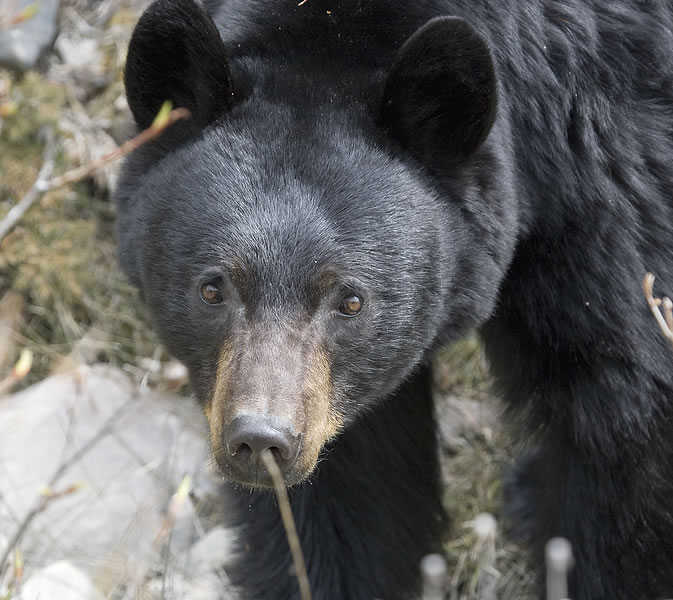
Big Bears:  Will have a very large, blocky looking head.  Their ears will look small, and almost off to the side of their skull a little.  On really big boars you might even see a crease down the center of their forehead, if that’s the case, it’s a good bear.  Other features to look for on a bears head would be scarring around the face, boars have ferocious fights, so it’s not uncommon for them to have plenty of battle scars around their muzzle, eyes and ears and these are helpful clues.

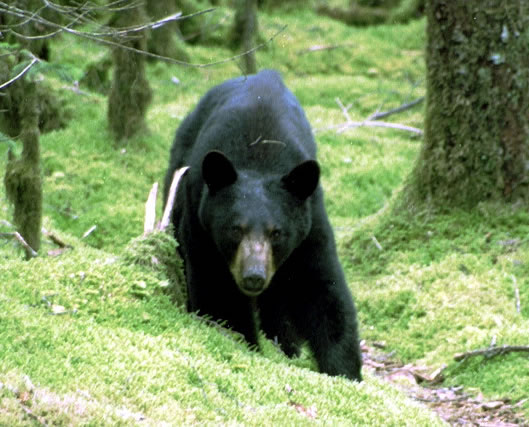
Small Bears:  Will have a small, narrow head, almost dog like.  Their ears will appear to be much larger and defined.  Almost like “Mickey Mouse” is a common description among many experienced bear hunters.

Check Out The Bears Behavior:

Big Bears:  Big dominant boars, behave like big dominant boars.  And they usually won’t be in much of a hurry unless they know you’re there and you’ve spooked him.  When big boars walk they will sometimes have a big swagger to their stride, much more so then a bear who’s on the submissive end of the spectrum.  When I shot my first Island Black Bear we watched him stand up on two legs and scratch his back on a tree for a couple minutes, without a care in the world.  When big boars decide to move they move deliberately, there is no indecision in their movements which can be noticed in younger, startled and confused bears.  Because they are dominant, the big boars will usually have a bit of a schedule and will often be caught feeding in the same places, at the same times of day.  They can do this because they are the boss!

Small Bears:  Are very cautious, they will get out of  your way quickly (so will a big old boar too if he’s spooked).  They will usually always be more alert then a dominant bear because they have to be, or they could become dinner.  Smaller bears will often seek the safety of a tree when in trouble or they just won’t stop running until they hit the coast.  When small bears run, they will appear much more agile then a larger bear.  They will will look more like a big dog running, then a lumbering old boar.

*Tip – When you’re observing a bear, and he/she doesn’t appear to be spooked, sit there and watch them for 1/2 hour or so.  Bears are pretty fascinating creatures when you watch them do their thing, and by observing you’ll learn more about them and that makes the hunt more fun.

Check Out The Bears Body:

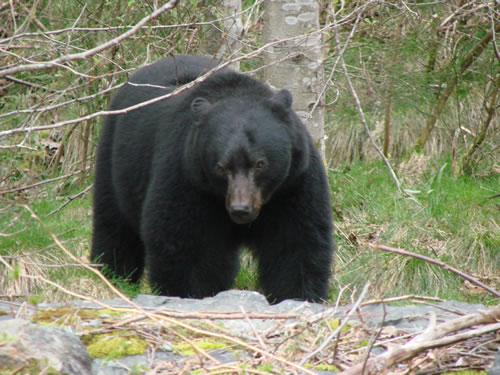
Big Bears:  Sometimes the big boys are called “belly draggers” for a reason, and it’s possible for our bears to get this big.  Big Boars may appear to be so big, you can’t see underneath their body when they are moving around.  That’s a big bear!  If the bear you’re looking at appears to have long legs, it’s probably because he has a smaller body in proportion.  Big bears will have very muscular looking arms and legs, especially their front shoulders/neck area.

Small Bears:  Can you picture the size of a really large breed dog? OK.  That’s about the size of an “average” Island Black Bear.  An average Island Bear will weigh 150-250lbs.  An large 6′+ boar could likely weigh 300+ and the big bears do look much different as you can see in the photos.

What Are Some Additional Signs Of A Big Bear?

If it’s a big bear you’re after then you need to pay attention to the sign you see around you.  Tracks and Scat are very good indicators as to the potential size of a bear, and will let you know if a particular bear is frequenting an area.

Judging Bear Size From Tracks:

This method was shown to me by my Father who was a big game guide for nearly 30 years.  It has since been shown to me by several taxidermists and many more experienced bear hunters than I so I believe in this method.

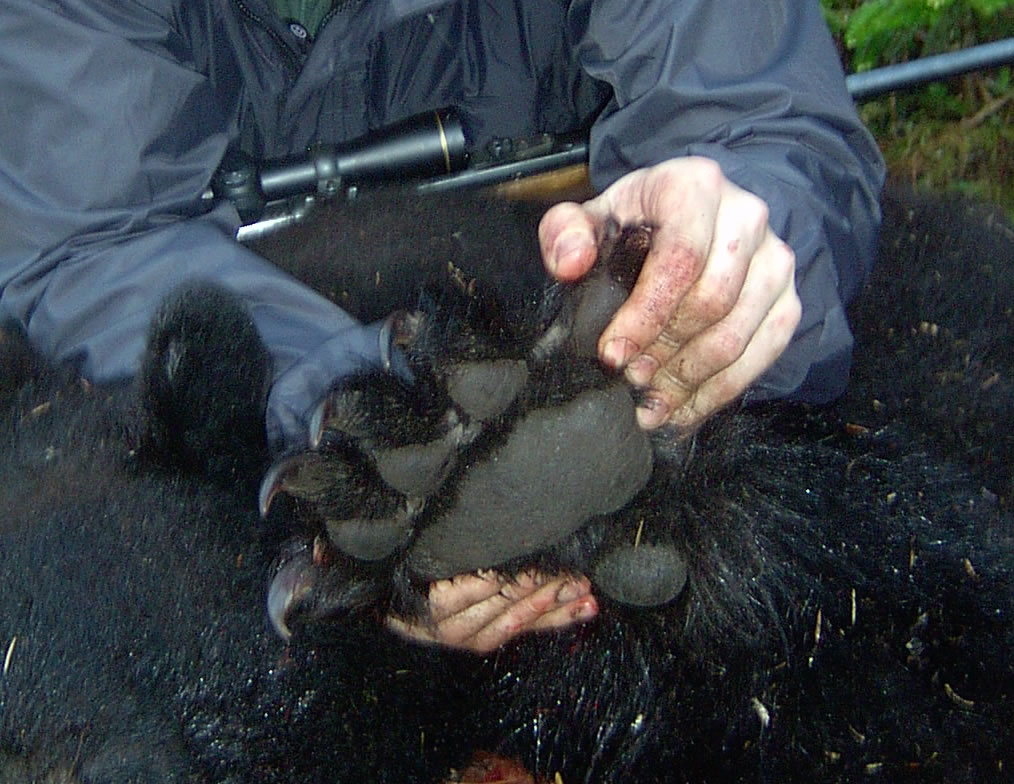
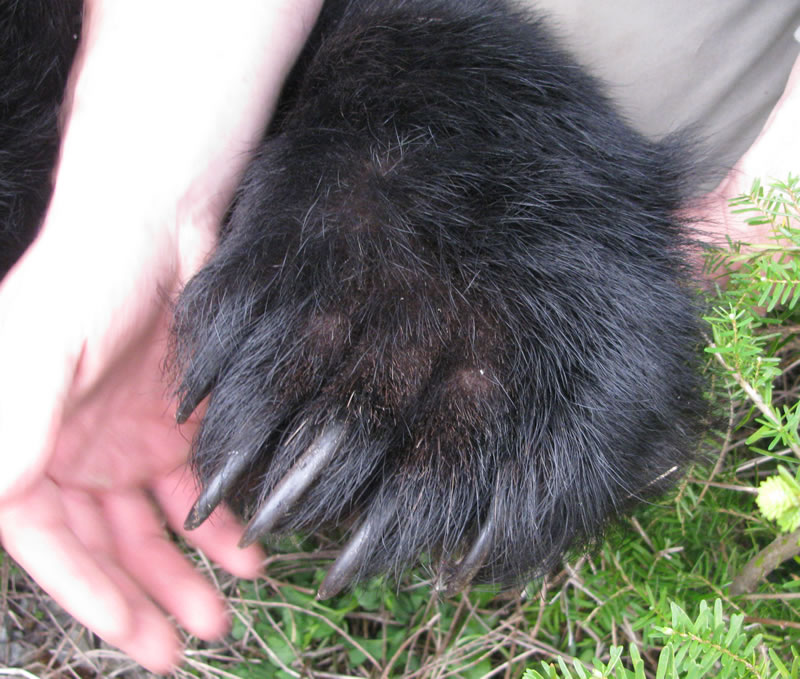
If you can find fresh bear tracks in an area, maybe mud or soft sand (common where we hunt spring bear on the Island) measure the distance across the front pad and simply add 1.  This will give you a rough “square” of the bear.   So if you measure the bear track and it came out at 5″inches across, you would add 1 and could guesstimate that bear was roughly a 6′ foot bear.

I have tried this method on many of our harvested black bears and I have to say it’s pretty damn close!  The only problem with this method is you need to find the bear that left the track!

Judging Bear Size From Scat:

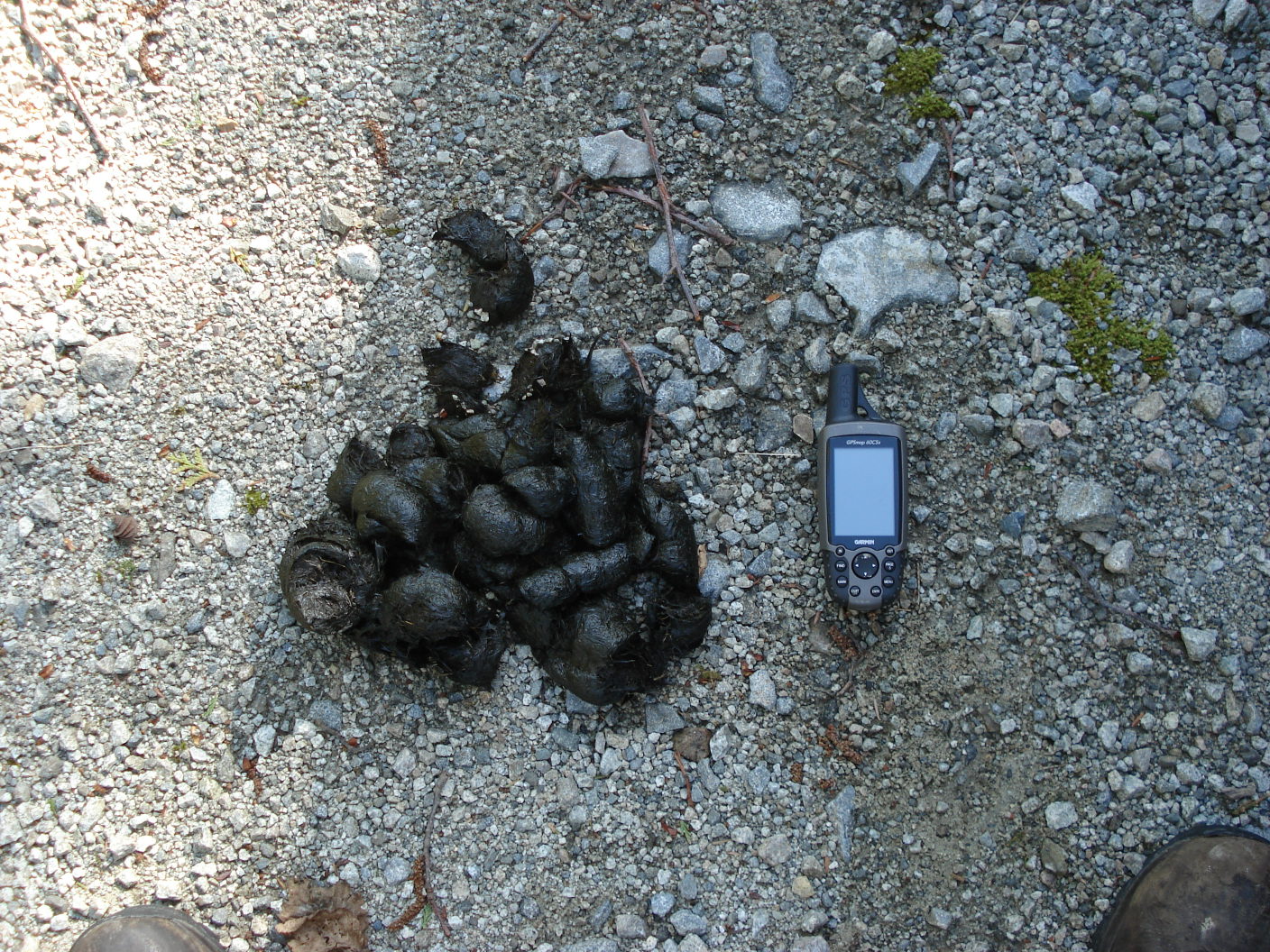
Spend a couple days bear hunting and you’ll observe several dozen or so piles of bear scat scattered across the road.  Not only can they help you see what the bears are eating but they can give you a pretty good indicator as to the size of the bear that left it.  Here’s a tip for you.  It’s not necessarily the size of the pile… It’s the diameter of the nuggets!  A really BIG bear has a really big butt and it’s not uncommon for them to leave scat the diameter of a beer can behind!  If you look at 10 piles of bear scat and then come across the one left by the big kahuna trust me… You’ll Know!

If you discover an area that has BIG tracks and some BIG (large diameter) scat, then it might be worth hunting that area a little harder.  Big Island Black Bears don’t have enormous ranges and unless you’ve spooked them heavily they will keep coming back to the same places to feed.

Hopefully you found article helpful and through experience you’ll become a much better bear hunter.  Because of their abundance it’s pretty easy to rack up experience if you’ve got the time to put a couple weekends in every year and then the patience to watch and observe what goes on around you.  Pay attention to the sign, and have a good time out there!

WEBSITE    RATES     FISH    HUNT    CABINS    PHOTOS
TESTIMONIALS    BROCHURE    HUNT BOOKLET

Enter your email address to subscribe to this blog and receive notifications of new posts by email.

← Back

Thank you for your response. ✨

Email Me....


Tags: , , , ,

Savoury Bear Recipe

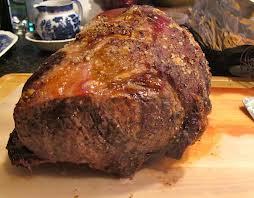
bearroast

1 pt. tarragon vinegar
2 peppercorns
3 bay leaves
1 stick cinnamon
2 onions, quartered
1/2 tsp. thyme
1/2 tsp. basil
1/2 tsp. rosemary
1 c. minced celery
2 lb. bear meat, cut in cubes
1 c. minced shallots
Salt and pepper to taste
Flour
1 pt. water
1 stick butter
2 tbsp. Worcestershire sauce
1 lg. can sliced mushrooms

Combine the vinegar, peppercorns, bay leaves, cinnamon, onions, thyme, basil, rosemary, and celery and pour over the bear meat in a bowl. Marinate in refrigerator for 24 hours. Drain bear meat; strain and reserve the marinade.

Cook bear meat in a Dutch oven in small amount of fat until browned. Sprinkle with shallots, salt, pepper, and small amount of flour and add water, reserved marinade, butter, Worcestershire sauce, and mushrooms. Simmer for 2 hours or until the bear meat is tender, adding water as needed. Yield 4 servings.

bear roast 2

 
Leave a comment

Posted by on August 14, 2014 in black bear, recipe, Wawang Lake Resort


Tags: , , , , ,