RSS

Category Archives: black bear

Check Out Our NEW Hunt Booklet!

 Working hard to provide quality for each individual  hunter is how we operate our hunts
and is what keeps  our hunters coming back year after year.

Hunt Booklet

Follow our FISHING BLOG

WEB   RATES     FISH    HUNT    CABINS    PHOTOS
TESTIMONIALS    BROCHURE    HUNT BOOKLET

Enter your email address to subscribe to this blog and receive notifications of new posts by email.

← Back

Thank you for your response. ✨

Email Me....


Leave a comment

Posted by on September 2, 2015 in black bear, grouse, Wawang Lake Resort, wolf


Tags: , , , , ,

Field Judging Black Bear

Here is an excerpt from a fantastic article written by Carl of BCHuntingBlog.  This is always a popular question we are asked and this article gives the same advice (with photos) as we have given for many decades 🙂

Field judging Black Bears can sometimes be difficult even for the most experienced of bear hunters.  The animal you are judging is usually completely black aside from color phase bears, they have thick fur and the shadows they create can be deceiving.  With that said there are a few methods you can have at your disposal to help you determine if the bear is a shooter or not.

So how can you improve your skills at judging trophy black bear size in the field?

Let’s Get Started.

Check Out The Bears Head:

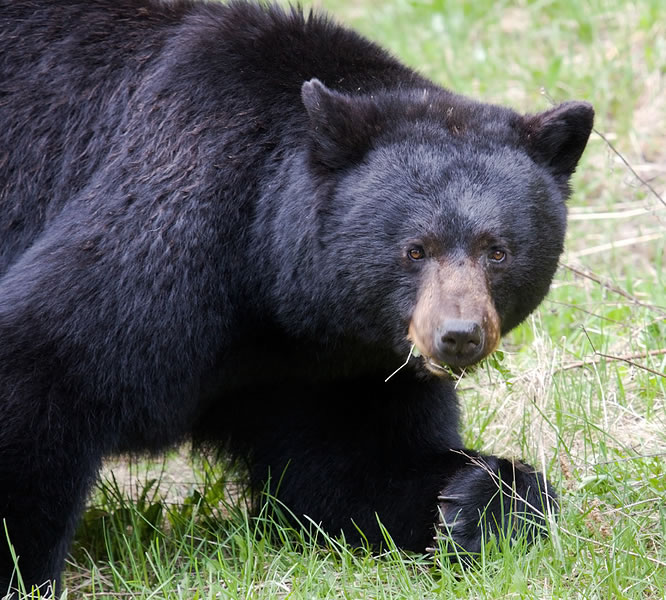
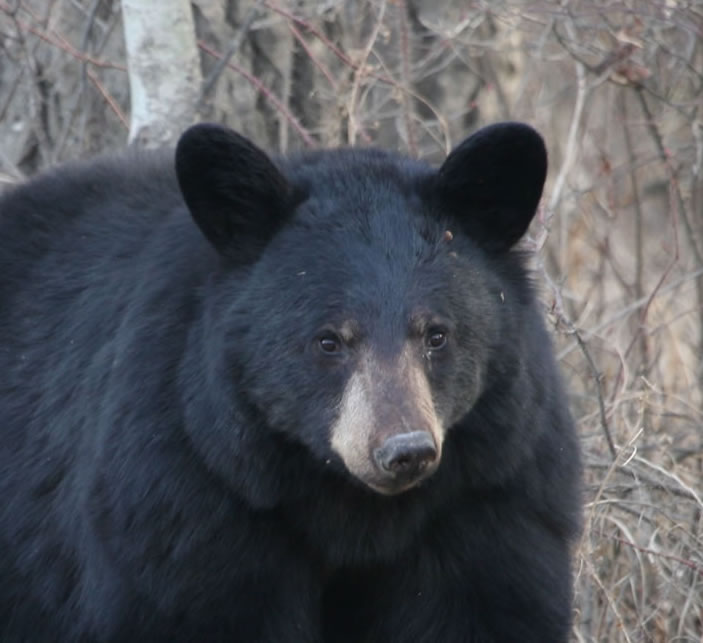
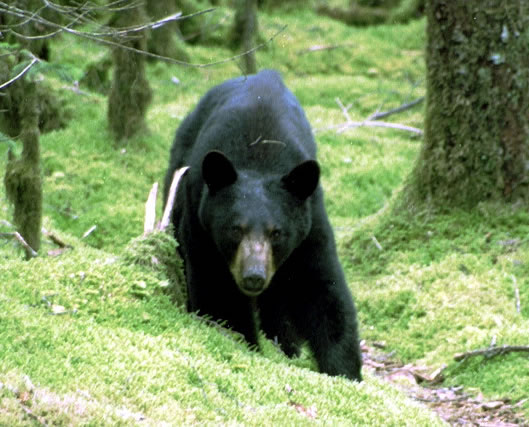
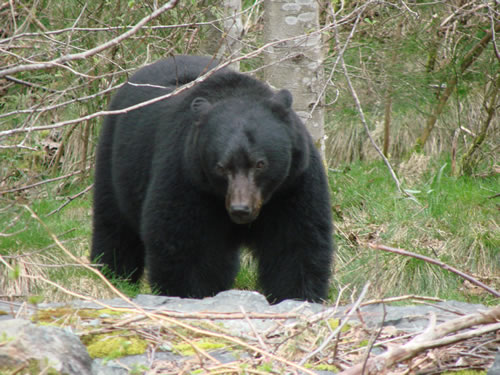
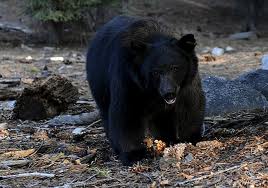
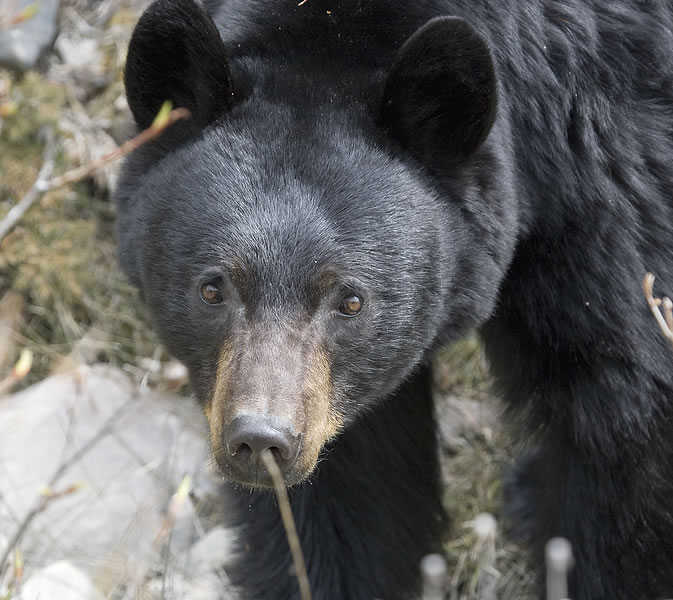
Big Bears:  Will have a very large, blocky looking head.  Their ears will look small, and almost off to the side of their skull a little.  On really big boars you might even see a crease down the center of their forehead, if that’s the case, it’s a good bear.  Other features to look for on a bears head would be scarring around the face, boars have ferocious fights, so it’s not uncommon for them to have plenty of battle scars around their muzzle, eyes and ears and these are helpful clues.

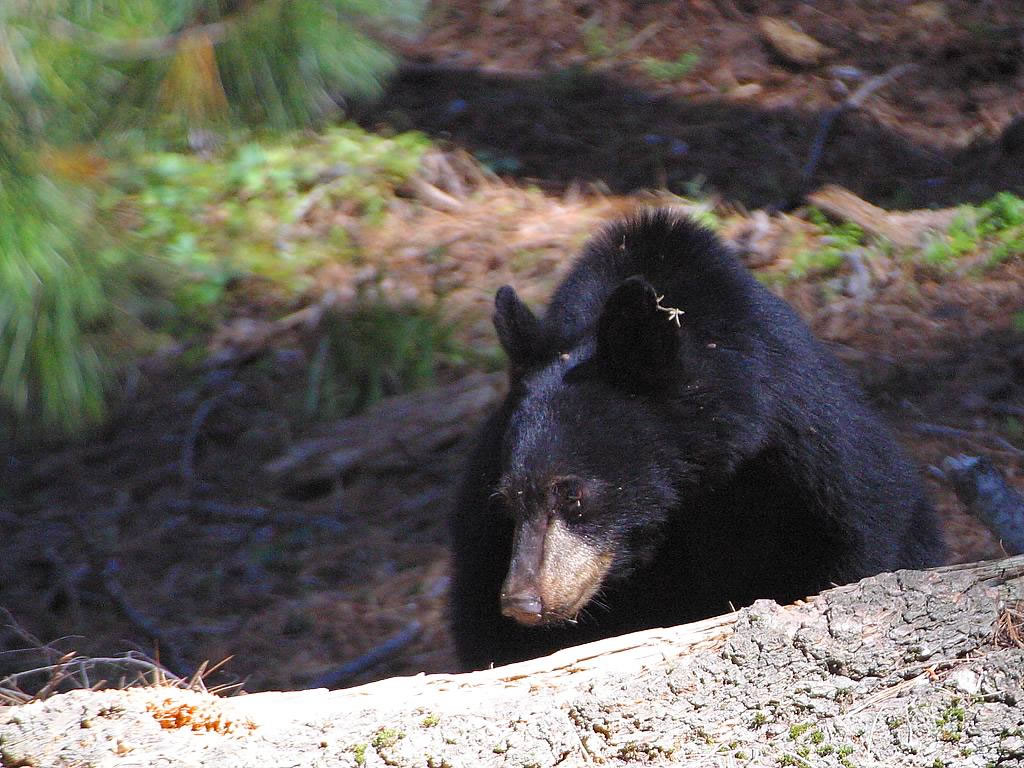
Small Bears:  Will have a small, narrow head, almost dog like.  Their ears will appear to be much larger and defined.  Almost like “Mickey Mouse” is a common description among many experienced bear hunters.

Check Out The Bears Behavior:

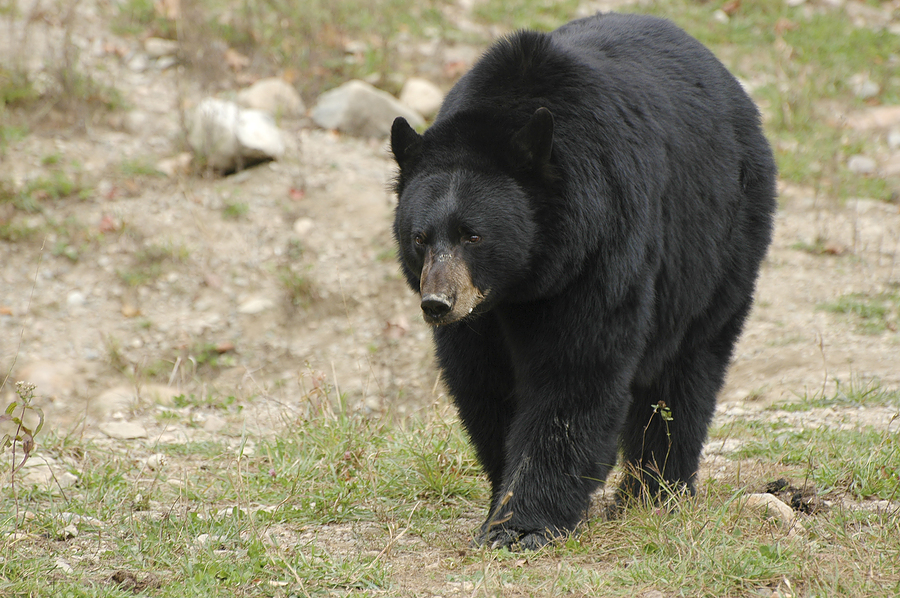
Big Bears:  Big dominant boars, behave like big dominant boars.  And they usually won’t be in much of a hurry unless they know you’re there and you’ve spooked him.  When big boars walk they will sometimes have a big swagger to their stride, much more so then a bear who’s on the submissive end of the spectrum.  When I shot my first Island Black Bear we watched him stand up on two legs and scratch his back on a tree for a couple minutes, without a care in the world.  When big boars decide to move they move deliberately, there is no indecision in their movements which can be noticed in younger, startled and confused bears.  Because they are dominant, the big boars will usually have a bit of a schedule and will often be caught feeding in the same places, at the same times of day.  They can do this because they are the boss!

Small Bears:  Are very cautious, they will get out of  your way quickly (so will a big old boar too if he’s spooked).  They will usually always be more alert then a dominant bear because they have to be, or they could become dinner.  Smaller bears will often seek the safety of a tree when in trouble or they just won’t stop running until they hit the coast.  When small bears run, they will appear much more agile then a larger bear.  They will will look more like a big dog running, then a lumbering old boar.

*Tip – When you’re observing a bear, and he/she doesn’t appear to be spooked, sit there and watch them for 1/2 hour or so.  Bears are pretty fascinating creatures when you watch them do their thing, and by observing you’ll learn more about them and that makes the hunt more fun.

Check Out The Bears Body:

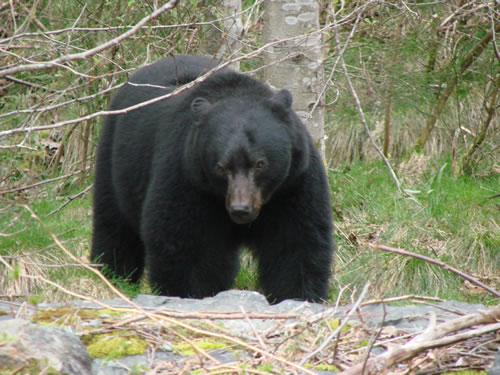
Big Bears:  Sometimes the big boys are called “belly draggers” for a reason, and it’s possible for our bears to get this big.  Big Boars may appear to be so big, you can’t see underneath their body when they are moving around.  That’s a big bear!  If the bear you’re looking at appears to have long legs, it’s probably because he has a smaller body in proportion.  Big bears will have very muscular looking arms and legs, especially their front shoulders/neck area.

Small Bears:  Can you picture the size of a really large breed dog? OK.  That’s about the size of an “average” Island Black Bear.  An average Island Bear will weigh 150-250lbs.  An large 6′+ boar could likely weigh 300+ and the big bears do look much different as you can see in the photos.

What Are Some Additional Signs Of A Big Bear?

If it’s a big bear you’re after then you need to pay attention to the sign you see around you.  Tracks and Scat are very good indicators as to the potential size of a bear, and will let you know if a particular bear is frequenting an area.

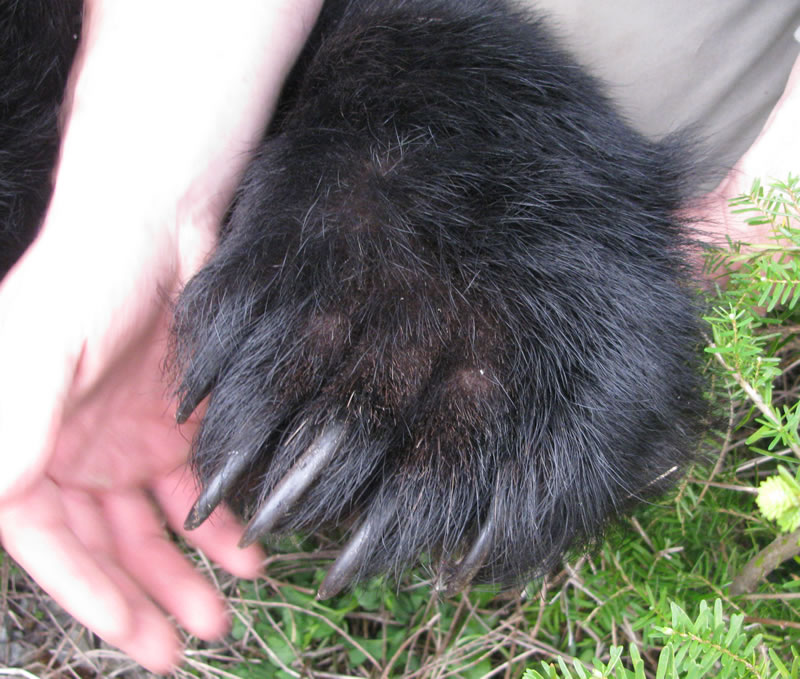
Judging Bear Size From Tracks:

This method was shown to me by my Father who was a big game guide for nearly 30 years.  It has since been shown to me by several taxidermists and many more experienced bear hunters than I so I believe in this method.

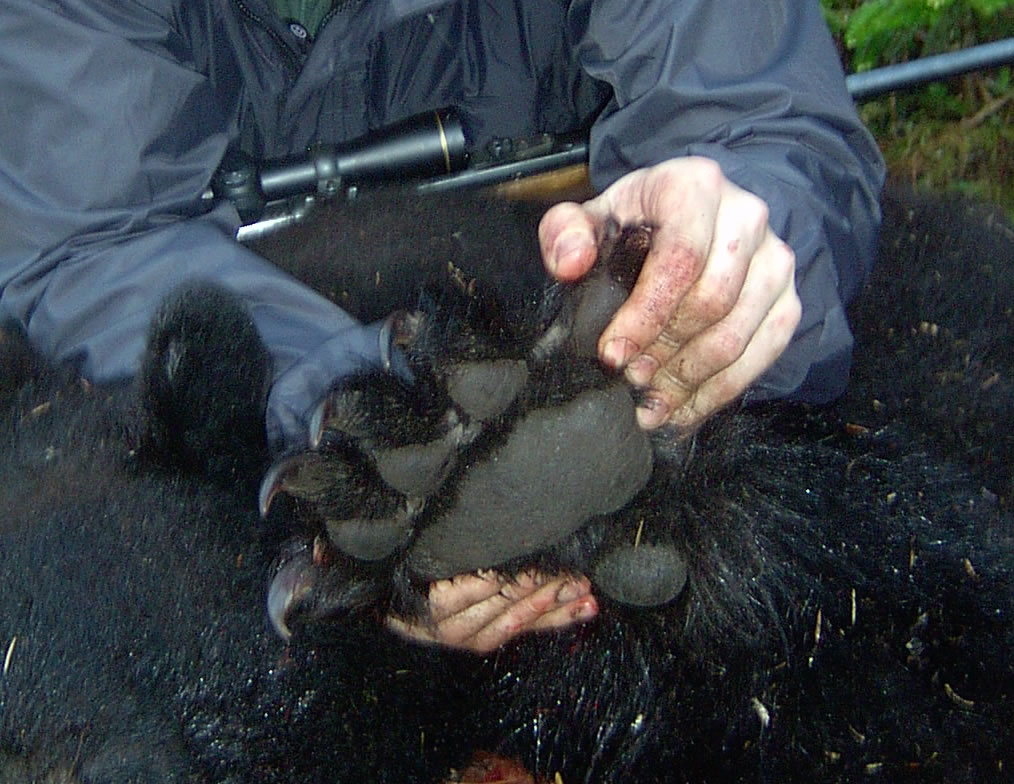
If you can find fresh bear tracks in an area, maybe mud or soft sand (common where we hunt spring bear on the Island) measure the distance across the front pad and simply add 1.  This will give you a rough “square” of the bear.   So if you measure the bear track and it came out at 5″inches across, you would add 1 and could guesstimate that bear was roughly a 6′ foot bear.

I have tried this method on many of our harvested black bears and I have to say it’s pretty damn close!  The only problem with this method is you need to find the bear that left the track!

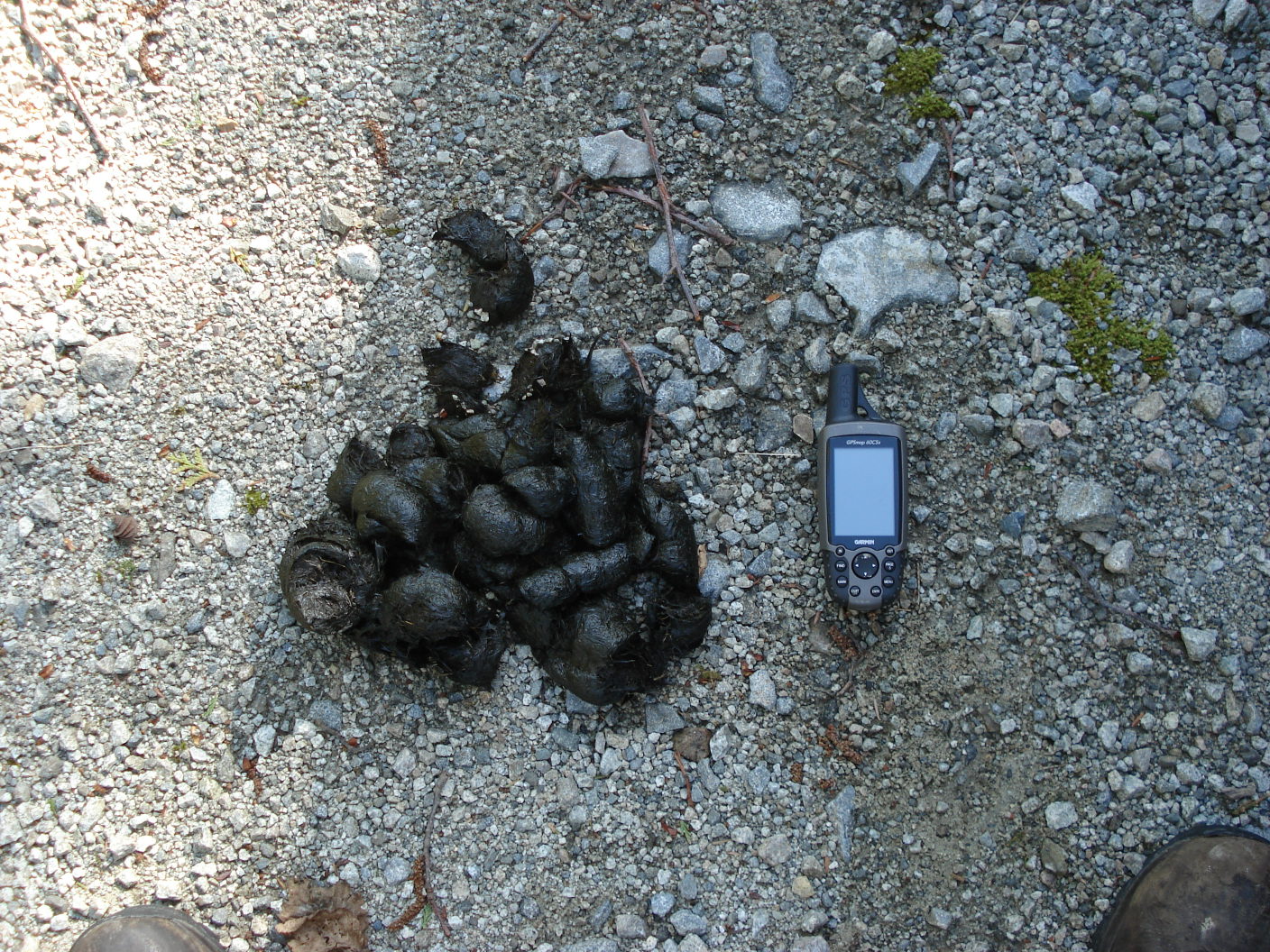
Judging Bear Size From Scat:

Spend a couple days bear hunting and you’ll observe several dozen or so piles of bear scat scattered across the road.  Not only can they help you see what the bears are eating but they can give you a pretty good indicator as to the size of the bear that left it.  Here’s a tip for you.  It’s not necessarily the size of the pile… It’s the diameter of the nuggets!  A really BIG bear has a really big butt and it’s not uncommon for them to leave scat the diameter of a beer can behind!  If you look at 10 piles of bear scat and then come across the one left by the big kahuna trust me… You’ll Know!

If you discover an area that has BIG tracks and some BIG (large diameter) scat, then it might be worth hunting that area a little harder.  Big Island Black Bears don’t have enormous ranges and unless you’ve spooked them heavily they will keep coming back to the same places to feed.

Hopefully you found article helpful and through experience you’ll become a much better bear hunter.  Because of their abundance it’s pretty easy to rack up experience if you’ve got the time to put a couple weekends in every year and then the patience to watch and observe what goes on around you.  Pay attention to the sign, and have a good time out there!

WEBSITE    RATES     FISH    HUNT    CABINS    PHOTOS
TESTIMONIALS    BROCHURE    HUNT BOOKLET

Enter your email address to subscribe to this blog and receive notifications of new posts by email.

← Back

Thank you for your response. ✨

Email Me....


Tags: , , , ,

Blueberries – a Critical Food for Black Bear

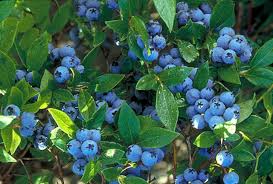
imagesB4EBB1P8 Blueberries are an important food source throughout the black bear range.  The most commonly eaten berries in our area of northwestern Ontario are blueberries and raspberries.   Many other berries are eaten, but they have shorter seasons, are scarce, or are less preferred.

The period when blueberries  are abundant in our area is short & mainly in August-making that period critically important in the black bear’s annual cycle of events.  Efficient feeding during that time is critically important to winter survival, growth, and reproductive success.  Researchers found that bears in NW Ontario end mating activities before the critical feeding period and focus on feeding for the remainder of the summer.

Black bears are efficient berry-eaters, consuming up to 30,000 berries a day in a good year.  They gather berries quickly, using their sensitive, mobile lips and swallowing them whole.  The berries enter a two-part stomach, which grinds the pulp off the seeds.


imagesP1Y6BVCSThe seeds pass through the digestive tract unbroken and able to germinate, making black bears important seed dispersers.  Each summer, they spread the seeds of their favorite berries all over their home ranges.

Black Bear around Wawang Lake gain weight most rapidly during July and August when berries are abundant.  When the berries run out in September, there is little else to eat.  The bear usually seek out their dens in September or October.   The longer period of food abundance enables bears to achieve more growth and reach maturity more quickly than bear.  Bear in NW Ontario typically produce their first litters at 4 to 5 years of age.

Berries contain anti-oxidants, and the seeds of some species contain vitamin B-17, considered an anti-cancer compound by some scientists.  Although cancer occurs in captive bear, it has never been reported in wild bear.

RECIPES

blueberry pancakes wawang lake

Blueberry Pancakes


GLUTEN FREE BLUEBERRY PIE

Gluten FREE Blueberry Pie


Follow our FISHING BLOG

WEBSITE    RATES     FISH    HUNT    CABINS    PHOTOS
TESTIMONIALS    BROCHURE    HUNT BOOKLET

Enter your email address to subscribe to this blog and receive notifications of new posts by email.

← Back

Thank you for your response. ✨

Email Me....


Tags: , , , , , , , ,

Stalking Black Bear

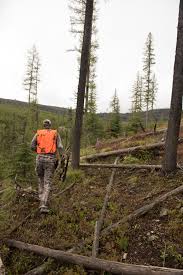
imagesPQEZ37S9If you’re determined to fill your tag and you’re up for a truly heart-pounding hunt, try one of these two killer ground setups. There are times when you have to get on the ground to arrow a big bear. Either the best ambush point offers no suitable place to hang a tree stand or the biggest bear is wise to the stand you’ve already hung. In both cases, the solution is to get on the bear’s level (at your own risk, of course). If you’re determined to fill your tag and you’re up for a truly heart-pounding hunt, try one of these two killer ground setups.

1) Smoke Him Out As the days begin to shorten in autumn, bears enter a stage called hyper­phagia in which they gorge themselves in advance of hibernation, often feeding all day long, putting on 2 or 3 pounds a day. Any major feeding area, therefore, is a great place to find bears now. Trouble is, many of their favorite spots, including clear-cuts, apple orchards, blueberry bogs, and raspberry and blackberry thickets, lack suitable stand trees. To take a bear in a place like this, the first thing you need to do is scout the area for scat, tracks, and traces of fur to tell you where the bruin is doing most of its feeding. Once you figure that out, pick an open area where you can get a shot, move crosswind about 20 paces, and make a natural blind. Try to choose a spot that already has good cover, such as a blow down, stump, or thicket, as bears are acutely aware of changes in their feeding areas. imagesAI2YGGR2Walk back out to the opening you chose earlier and fire up a couple of scent sticks, which are legal in many areas that don’t allow bait (be sure to check local regulations). Now just sneak back into your hideout and wait for a hungry bear to show up. Theoretically, the approaching bruin’s attention will be locked on the sweet-smelling smoke—not on you quivering in the shadows—and you’ll be able to keep it together long enough to take the shot.

2) Back Off the Bait The majority of black bear bait sites feature a permanent (or at least long-term) tree stand that is situated downwind and overlooking the goodies. The biggest bears, however, often know not only where that tree stand is, but whether or not a hunter is in it. Circling downwind of the stand to check with his nose and often his eyes, a big boar will not hit the bait until he’s absolutely certain the perch is unoccupied. And that means, if you’re willing to go to the ground, you can use the stand as a decoy.

First look for the faint trail that curves through the undergrowth downwind of the treestand; this usually lies just within sight of the bait barrel. Broken plant stems, paw impressions in the moss, and freshly snapped branches should be all the evidence you need, but you may also see obvious tracks or scat. Once you’ve determined the bear’s route, look for a natural hideaway downwind of it and get comfortable. I should probably warn you: You may be afraid as that big boar pads in to investigate, but wait for him to walk past you, and then take the quartering-away shot.

Follow our FISHING BLOG

WEBSITE    RATES     FISH    HUNT    CABINS    PHOTOS
TESTIMONIALS    BROCHURE    HUNT BOOKLET

Enter your email address to subscribe to this blog and receive notifications of new posts by email.

← Back

Thank you for your response. ✨

Email Me....


Tags: , , , , , ,

How to Size a Black Bear

……… WHEN SIZING UP A BEAR

WawangLakeBear
A big bear swaggers and walks with attitude. He doesn’t jump at every sound like a small bear will.  A big bear doesn’t have to; he believes he’s got nothing to fear. Once you’ve spotted your bear on the bait site, it’s time to get serious about analyzing how that bear is behaving.

It is important to note that long before you judge the size of the bear, you must judge the sex of that bear and here are some things to take into consideration:

A big, old sow will have all, or more correctly, almost all of the physical characteristics of a big, old boar. She’ll have the nasty looking face that’s seen one too many years in the ring, the potbelly and the sway back.

Watch to see if the bear stands on his hind legs and rubs his back on a tree, that’s a boar.  If it walks along and straddles small trees, wiping its scent on that tree, it’s a boar.  If it stands up and breaks saplings over its shoulder, it’s a boar.  If it encounters another bear and gives chase, it’s a boar and if it is following a smaller bear, it’s a boar.

SCALE:  There is one last general appearance tip to judging black bear that makes the top three in importance, and that is scale.   A big bear looks big . . . but so does a closer, smaller bear.   Here’s a help tip on how to gauge more accurately.  If the bear is 150 yards away but the hunter thinks the bear is 200 yards away, the hunter will overestimate the bear’s relative size by somewhere near 25 percent.   In other words, the hunter is in for a serious case of ground shrink when he walks up to his bear.  TIP:  Let the bear get as close to you as possible and preferably on the bait itself.   The closer the bear, the less chance there is of misjudging the distance to relative size.

SPECIFIC TIPS FOR JUDGING BLACK BEARS: If the bear fails any one of the above general conditions, then it’s advisable to pass up on it or let the bear walk. It’s tough and you could be wrong, but at least there isn’t a dead small bear lying on the ground.   Call it a personal aversion to guilt.

BODY SHAPE:    Bigger bear are older bears, and like most of us, they don’t have the svelte bodies they once did. They tend to look “heavy” and out of shape. Remember, they monopolize the best feed and habitat, and therefore exert less energy to live.

HEAD SHAPE:   A big bear (boar) will have a deeper, wider and longer snout than a smaller bear or a female. His ears will appear to be wide apart and small. If he is aware of you and looking your way, his ears won’t stand up on top of his head like a dog’s ears, they’ll seem to be aimed out to the side of his head. A big bear will have well developed “bulging” muscles on the top of his head.


WawangBear2

LEGS:   A big bear will have massively developed front shoulders. His shoulders will look big and burly. A sow’s wrist will pinch in directly above the foot. Not so with a boar. The lower forearm, wrist and the foot on a big boar are all the same width. A big bear often appears to have shorter legs because the body is so much thicker, but keep in mind that the best-scoring bears for the records book are often the lankier looking, longer-bodied bears.

There are bear that have meatier heads; bear that look great and are great trophies, but that don’t score well.  There are others that have short skulls, block- headed beasts that look impressive, but that don’t score well at all and there are lanky, skinny bears with donkey faces that score like the devil, but that a hunter seriously looking for  a  records book bear wouldn’t walk across the street for. Black bear morphology is just too darn diversified to make a science out of judging.

The best way to hunt for a record boar is to simply shoot the bear that looks good to you and that hopefully  you’ll  appreciate all the time and effort you put in for the hunt.  If it’s got a nice hide, be happy with your animal. If it has long claws and weighs a ton, good for you and congratulations. If it isn’t as big as  you’d like, don’t fret, you’re not alone and the rug on your wall will still look great. If it happens to be one of those rare few bears that has grown a skull that qualifies for the record books, thank your guide for the good fortune that made that bear come to the bait site.

To easily judge, remember:

  • Check out the ear size in relation to the head
  • Mickey Mouse ears means a small bear.
  • Watch to see if the belly is low to the ground
  • Legs that appear short means big bear.

Watch the bear’s behavior around the bait – small bears will be skittish and afraid of a larger bruin in the area.

Look for a log around the bait and use it as a reference, check to see the length and height of the log before climbing into your stand. When the bear enters the bait site use the size of the log to help determine the overall size of the bear.


SKULL MEASURING


WawangSkull

Hope this information helps develop your judging skill on your next hunt, and,  good luck out in the field.

For further information, or, to book your next bear hunt please contact us at:
1-888-534-9217 or EMAIL

 WEBSITE    RATES     FISH    HUNT    CABINS    PHOTOS
TESTIMONIALS    BROCHURE    HUNT BOOKLET

Enter your email address to subscribe to this blog and receive notifications of new posts by email.

← Back

Thank you for your response. ✨

Email Me....


Tags: , , , , , , ,

The Fascinating Cycles of Bear Hibernation

It’s that time, the bears are getting ready to den up for the winter.  While known, bear hibernation is not fully understood by many.  Hibernation preparation begins immediately when they awake in the spring.  There are five distinctive steps to this

During hibernation, the bear go through five different stages.

First Stage

The spring until midsummer or fall is the time when the bear are in their normal activity. If food and water are available, the bear will consume about 5,000 to 8,000 calories each day. If they are unable to consumer enough food and water during this time, they will be unable to successfully hibernate in the winter.imagesCA0ZA802

Second Stage

This stage is known as hyperphagia. During this stage, bear eat and drink excessively as they build up fat stores for hibernation. When food and water are plentiful, black bear have been know to eat as many as 15,000 to 20,000 calories a day. The need large amounts of water to process the food and flush nitrogenous waste from their bodies.

Third Stage

After they go through hyperphagia, it is time for their fall transition. During this time, their metabolic processes change as they prepare to hibernate. Their heart rate slows from the normal 80-100 beats per minute to about 50-60 beats per minute. During sleep, their rate is about 22 beats per minute. The normal beats of a sleeping bear are between 66-80 per minute. The bear continue to drink, but will start to eat less. As they prepare to hibernate, they can rest as much as 22 hours a day.


Fourth Stage

Hibernation begins. The bears’ breathing slows to about half of their normal rate. They take a breath only once every 45 seconds. Their heart rates slows even more. It can drop periodically to between eight and 21 beats per minute. They burn about 4,000 calories per day. They do not eat, drink, urinate or defecate during hibernation.


Fifth Stage

This stage is known as walking hibernation. During the first two to three weeks after the bear leave their hibernation den, their metabolic processes return to normal levels. During this time, they will continue to eat and drink less than they do in the summer months. Their bodily waste processes are also reduced. Once this time is past, the bears resume their normal summer activity.

Bear that are in hibernation can be hard to wake if they are disturbed. The bear that are in warmer climates may not be in as deep hibernation as bear in colder areas. Female bear often give birth in the den during the winter months. The mother bear tend to be in a lighter state of hibernation as they awaken to care for their young.

Should you stumble upon a hibernating bear, the best thing to do is to quietly leave the area.


Follow our FISHING BLOG

WEB   RATES     FISH    HUNT    CABINS    PHOTOS
TESTIMONIALS    BROCHURE    HUNT BOOKLET

Enter your email address to subscribe to this blog and receive notifications of new posts by email.

← Back

Thank you for your response. ✨

Email Me....


Tags: , , , , , ,

Check Out Our NEW Hunt Booklet!

 Working hard to provide quality for each individual  hunter is how we operate our hunts
and is what keeps  our hunters coming back year after year.

Hunt Booklet

Follow our FISHING BLOG

WEB   RATES     FISH    HUNT    CABINS    PHOTOS
TESTIMONIALS    BROCHURE    HUNT BOOKLET

Enter your email address to subscribe to this blog and receive notifications of new posts by email.

← Back

Thank you for your response. ✨

Email Me....


Tags: , , , , ,

A big bear sighting!

Well sometimes you just have to let a bear bare all!

Follow our FISHING BLOG

WEB   RATES     FISH    HUNT    CABINS    PHOTOS
TESTIMONIALS    BROCHURE    HUNT BOOKLET

Enter your email address to subscribe to this blog and receive notifications of new posts by email.

← Back

Thank you for your response. ✨

Email Me....


Tags: , , , , ,

Rise and Shine!

So spring has sprung…summer is well on its way….and it is apparent with the awakening of the bears 🙂  They are slowly emerging and letting us know that we should stop worrying about the snow…it’s all gone now!!

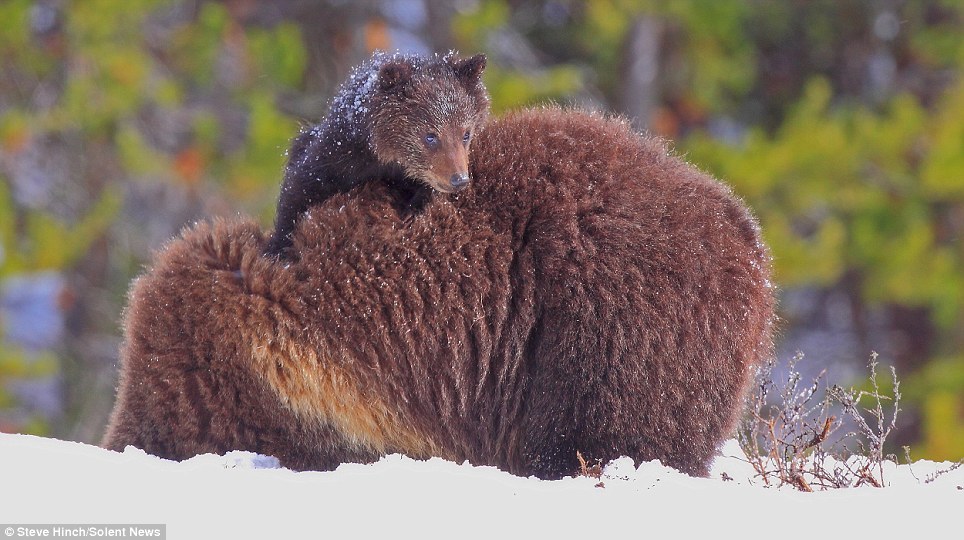
This is the first time that these babies have seen the snow……


No worries though, Momma is always nearby!

So for those that were worried that the snow would never leave, Mother Nature says just be patient…..it is just around the corner!

Follow our FISHING BLOG

WEB   RATES     FISH    HUNT    CABINS    PHOTOS
TESTIMONIALS    BROCHURE    HUNT BOOKLET

Enter your email address to subscribe to this blog and receive notifications of new posts by email.

← Back

Thank you for your response. ✨

Email Me....

 
Leave a comment

Posted by on June 27, 2015 in black bear, Wawang Lake Resort


Tags: , , , , ,

How to make bear tallow soap

 44 oz. bear tallow
20 oz. olive oil
20 oz. coconut oil
12 oz. lye crystals
32 oz. cold water

When making soap it helps to have everything laid out and organized.
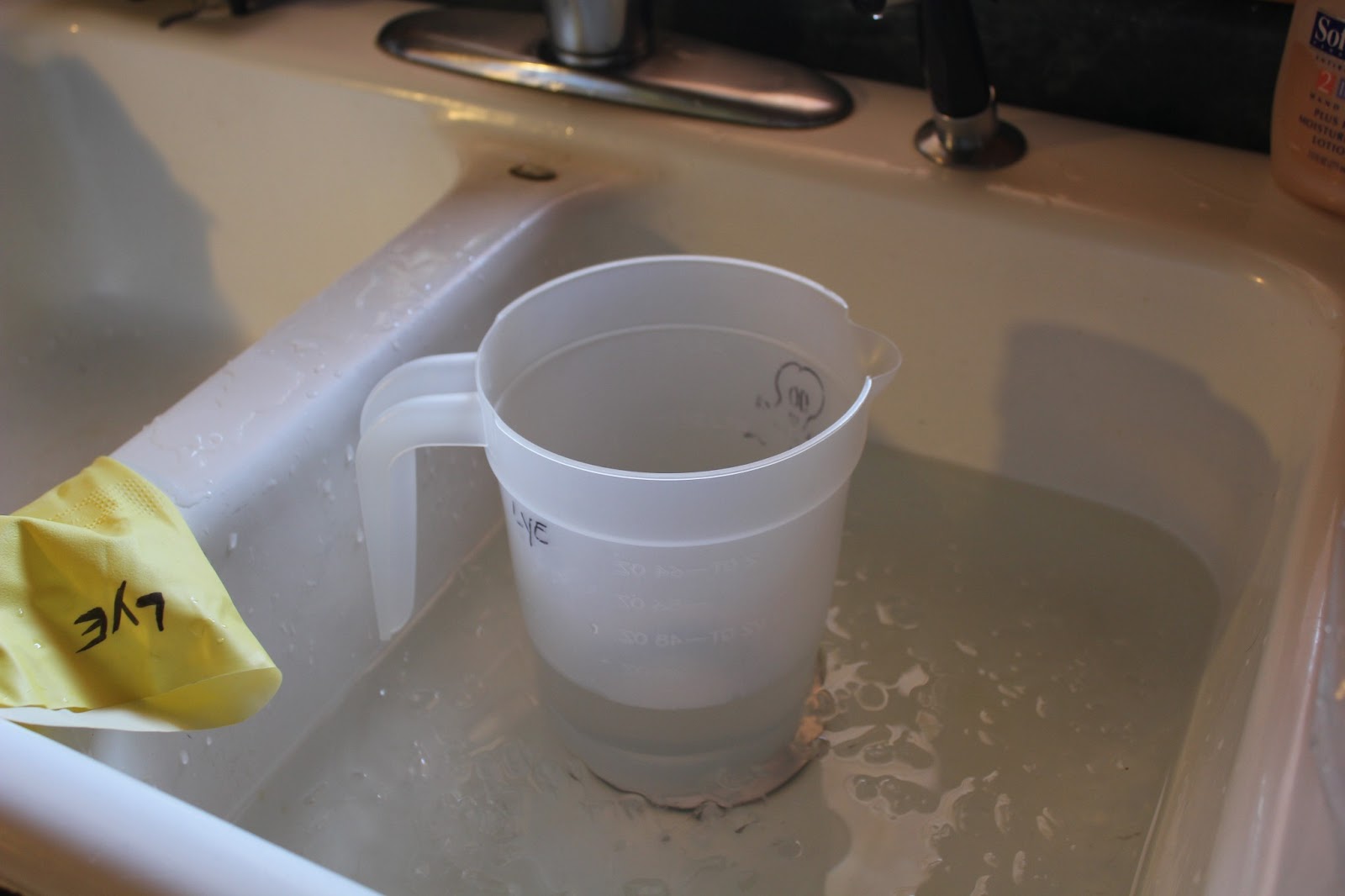
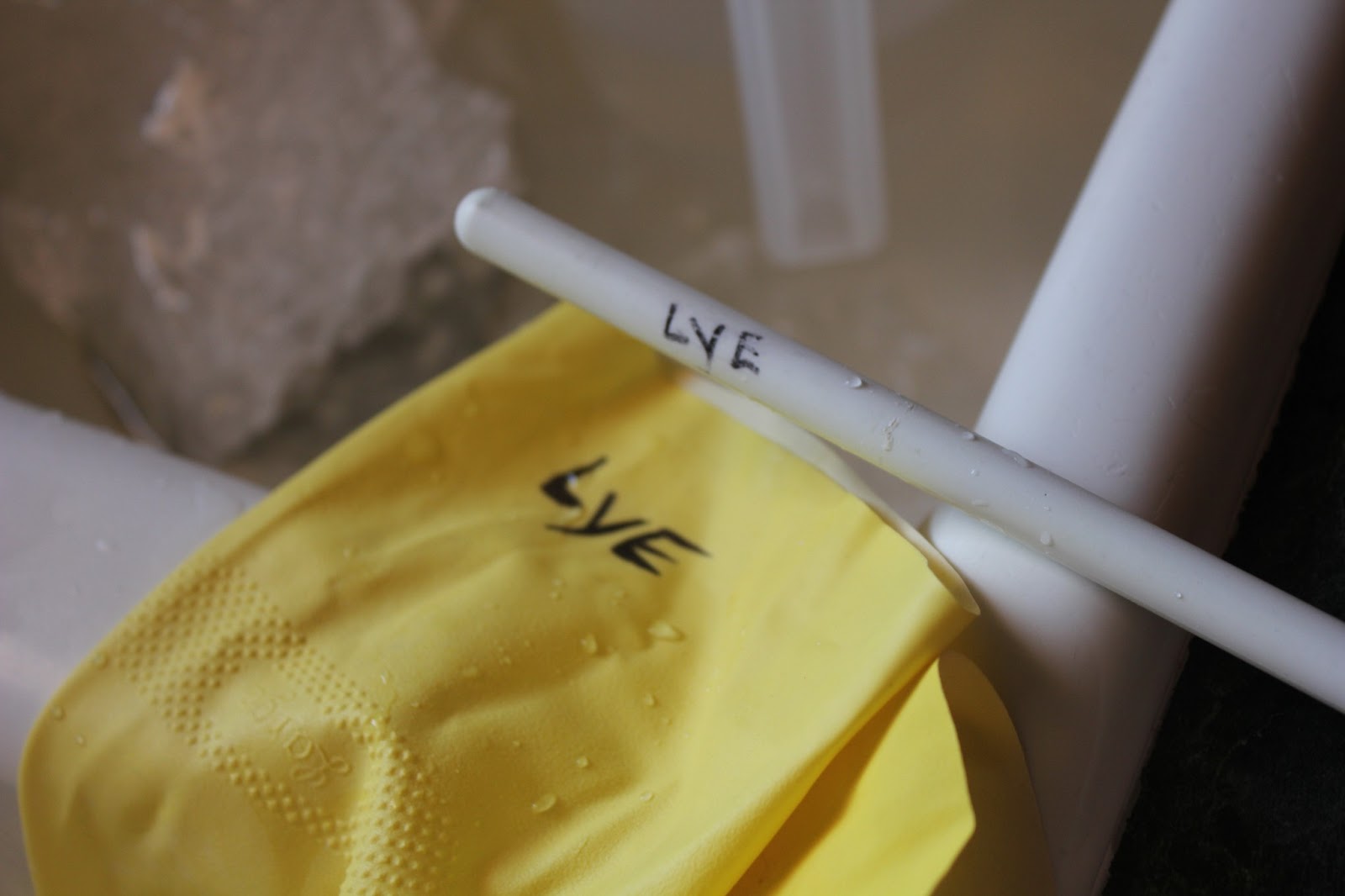
Here we have our lye, distilled water, equipment used only for lye which is labeled as such, and safety equipment.  While soap making is not hard you can never be TOO cautious with the lye.  Make sure you use gloves and safety glasses.  Wear shoes and long sleeves.
Lye is a base so if you do get some one your skin rinse off with vinegar(an acid).  Lye will also react with aluminum, cast iron, and steel.  For this reason we use some plastic, probably picked up at the dollar store.
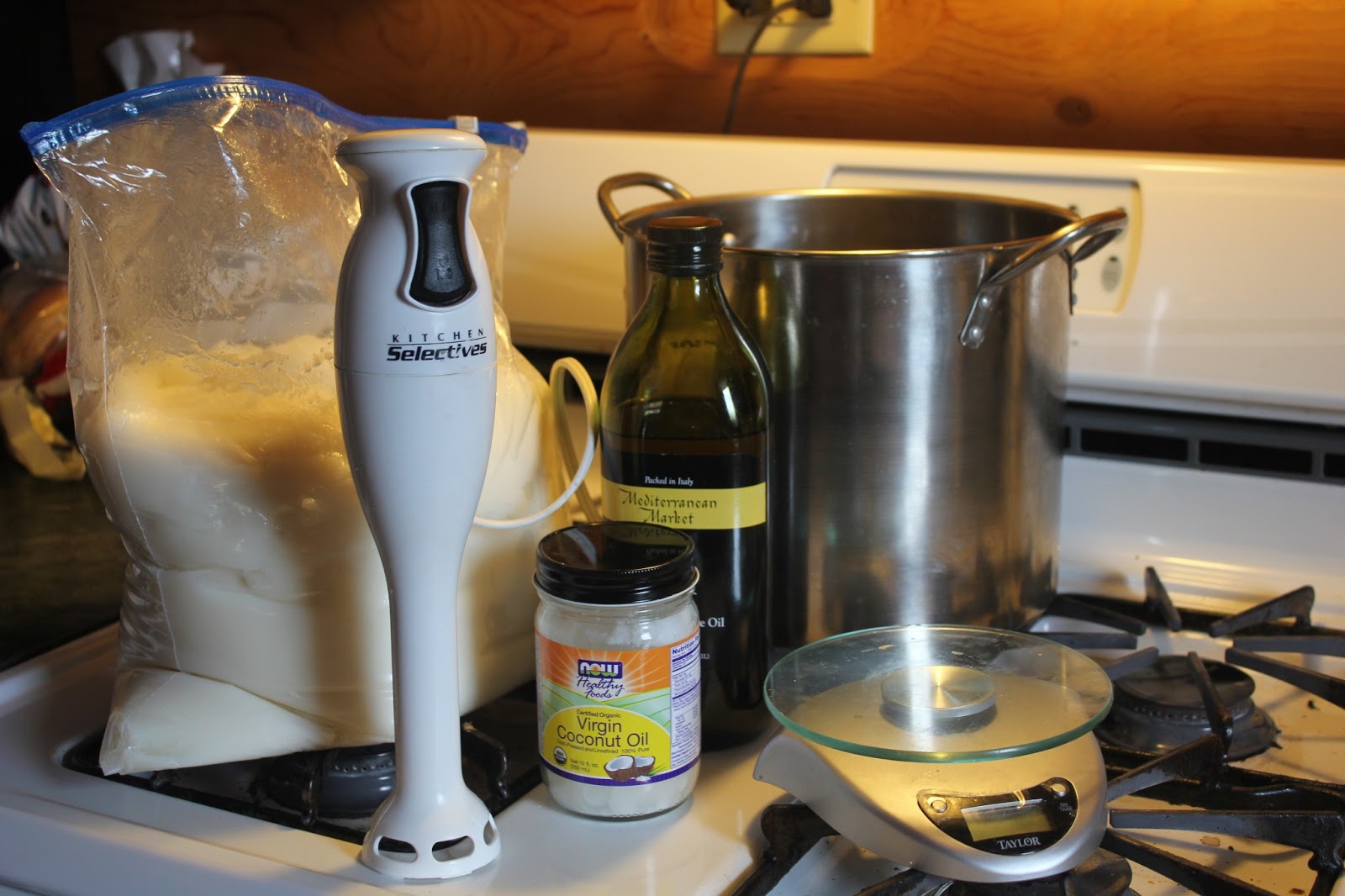
Here we have our oils all set up.  The zip lock bag is rendered bear tallow.  The pot and stick blender are only used for soap making.  You will also need thermometers for checking temps.  One for lye and one for oils. A scale is important for exact measurements.
If you are interested in making your own homemade soap, you are going to want equipment that will only be used for soap making.  Search your cupboards for bowls and pitchers you don’t use anymore.  Hit up some garage sales and thrift stores.  It doesn’t have to cost a fortune.
Like any hobby there is costs however this hobby will get you homemade soap that is better than any commercial bar out there!
Closer look at that bear fat : )
Measuring out your fats and oils.
Pour oils into stock pot and slowly heat up.  For this recipe since the tallow is hard as is the coconut oil we found in order to melt all the fats down the oil heated up way past what we needed it at.  We then had to let it cool down.  This process took the longest.  For future note we will get the oil melted down well before we start the lye water.
When the lye hits the water it heats up fast.  The goal is to get it to the temperature down to what your soap recipe says.  In our case between 110-115 degrees.  To help cool it down we will stick the pitcher of lye water into a ice bath.  Another option would be to measure out your water the day before and freeze it.
While I was setting other stuff up I had my pitcher of distilled water sitting in the ice bath already.
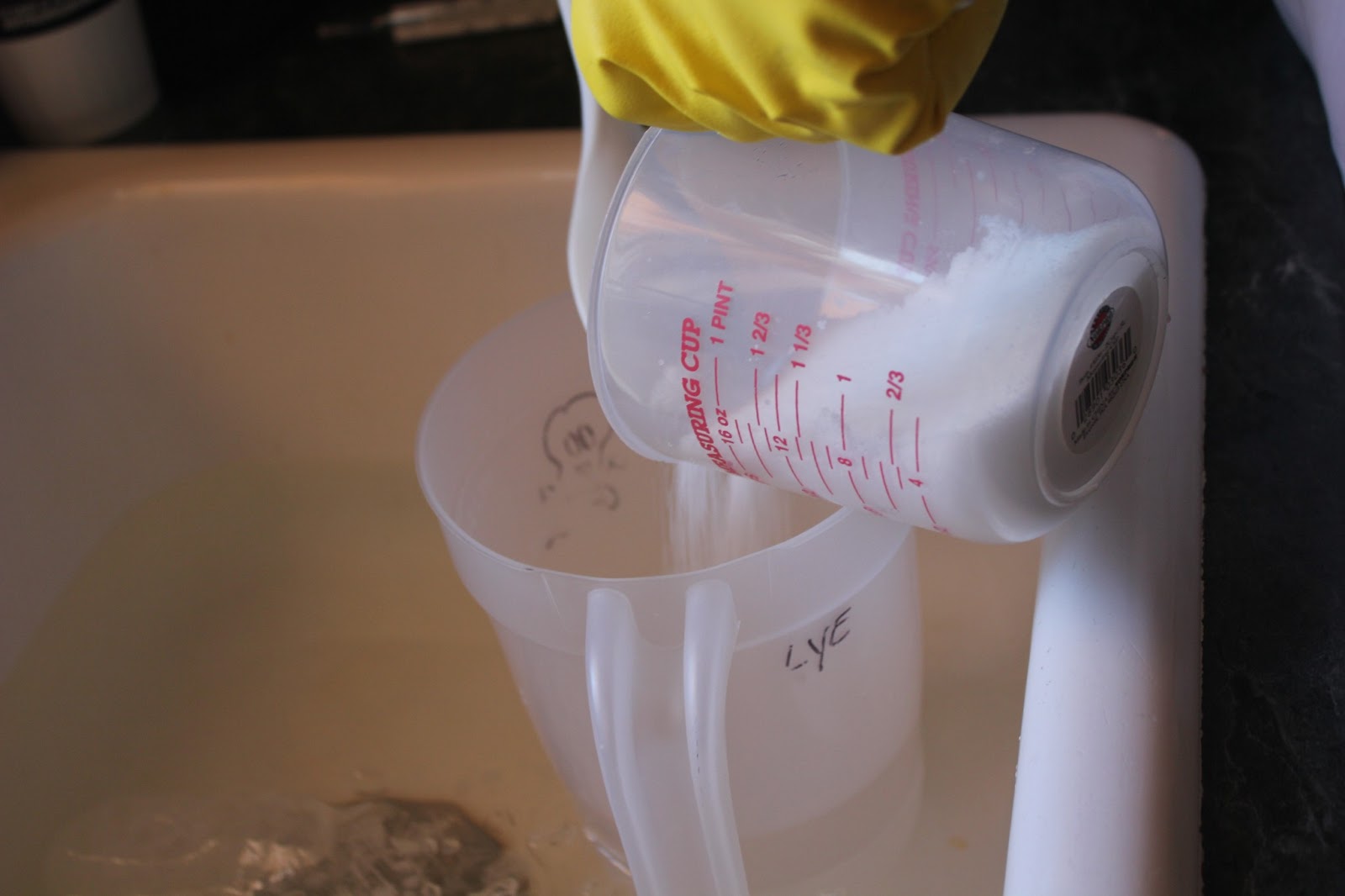
Measuring out the lye needed and where to find lye.  We have always had luck at Menards, and I haven’t tried anywhere else.  If you can’t find it ask, they don’t always keep it on the shelf and if they do they only keep one bottle on at a time.  Lye is often misused for horrible purposes.  Also, make sure it says 100% Lye.
Equipment just for lye.

Our oils are melting down so we will wait a bit to combine the lye and water.  You should have an idea if you are going to add other stuff to you soap.  It’s good to organize all that you need in exact measurements so they are ready.  You never know how fast things can move a long.  Better to have a little down time waiting on temps than being rushed and frazzled.  That’s when accidents happen.

You can add some extra fats after the soap traces for superfatting.  You can add fragrance or other additives for texture.

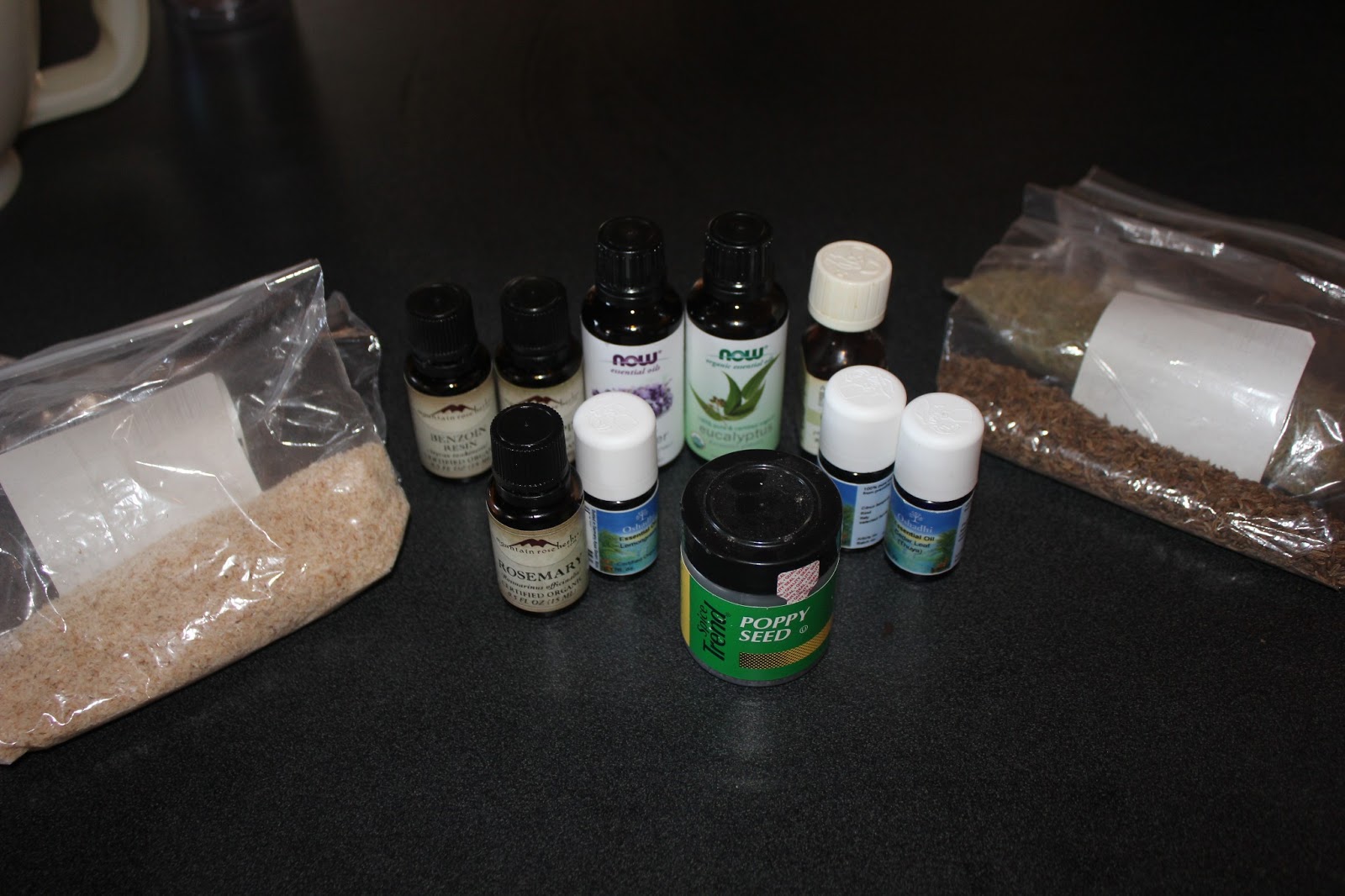
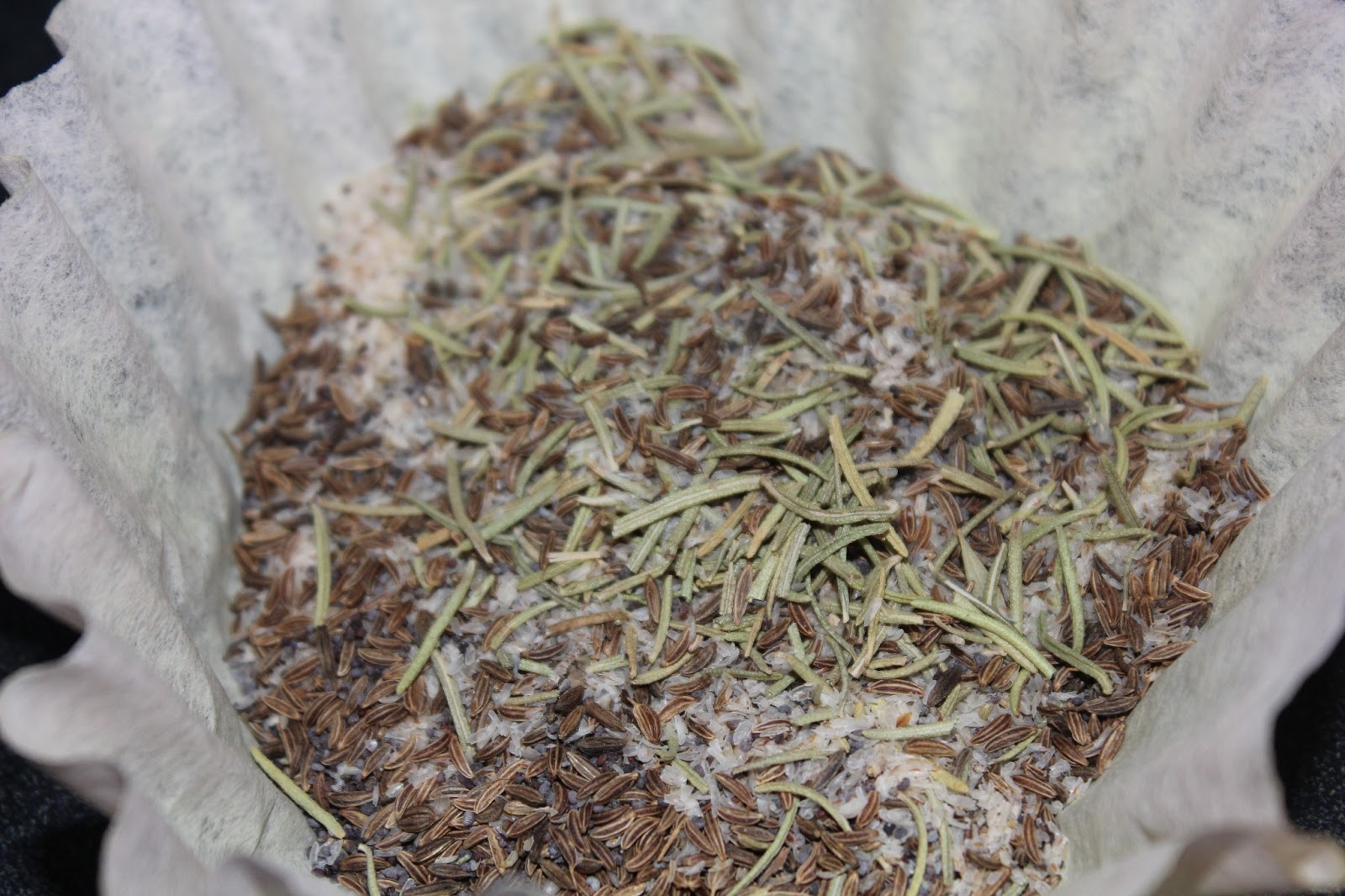
One of our batches is to be a “gardeners” soap.  We added rosemary and lemongrass essential oils for the scent.  For the exfoliant we added a mixture of poppy seeds, caraway seeds, dried rosemary, and psyllium seed husk whole.   If one was to recreate this they could just pick one.  We happen to have these four ingredients on hand so decided to do a mixture with all.
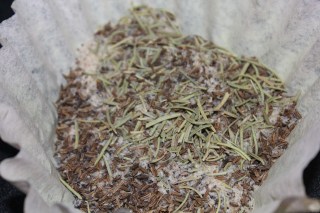
Exfoliant for our gardener’s soap.
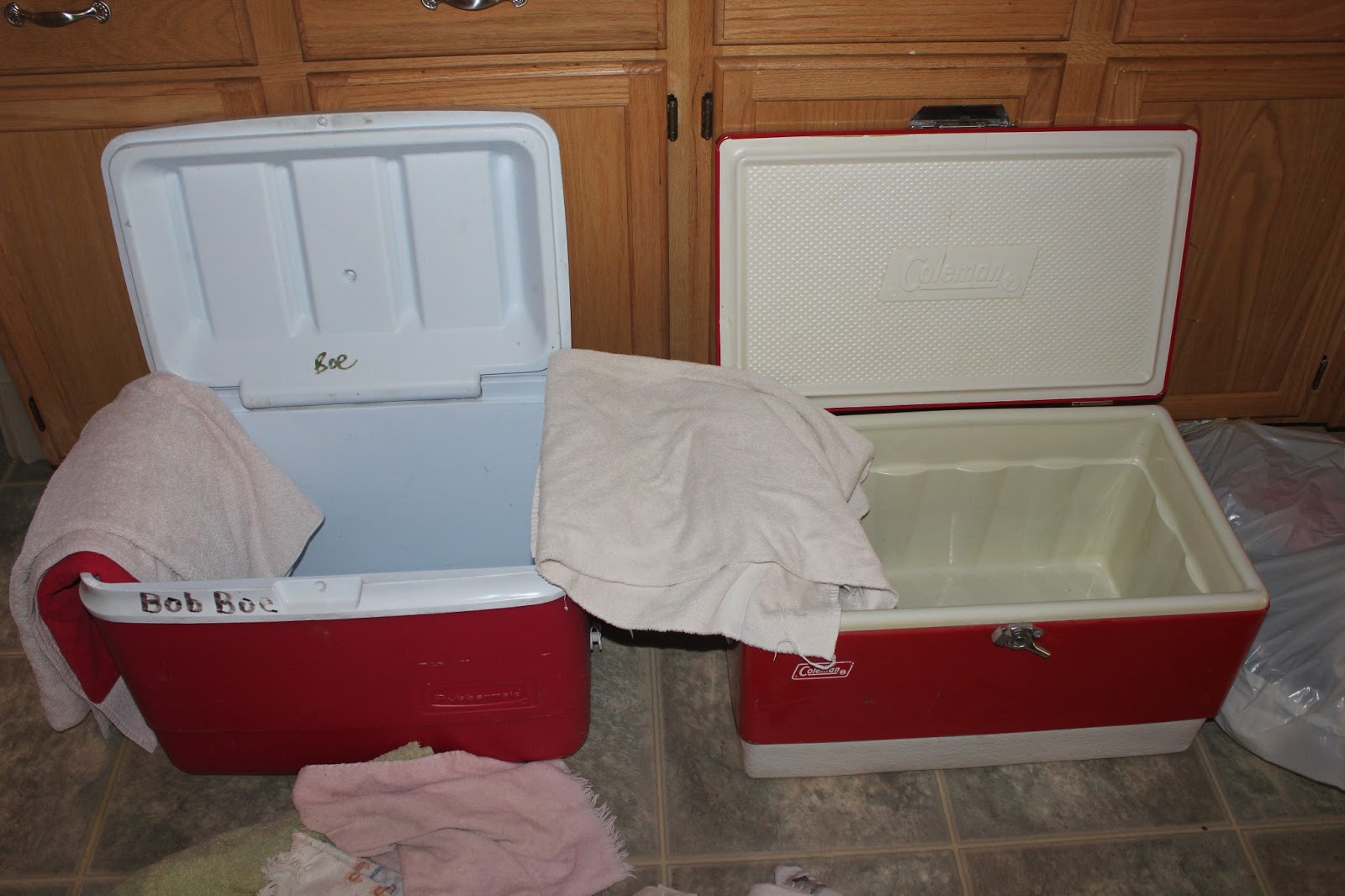
Another thing to ready before you get started is a place to keep the soap for the initial set up.  It is recommended that your soap should slowly cool down.  Most instructions will say to wrap your mold in towels.  We also place our molds in coolers.  Just helps insulate a little better and it’s safe from being bumped or knocked over.
You will need something to mold your soap in.
Miscellaneous containers we have found here and there is what we use for molds.  Soap is initially caustic so over time the soap you make will break down the molds.  Ours were cheap so we are ok with that.
I really love the silicone loaf pan.  It holds a little over 2 pounds of soap and the soap always comes out so easy.  If you are using old tupperware it helps to line with wax paper and grease it down a bit.
Back to the lye and oil.  The oil and fats have melted down and are now cooling so we now are going to mix the lye and water.  Always pour the lye INTO the water and slowly!
Make sure your gloves and safety glasses are on!
Stir it up and do not lean over it.  You could wear a mask during this step.  Make sure the area is well ventilated.  There will be harmful fumes.
Almost instantly the temperature gets to 150+ degrees.
Now we wait some more.  The oil is still cooling and now the lye needs to cool.  If your oil gets cooler before your lye just heat it up again.
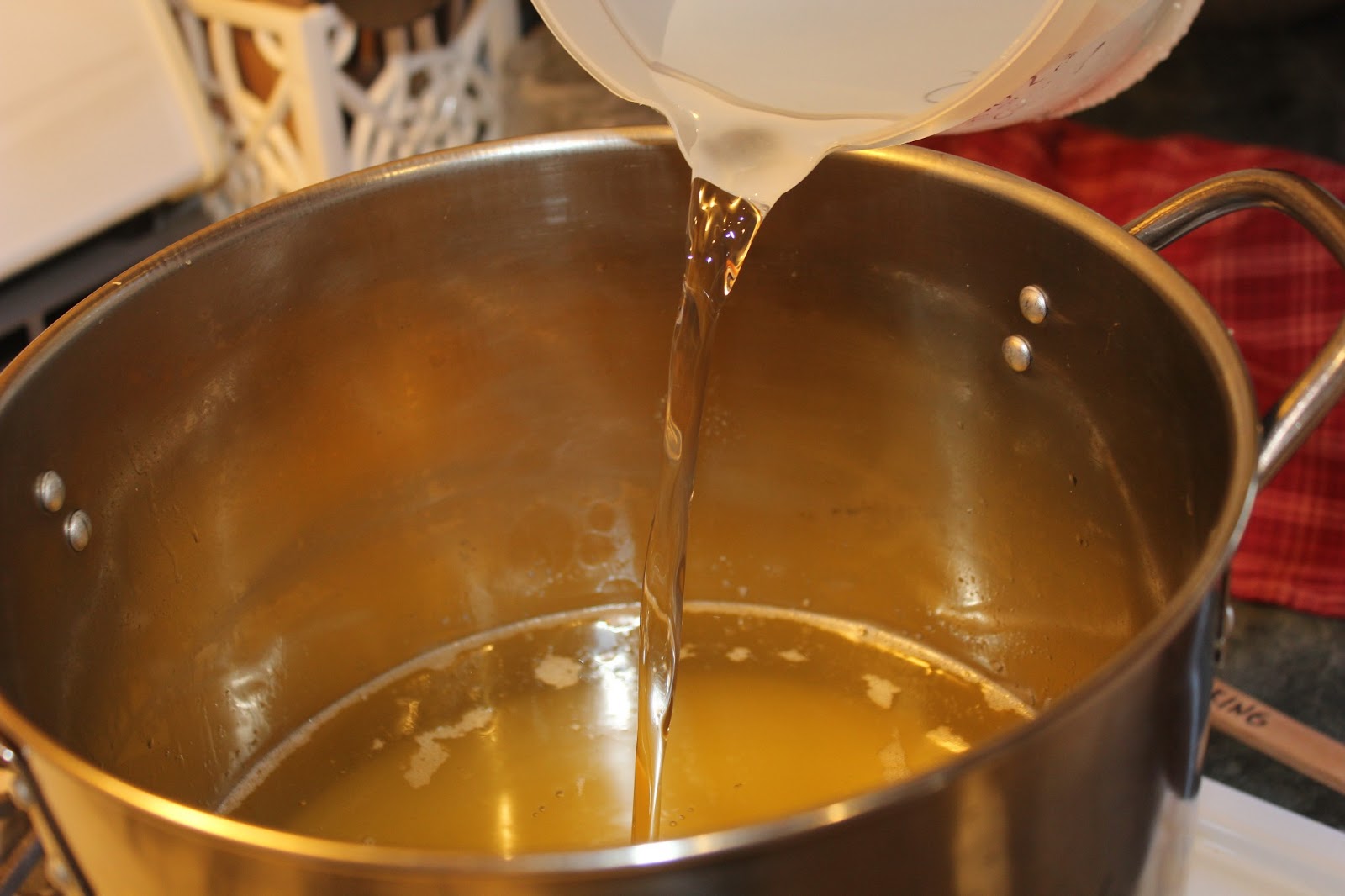
When both reach desired temps pour lye water INTO oils.  Always.
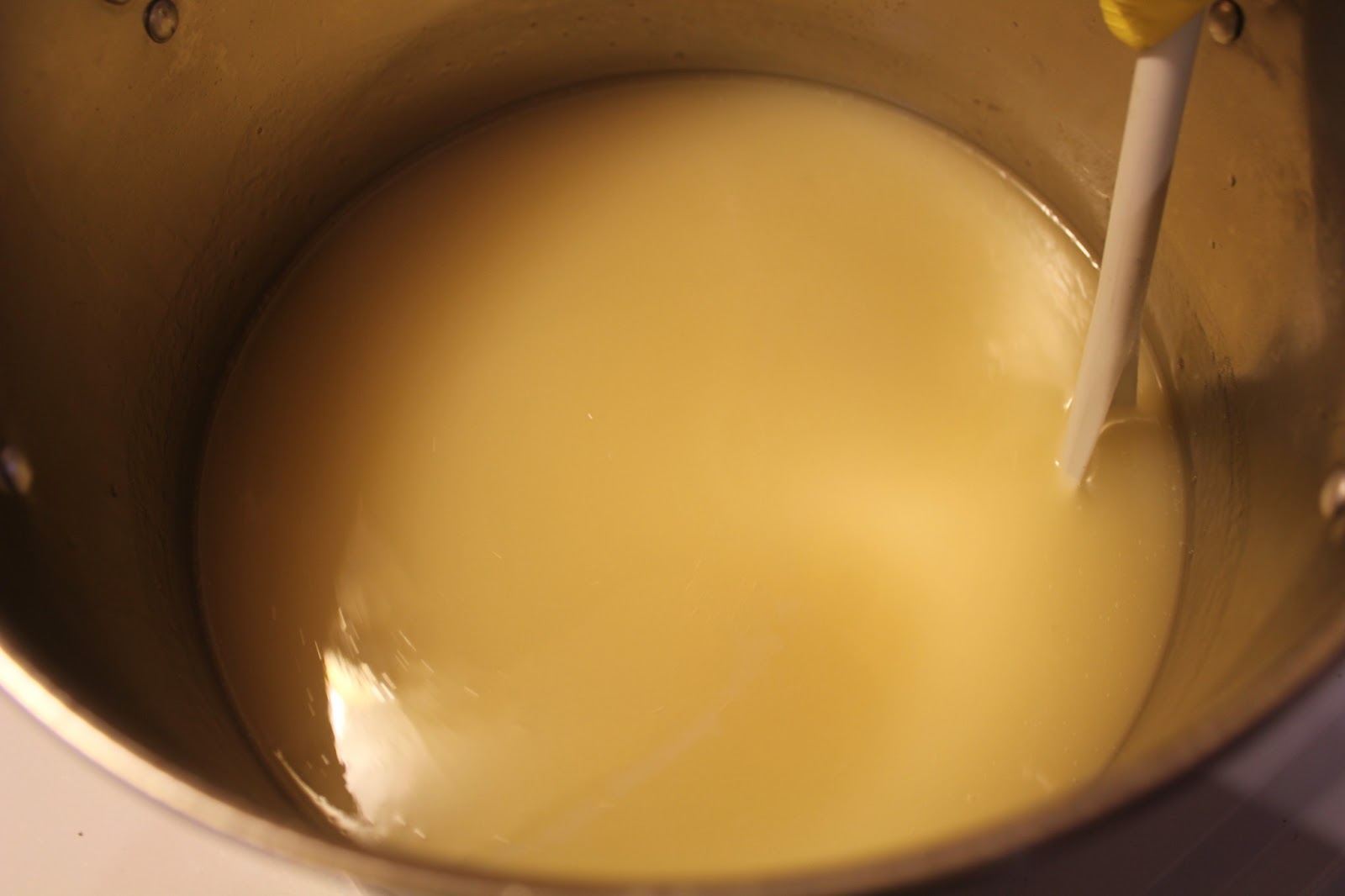
Very quickly the oils start to thicken.
The process of the lye and oils combining is called saponification.
Follow this link, they give a good description of saponification.
If you don’t have a stick blender you will need to stir by hand.  You will be stirring for a LONG time.  Time does vary based on the oils used, but it still takes a long time.  The stick blender is.a.LIFESAVER!
For this recipe I think we stirred with the stick blender for about 20 minutes.
You stir until the soap reaches trace.
Trace means the oils and lye have combined.
Now we have soap.  Add any other additives at this point.
What combination of fats and oils makes a good soap?
Here just a couple links I found that explain the different characteristics commons fats and oils used in soap making.
.
 
In a nutshell soap making directions.
  1. Collect ingredients
  2. Weigh ingredients
  3. Get fats/oils to desired temp
  4. Get lye water to desired temp
  5. Add lye water to oils
  6. Stir until trace happens
  7. Add any additives
  8. Pour into molds
  9. Let sit for about 24hrs
  10. Take out of molds, if hard enough, and cut.
  11. Cure for 4-6 weeks
  12. Always use caution when working with lye.

    Follow our FISHING BLOG

    WEB   RATES     FISH    HUNT    CABINS    PHOTOS
    TESTIMONIALS    BROCHURE    HUNT BOOKLET

    Enter your email address to subscribe to this blog and receive notifications of new posts by email.

    ← Back

    Thank you for your response. ✨

    Email Me....


Tags: , , , , ,