RSS

Tag Archives: Wawang Lake

Great Grouse Mount Ideas for all Budgets

With grouse season upon us, we all know that the meat is fantastic, but did you know that there are various ways to utilize the entire bird.

Full mounts are beautiful but often passed over due to cost:

grousedisplay7

grousedisplay6

grousedisplay8

Another great idea is a flat “rug” mount.  Unusual, but beautiful.

grousedisplay3

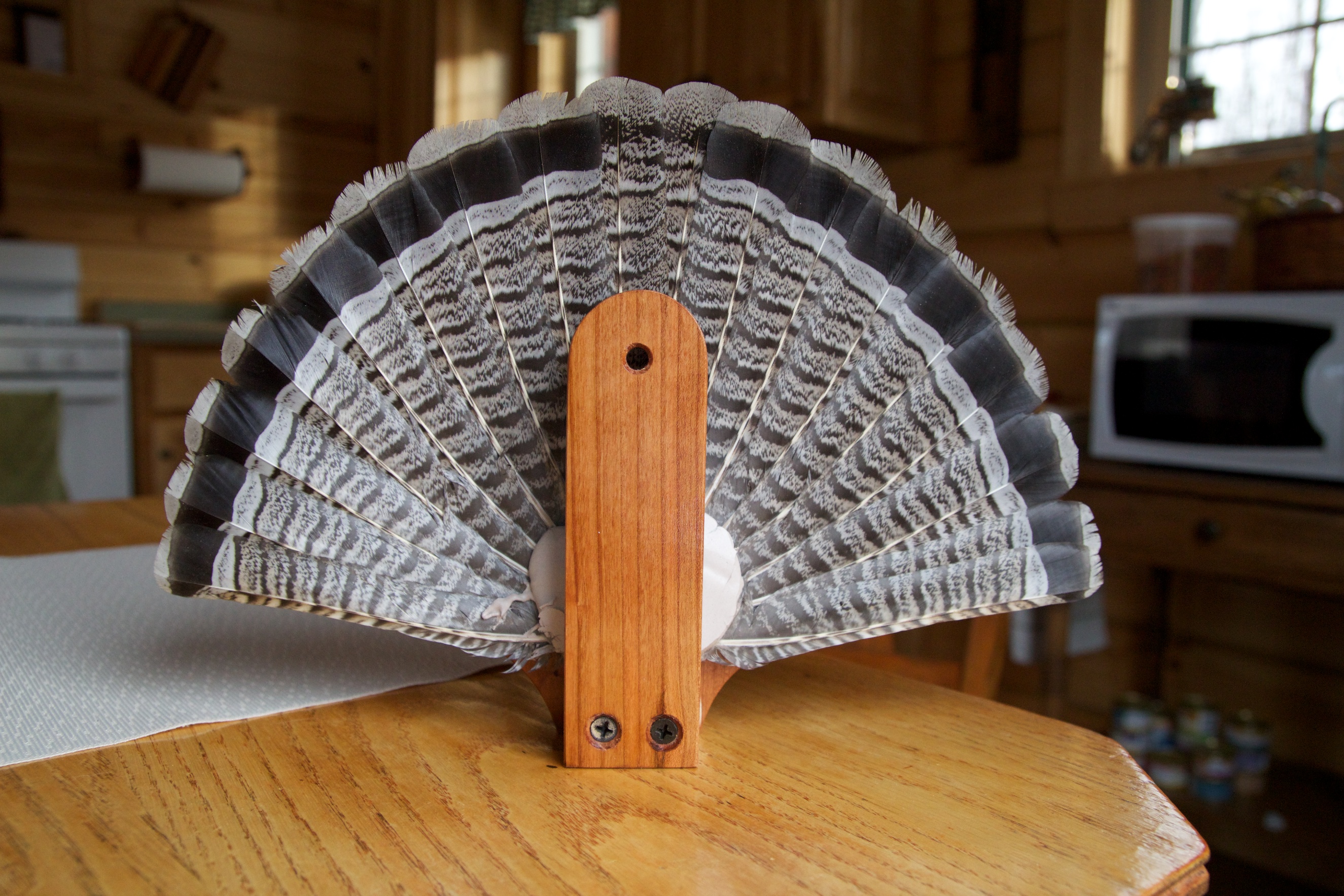
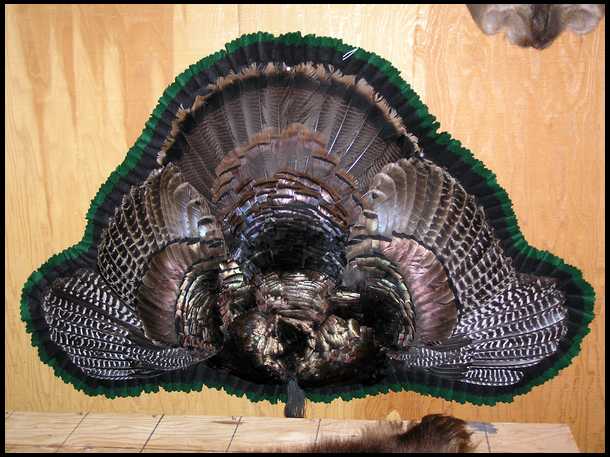
One of the more beautiful ideas is a wall tail fan mount.  These are gorgeous to look at and a good DIY option.

grousedisplay1

grousedisplay4

grousedisplay5

 OLYMPUS DIGITAL CAMERA

These options are not only visually appealing, and with so many options for display, why not utilize the entire bird 🙂

Follow our HUNTING BLOG

WEB   RATES     FISH    HUNT    CABINS    PHOTOS
TESTIMONIALS    BROCHURE    HUNT BOOKLET

Enter your email address to subscribe to this blog and receive notifications of new posts by email.

← Back

Thank you for your response. ✨

Email Me....


Tags: , , , , , ,

DIY: Survival Cook Stove out of a Tin Can

This is a how-to on how to make a survival cook stove instead of spending $25 to buy one online. It is a simple projecting that requires an old can, a pair of scissors, and a knife. Be careful and pay attention to his excellent instructions! Watch this video survival training tutorial and learn how to build a cook stove out of a tin can.

Follow our FISHING BLOG

WEB   RATES     FISH    HUNT    CABINS    PHOTOS
TESTIMONIALS    BROCHURE    HUNT BOOKLET

Enter your email address to subscribe to this blog and receive notifications of new posts by email.

← Back

Thank you for your response. ✨

Email Me....


Tags: , , , , , ,

Check Out Our NEW Hunt Booklet!

 Working hard to provide quality for each individual  hunter is how we operate our hunts
and is what keeps  our hunters coming back year after year.

Hunt Booklet Cover

Follow our FISHING BLOG

WEB   RATES     FISH    HUNT    CABINS    PHOTOS
TESTIMONIALS    BROCHURE    HUNT BOOKLET

Enter your email address to subscribe to this blog and receive notifications of new posts by email.

← Back

Thank you for your response. ✨

Email Me....


Tags: , , , , ,

Know Your Rover, Know Its Range

by 

a chocolate lab, pointing

“Here, Penny. Come here, girl. Whoa. Now Whoa!” The panicked expletives started the minute I turned my brittany, Penny, loose to quarter the covert. The problem was, it wasn’t me shouting the commands. It was my hunting partner who had only hunted upland birds over his labs.

He didn’t understand that the range for a pointing dog was vastly different than that of a flushing dog, (but really shouldn’t have been commanding or cautioning my dog at all).

He was used to a very close working dog and thought that a wider ranging dog was going to bump birds before we got in position to shoot. What he didn’t know was that a pointing dog, unlike a flushing dog, will (or should) hold birds on point until the guns arrives for the flush.

Range is simply the distance a dog can effectively hunt from its master, and this will vary from dog to dog, breed to breed.

To my mind, range is simply the distance a dog can effectively hunt from its master, and this will vary from dog to dog, breed to breed.

A dog’s natural range is first dictated by genetics and then molded by handling and training in the field. Each breed has its own general parameters in which it works effectively.

Being mindful of the differences between breeds makes the potential owners more informed and more likely to be pleased with their hunting companion.

Point or Flush?
Flusher Retrievers
Flushing dogs, such as retrievers and spaniels, do as their name suggests.

Upon scenting game, they chase and ultimately flush birds. In order to be effective, these dogs must work within a distance of typical shotgun range (10 to 25 yards). If the dog pushes the envelope and starts popping birds up at 35 to 40 yards, the number of missed birds will increase.

The way to train a dog to handle within range is to make sure it’s successful at finding birds in range of the gun during training. Planted birds and solid basic obedience training will convince the dog that if it stays close enough to the shooter, a mouthful of feathers and a retrieve are the reward.

Pointers
Pointing dogs on the other hand can, and should, stretch out the field a bit more. As long as the dog is dependably holding birds until the gun-totting hunter arrives, it can be trusted to reach out a little more.

To ensure that a dog remains steady on point and doesn’t flush birds prematurely, never shoot birds that the dog bumps or flushes.

Soon enough the dog will understand that the only way he gets the reward of a mouthful of feathers is to remain still and hold the bird on the ground until the handler flushes the bird.

Best Breed Debate
The debate over which breed is best for a particular game bird has gone on for decades and will certainly continue. With that in mind, I suggest for the rough shooter who expects to shoot both upland and waterfowl on a given hunt, one of the flushing/retrieving breeds might be most appropriate choice, flushing/retrieving breeds might be most appropriate choice — a springer spaniel or Labrador, for example.

With training, these breeds work close to the gun and will also be happy to hunker down in a blind while waiting for waterfowl to pitch into the decoys.

If, on the other hand, you like to keep your boots dry and hunt upland birds exclusively, then pointing breeds are a better fit. Pointing dogs have a style and range that add a unique flavour to the hunt. True pointing breeds, such as setters or English pointers, are specialists — as are those who tend to own them.

For those who don’t want their dog to dictate the kind of game they pursue, there are always the dock-tailed Continental breeds, such as German shorthairs, Hungarian vizsla, pudlepointers and even brittanys. Pointing, tracking, and retrieving of upland birds, waterfowl, and furred game is all in a day’s work for these versatile breeds.

The distance your dog works from you is ultimately a matter of choice. Regardless of what breed you prefer orgame you hunt, it’s important that you recognize the skills your own dog brings to the field and allow it the room he needs to be effective.

Follow our FISHING BLOG

WEB   RATES     FISH    HUNT    CABINS    PHOTOS
TESTIMONIALS    BROCHURE    HUNT BOOKLET

Enter your email address to subscribe to this blog and receive notifications of new posts by email.

← Back

Thank you for your response. ✨

Email Me....


Tags: , , , , , ,

Rhinowire lace review

// When I was at a sport show this past season, I had seen a demonstration for these laces and they truly are amazing and very effective for hunting!  Here is a very well pointed review written by Tim Collins for Rhinowire 🙂  Enjoy!

Article Written By: Tim Collins

rhinoup


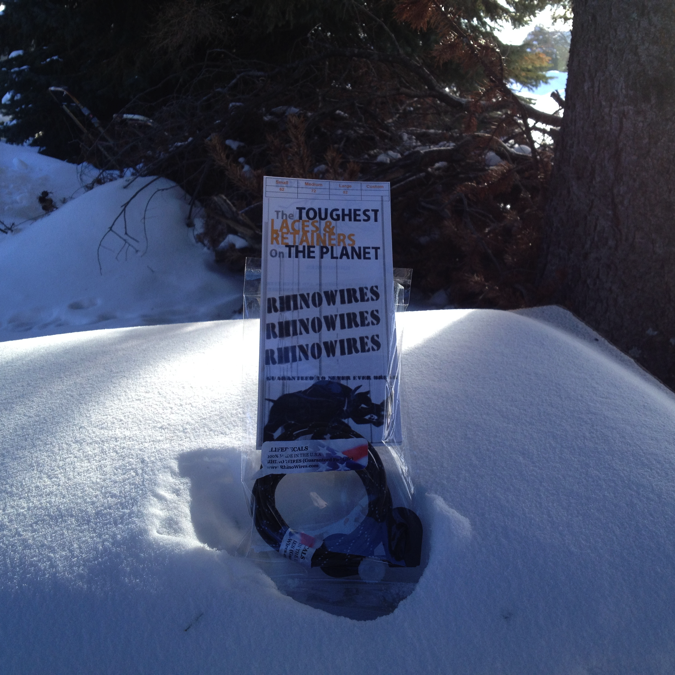
rhinowiresThis review is for the RHINOWIRES boot laces. And no, that is not an error in my typing. I used all capital letters for their company because these “boot laces” are the real deal!

As soon as I received them and took them out of the package I realized I had ahold of a pair of serious laces. The RHINOWIRES feel stiff and you wonder how on earth am I going to tie these up?! I can assure you though that they do tie up. I put mine in a double knot and they hold my entire 12-13 hour day. RHINOWIRES also come with optional lace locks so you don’t have to tie them. I would suggest getting them custom sized and go with the lace locks. Mine are too long to do this and the extra RHINOWIRES length would prove to be a trip and entanglement hazard.

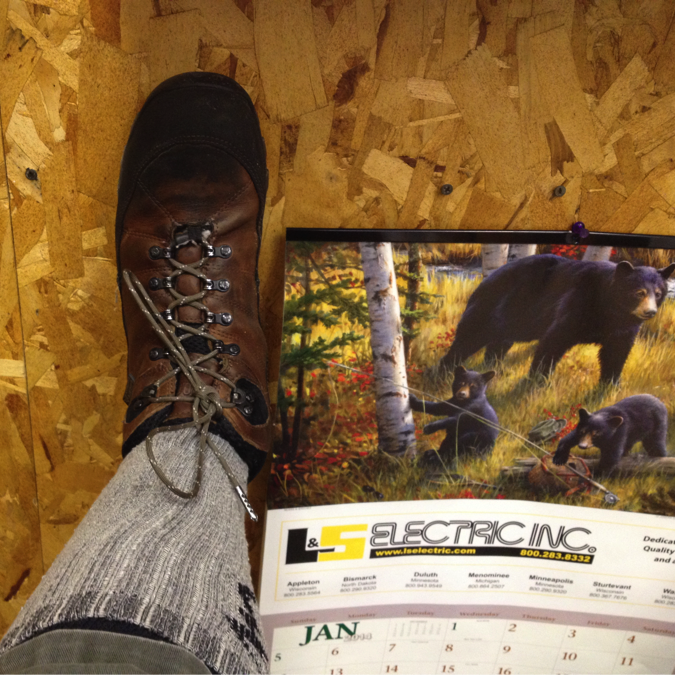
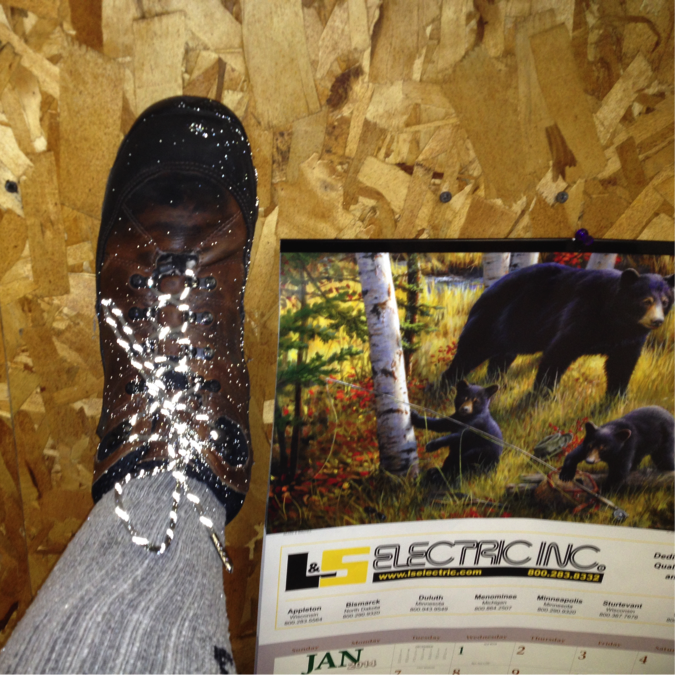
Those of you who are blue collar and perform hard labor for a living would benefit greatly from owning a pair of RHINOWIRES. Outdoor guides, farmers, steel workers, loggers, military, law enforcement, of course firefighters and everyone else who needs to wear steel-toe boots on the job need to get a pair of these RHINOWIRES. Even individuals who spend their time in the great outdoors hunting, fishing, hiking and other outdoor activities would be wise to own a pair of RHINOWIRES. They come in a variety of colors and sizes as well as even being reflective. I received a pair of OD green that is reflective. I work as a dry kiln operator at a lumber mill and the reflective laces will actually benefit me since I need to wear a reflective vest in my work environment. Working around 56,650 lbs. forklifts carrying around lumber bundles that weigh from 17,500 lbs. to 35,000 lbs. means that safety is of the up-most importance. That is where having the reflective laces add an additional safety element to my work. Granted, right now I am wearing rubber over-boots for the winter to help with the freezing temperatures and snow, but I am confident that when summer rolls around my RHINOWIRES will not fail me. You will know what I mean as soon as you lay your hands on your very own pair. As you can see from the photo’s below, I took a picture of my Rhinowires without flash and then one with flash to show the degree of reflectiveness they have. Quite impressive if you ask me.

rhinowiresatworkreflectiverhinowires

RHINOWIRES come with a replacement guarantee. That’s right, if they ever break they will replace them no questions asked! If you don’t believe me, just read their RHINOWIRE guarantee.

These RHINOWIRES were invented by 2 fire fighters. They said it best on their website that “$400 boots are only as good as the $3 shoe laces. Once the laces break, your $400 boots are useless!”. They invented a product that we all can benefit from because they understand the need for RHINOWIRES. Right now they are running a kick-starter program to fund their project. I hope that everyone will consider helping them. They have several packages available that will get you a pair of these RHINOWIRES and believe me; they are worth every penny and then some.

rhinoupkick

I am proud to participate in this product review for RHINOWIRES and I assure you that I am also going to invest in the project even though I received a pair for review. It is completely worth it and I hope you feel the same way as well. As they say on their website, I am definately going to Rhino up! Thank you for reading my product review for RHINOWIRES and if you have any questions, comments or even critiques please feel free to contact me.

Follow our HUNTING BLOG

WEB   RATES     FISH    HUNT    CABINS    PHOTOS
TESTIMONIALS    BROCHURE    HUNT BOOKLET

Enter your email address to subscribe to this blog and receive notifications of new posts by email.

← Back

Thank you for your response. ✨

Email Me....

 
Leave a comment

Posted by on June 30, 2016 in hunting, hunting equipment


Tags: , , , ,

Trip Planning Tips

So many people WANT to go on a hunting or fishing trip but find the task daunting and the thought overwhelming so they tend to avoid it….

Truly, if you know a few simple tricks, planning can be expedited and you could find yourself in a boat or tree stand much quicker than expected.

wawang lake, wawang lake resort

U. S. Passport Card

First and foremost, you do NOT need to purchase a passport.  For half the price ($55.00 adult, $40 child) this handy card lasts for a period of 10 years and allows ground transport between the US and Canada and Mexico. If you plan to fly, a passport will be required but most of us travel will plenty of hunting and fishing equipment so driving is much more common.

http://travel.state.gov/content/passports/english/passports/information/card.html

Also a note regarding those pesky DWI’s….if you have had one and it has been over 6 months, there is a good possibility you can still enter Canada!!  https://help.cbp.gov/app/answers/detail/a_id/402/~/entering-the-u.s.-and-canada-with-dui-offenses

Next, when choosing a trip, make a list of ‘must haves’ such as:  The resort MUST HAVE running water, indoor plumbing, somewhere to prepare food etc.  (We have that…shameless plug lol)

Next devise a budget.  Remember to calculate travel and food costs.  And also remember to find out if the cost is per person or an overall cost.  Always add an extra 15% to that number to ensure you have money for unexpected incidentals such as a flat tire etc.  Also, never forget to calculate the local taxes into the cost.

Once you have a targeted budget, begin your research.  Remember, most resorts do have varying rates depending on the season as well as various other specials during the year.sunset bear

When utilizing specials, ensure that you understand the weather patterns and fishing patterns at that time of year.  Some places have a change over in ease of catching species or hunting migration patterns.  Make sure you ask about this so you aren’t disappointed.


Take us for example, in June our regular Housekeeping fishing rate is $625 per person but offer various discounts from July-Sept.  In July we offer 25% off for parents and children so the rate would drop to $468.75…quite a savings.  And for those of you who are paying attention, our lake is a closed off headwater, spring fed and our fish cant leave…they just tend to migrate from one part of the lake to another so fishing will only be affected by color, depth and presentation 🙂  Feel free to check us out http://wawangresort.com/HTML%20Pages/RATES/Fishing_Rates.pdf

Last and not least, get referrals!  There is nothing more disappointing that driving (or flying) all that way only to find it isnt what is what you were expecting.  Though no trip may be perfect, you should understand the basics of what to expect.  


Ensure that you also contact the lodge representatives with all questions and they should respond promptly, honestly and with as much information as possible…..remember, they should be looking forward to meeting you and be excited to share what they can provide for you.

Remember…this is YOUR vacation and it is within your control to make it the best possible!

Follow our HUNTING BLOG

WEB   RATES     FISH    HUNT    CABINS    PHOTOS
TESTIMONIALS    BROCHURE    HUNT BOOKLET

Enter your email address to subscribe to this blog and receive notifications of new posts by email.

← Back

Thank you for your response. ✨

Email Me....


Tags: , , , , ,

What is Solunar and why is it helpful?

The solunar theory is a hypothesis that animals and fishes move according to the location of the moon in comparison to their bodies. The theory was laid out in 1926 by John Alden Knight, but was said to be used by hunters and fishermen long before the time it was published.

History

In May 1926, John Aldenn Knight put together some fishing folklore and other fishing factors such as the sun and the moon, hence the name Solunar (Sol for sun and Lunar for moon) to form a theory on the patterns of animal movement. Knight compiled a list of factors which control or influence the day-to-day behavior of many freshwater and saltwater fish. Each one of the 33 different factors were considered. All but 3 were rejected.

The three factors retained were the sun, the moon and the tide. For salt water fishing, tides have long been known as a factor which control fishes’ behavior. As Knight’s research progressed, he found that rather than just tides themselves, the relationship of the moon and sun’s positions relative to each other may be the determining factor.

In addition to the time of moon up (moonrise) – moon down, his research determined that there were intermediate times of the day that occurred in between the two major periods. From that he establishes that there were major periods (moon up – moon down) and minor periods. Knight published the first Solunar table in 1936.[3]

Tables

Solunar tables are tables that fishermen and hunters use to determine the best days of the month and times of the day for catching fish and hunting game. For fishermen, the tides, sunrise and sunset are helpful times of the day to know when the fish are going to bite. For hunters, the tides are not a factor.

Hunters use the sun and the moon to determine when the game will be moving the most.”Other conditions not being unfavorable, fish will feed, animals will move about, birds will sing and fly from place to place, in fact, all living things will become more active, more alive, during Solunar periods than at other times of apparent equal value. …anglers have found that it is a guide to the best fishing of each day, and the quality of their sport has improved…”

Using these tables, a fishermen and a hunter can tell when the moon is directly underfoot and overhead. The strongest activity occurs when there is a full moon or a new moon and is weakest when there is a quarter moon and a three quarter moon. This is because the moon and the sun’s gravitation force is strongest when directly above or directly below our head. The lunar data humans receive is better now because of the newer technology the US Naval Observatory and GPS technology.

This new technology has allowed the Solunar Theory to generate hunting and fishing times with much greater precision It is important to note that data in tables found on various websites should be reverified periodically with US Naval Observatory available data as well as compared against other reputable solunar data providers. Inconsistencies abound due to the complex nature of the Astrophysics computations and overlooked associated anomalies checking that are required to produce useful results. Moon Transits which do not occur for more than a day or associated times being off more than a few minutes are indications of a fundamental issue for a given position and should be suspect.  All data providers should be verified before assuming data presented is authoritative or accurate. 

Go to http://www.solunarforecast.com/ to create your own solunar calendar 🙂

Follow our HUNTING BLOG

WEB   RATES     FISH    HUNT    CABINS    PHOTOS
TESTIMONIALS    BROCHURE    HUNT BOOKLET

Enter your email address to subscribe to this blog and receive notifications of new posts by email.

← Back

Thank you for your response. ✨

Email Me....


Tags: , , , , ,

Black Bear Hunting at Wawang Lake

Working hard to provide active baits for each individual hunter is how we operate our hunts, and is what keeps our sportsmen coming back year after year.

IMG_6110 - Copy

We have a very large bear hunt area (1,200 sq miles) surrounding our resort with a good healthy bear population due to years of black bear management.

Our hunts usually begin the Saturday on or after August 15th and continues for three weeks. Since we have consistently managed our bear population for several years we determine the number of hunters we will take according to the bear population we observe the previous year. We average 14 hunters per year.

What We Need to Know Upon booking, please inform us of each party members contact information, weapon (archery or gun) and will they be bringing a tree or ground stand. We need to know what type of weapon each member in the hunt party will be hunting with and whether they will be hunting from tree stand or would prefer a ground stand. More on our website

Days to Hunt (7 days) – Arrive Saturday and depart the following Saturday. Arrive Saturday and depart the following Saturday. If you would like to hunt upon your arrival, please check in between 11am-12pm (EST) and have all of your equipment prepared in advance (tree stands as assembled as possible, weapons/ammunition cased)

Transportation Requirements Since most of our baits are very remote, groups should anticipate driving their members to and from the sites. Most of our baits are road access and we provide private areas for each hunting group so that

dropping members off and picking them up will be systematic and easy. We advise to have 1 vehicle per every two hunters (three max) to ensure as little disruption to each party member’s hunt.

Rates
For a complete list of our Bear Hunt Rates please visit our website at: www.wawangresort.com/Rates.htm A $500.00  non-refundable deposit is required at the time of reservation to guarantee a hunt.

Other Costs Hunting license Canadian Funds (approximately). It’s MANDATORY to provide a current or prior hunting license FROM YOUR HOME STATE, or a hunter safety certificate, as qualification to obtain a hunting license in Ontario. Export Permit – $35.00 Canadian Funds (available at designated locations in the area)

Things to Remember Bring your own tree stand as we do not provide them. Comfortable climbers are the most popular and screw in peg types are acceptable, however, whatever type you bring bear in mind that our trees have very loose bark.

What is Included in our Bear Hunts

  • Modern Housekeeping Cottage for 7 nights
  • Pre-baited Sites & all baiting supplies during your stay & Freezer Service
  • Orientation trip to bait site
  • Experienced guide’s knowledge and advice (use it!)
  • Canadian Firearms Regulations All Firearms (does NOT include bows) being brought into Canada must be registered at the Canadian Customs at the time of entry into Canada. A one- year permit costs $50.00 Canadian, or there is a long term permit as well. If you would like further information, you can visit the Canadian Firearms Website through the link on our website or call toll free, 1-800-731-4000

Passport Cards (similar to a Passport) Information can be obtained at this website: http://www.travel.state.gov/passport/ppt_card/ppt_card_3926.html

Our season begins Saturday on or after August 15th

For further information, or, to book your next bear hunt please contact us at:
1-888-534-9217 or EMAIL

 WEBSITE    RATES     FISH    HUNT    CABINS    PHOTOS
TESTIMONIALS    BROCHURE    HUNT BOOKLET

Enter your email address to subscribe to this blog and receive notifications of new posts by email.

← Back

Thank you for your response. ✨

Email Me....


Tags: , , , , , , , , , ,

Top Ten Fire Starters

fire-starter-wawang-lake

Follow our FISHING BLOG

WEBSITE    RATES     FISH    HUNT    CABINS    PHOTOS
TESTIMONIALS    BROCHURE    HUNT BOOKLET

Enter your email address to subscribe to this blog and receive notifications of new posts by email.

← Back

Thank you for your response. ✨

Email Me....


Tags: , , , , , , , ,

The Elusive Woodland Caribou In and Around Wawang Lake

 This improved understanding will help the ministry develop resource management practices that will minimize the impact of human development and resource use on caribou.

Caribou

Caribou @ Wawang Lake Resort

It is a relatively unknown fact that the Woodland Caribou once thrived in the Wawang area.  Herds lived freely and well fed on the abundance of lichen in the surrounding area.  In the last century, due to logging, hunting and forest fires, the population not only migrated but was also put at serious risk.

In 2012, the Woodland Caribou was escalated from the Species at Risk list to the Endangered Species list in our area.  With the stringent management and extensive research taking place, the Ministry biologists suspect that it may be slow but the Woodland Caribou will eventually once again become prolific in the English River Forest which encompasses Wawang Lake.

With such rarity, it was a real treat to see on right on our very own beach….what a majestic creature!

If you’re not familiar with northern forests, it would be easy to think that forest-dwelling woodland caribou are more or less on their own in these woodlands. But caribou share the landscape with many other species – including other large mammals.

The program is researching ways to maintain healthy caribou populations in the province. Since 2010, program researchers have fit more than 190 caribou with collars that transmit information about their location and movement behaviour in three large study areas. Their objective is to sample animals in relatively undeveloped landscapes, as well as in more disturbed and developed areas, to collect information on how survival, reproduction, habitat selection and movement patterns are affected by human influences. They plan to analyze this information to develop a better understanding of the factors that influence woodland caribou persistence. This improved understanding will help the ministry develop resource management practices that will minimize the impact of human development and resource use on caribou.

A shed radio transmitter collar used to track the movement and behavior of the Woodland Caribou

A shed radio transmitter collar used to track the movement and behavior of the Woodland Caribou

The Northern Mammal Ecology Program at the Ministry of Natural Resources Center for Northern Forest Ecosystem Research studies caribou, wolves and moose to learn what determines the density and distribution of these mammals on the northern Ontario landscape.

The abundance of other large prey species (e.g., moose) and predators (e.g., wolves) on the landscape are believed to influence the caribou density. When intact forests are affected by development or resource extraction activities, these disturbances may cause changes in the abundance, behaviour and the amount of habitat available for species like moose and wolves. These changes have the potential to have a negative impact on caribou density and persistence.

To gain a better understanding of how predators and other prey species might be affecting caribou, researchers are also collecting information on the distribution, density and behaviour of these other species. For example, more than 45 wolves have been fitted with collars that transmit information about their location and movements. These collars have been placed on animals that inhabit the same three study areas as the collared caribou. Information collected focuses on the types of habitat (e.g., forest types, landscape features) that wolves inhabit and travel through, the prey species they eat, and the characteristics of the locations where they catch their prey.

The collared movement data for the caribou in North W

The collared movement data for the caribou in Northwestern Ontario


Researchers have also conducted aerial surveys within the study areas to calculate moose densities and identify the characteristics of locations with relatively high and low moose densities. They are also examining historic information gathered from moose collared in other areas of northern Ontario, to develop a more detailed understanding of how moose respond to different types of forestry practices.

This holistic approach to caribou research – which focuses on the species they interact with, as well as caribou themselves – should provide some important insights into caribou ecology that will help the ministry develop effective caribou conservation measures.

In time, it will become more and more common to spot these animals on your visits up to Wawang Lake….stay tuned and keep your eyes peeled!

Follow our FISHING BLOG

WEB   RATES     FISH    HUNT    CABINS    PHOTOS
TESTIMONIALS    BROCHURE    HUNT BOOKLET

Enter your email address to subscribe to this blog and receive notifications of new posts by email.

← Back

Thank you for your response. ✨

Email Me....

 
Leave a comment

Posted by on June 24, 2016 in caribou, Wawang Lake Resort


Tags: , , , , , , , ,