RSS

Tag Archives: Wawang Lake Resort

Online RESIDENT moose hunting draw information!

Don’t “Checkout” During Moose Application

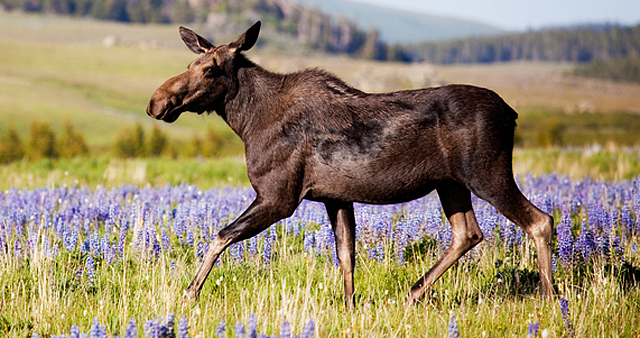
moose in a meadow

The Ontario big game draw for moose online process has caused some confusion, and may result in hunters who believe they have already entered missing out.

When applying online, applicants must be sure to read the instructions very closely. The step-by-step instructions, as per the MNR are as follows. (We advise you to print the appropriate sheet out).

Step 1 Not The Only Step
Purchase your moose tag. Once you’ve entered your personal information, be sure to choose “add licence and continue shopping” instead of “checkout.” This is likely where the confusion is happening.

If you choose checkout, you will get a receipt for your tag only. You must still enter the draw.

“The problem is, the issuance of a receipt of payment is the natural end of an online transaction, so many people could make this mistake. In fact, many have,” said John Vanthof, MPP for Timiskaming-Cochrane, during members’ statements in parliament on April 18. “I have made the Ministry of Natural Resources aware of this problem over the last year but nothing was done to fix the program.”

If you do checkout without entering the draw, you can go back to the homepage and start over. You will not be charged for another tag, but you will have to re-enter your personal information.

The current system can be confusing, even for those who are online savvy, so entering the draw by phone or in person might be a preferable option.

You can enter the moose draw by calling 1-800-288-1155 or going to a Service Ontario location or other participating licensing location.

– See more at: http://www.oodmag.com/hunting/big-game/dont-checkout-during-moose-application/#sthash.wMpebPQZ.dpuf


← Back

Thank you for your response. ✨

Email Information regarding


Leave a comment

Posted by on March 17, 2014 in moose, Wawang Lake Resort


Tags: , , , , , , , , ,

2014 Ontario Resident Moose Hunt

Are you planning to put in for a tag in the moose dense 15A or 15B?

Are you sick of setting up a stake camp and coming back each night cold and damp only to have to set up a fire and wait to cook and warm up?

Why not stay in clean, warm cottages with heat, hot and cold running water, indoor plumbing and kitchens?

 Moosehuntersjpg

← Back

Thank you for your response. ✨

Email Information regarding

Do you like what you see? Join us on our<a title=”Fishing Blog ” href=”wawangresort.wordpress.com”> Fishing Blog</a> for more up to the minute action, tips and tactics!!


Tags: , , , , , , , , ,

What is Solunar and why is it helpful?

The solunar theory is a hypothesis that animals and fishes move according to the location of the moon in comparison to their bodies. The theory was laid out in 1926 by John Alden Knight, but was said to be used by hunters and fishermen long before the time it was published.

History

In May 1926, John Aldenn Knight put together some fishing folklore and other fishing factors such as the sun and the moon, hence the name Solunar (Sol for sun and Lunar for moon) to form a theory on the patterns of animal movement. Knight compiled a list of factors which control or influence the day-to-day behavior of many freshwater and saltwater fish. Each one of the 33 different factors were considered. All but 3 were rejected.

The three factors retained were the sun, the moon and the tide. For salt water fishing, tides have long been known as a factor which control fishes’ behavior. As Knight’s research progressed, he found that rather than just tides themselves, the relationship of the moon and sun’s positions relative to each other may be the determining factor.

In addition to the time of moon up (moonrise) – moon down, his research determined that there were intermediate times of the day that occurred in between the two major periods. From that he establishes that there were major periods (moon up – moon down) and minor periods. Knight published the first Solunar table in 1936.[3]

Tables

Solunar tables are tables that fishermen and hunters use to determine the best days of the month and times of the day for catching fish and hunting game. For fishermen, the tides, sunrise and sunset are helpful times of the day to know when the fish are going to bite. For hunters, the tides are not a factor.

Hunters use the sun and the moon to determine when the game will be moving the most.”Other conditions not being unfavorable, fish will feed, animals will move about, birds will sing and fly from place to place, in fact, all living things will become more active, more alive, during Solunar periods than at other times of apparent equal value. …anglers have found that it is a guide to the best fishing of each day, and the quality of their sport has improved…”

Using these tables, a fishermen and a hunter can tell when the moon is directly underfoot and overhead. The strongest activity occurs when there is a full moon or a new moon and is weakest when there is a quarter moon and a three quarter moon. This is because the moon and the sun’s gravitation force is strongest when directly above or directly below our head. The lunar data humans receive is better now because of the newer technology the US Naval Observatory and GPS technology.

This new technology has allowed the Solunar Theory to generate hunting and fishing times with much greater precision It is important to note that data in tables found on various websites should be reverified periodically with US Naval Observatory available data as well as compared against other reputable solunar data providers. Inconsistencies abound due to the complex nature of the Astrophysics computations and overlooked associated anomalies checking that are required to produce useful results. Moon Transits which do not occur for more than a day or associated times being off more than a few minutes are indications of a fundamental issue for a given position and should be suspect.  All data providers should be verified before assuming data presented is authoritative or accurate. 

Go to http://www.solunarforecast.com/ to create your own solunar calendar 🙂

← Back

Thank you for your response. ✨

Email Information regarding


Tags: , , , , ,

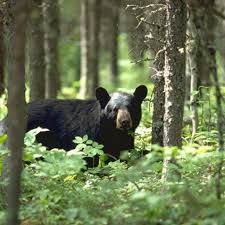
A big bear sighting!

Well sometimes you just have to let a bear bare all!

← Back

Thank you for your response. ✨

Email Information regarding


Tags: , , , , ,

In a rut: Brush up on your calling

There’s a lot of prep that goes into a moose hunt, so don’t blow a shot at one of these majestic beasts because you can’t call it in. Check out the video below from Ontario Out of Doors for some great tips to help get you ‘in tune’ for when the time comes.

← Back

Thank you for your response. ✨

Email Information regarding


Tags: , , , , , , ,

Know your Rover, Know its Range

So those that know me best, know that I am an avid dog enthusiast that has traveled the globe showing dogs.  I am passionate about dogs that can do what they were bred for and still hold a working ability.  This is a fantastic article outlining some very valid points- Enjoy!
by  February 3rd, 2014

a chocolate lab, pointing

“Here, Penny. Come here, girl. Whoa. Now Whoa!” The panicked expletives started the minute I turned my brittany, Penny, loose to quarter the covert. The problem was, it wasn’t me shouting the commands. It was my hunting partner who had only hunted upland birds over his labs.

He didn’t understand that the range for a pointing dog was vastly different than that of a flushing dog, (but really shouldn’t have been commanding or cautioning my dog at all).

He was used to a very close working dog and thought that a wider ranging dog was going to bump birds before we got in position to shoot. What he didn’t know was that a pointing dog, unlike a flushing dog, will (or should) hold birds on point until the guns arrives for the flush.

Range is simply the distance a dog can effectively hunt from its master, and this will vary from dog to dog, breed to breed.

To my mind, range is simply the distance a dog can effectively hunt from its master, and this will vary from dog to dog, breed to breed.

A dog’s natural range is first dictated by genetics and then molded by handling and training in the field. Each breed has its own general parameters in which it works effectively.

Being mindful of the differences between breeds makes the potential owners more informed and more likely to be pleased with their hunting companion.

Point or Flush?
Flusher Retrievers
Flushing dogs, such as retrievers and spaniels, do as their name suggests.

Upon scenting game, they chase and ultimately flush birds. In order to be effective, these dogs must work within a distance of typical shotgun range (10 to 25 yards). If the dog pushes the envelope and starts popping birds up at 35 to 40 yards, the number of missed birds will increase.

The way to train a dog to handle within range is to make sure it’s successful at finding birds in range of the gun during training. Planted birds and solid basic obedience training will convince the dog that if it stays close enough to the shooter, a mouthful of feathers and a retrieve are the reward.

Pointers
Pointing dogs on the other hand can, and should, stretch out the field a bit more. As long as the dog is dependably holding birds until the gun-totting hunter arrives, it can be trusted to reach out a little more.

To ensure that a dog remains steady on point and doesn’t flush birds prematurely, never shoot birds that the dog bumps or flushes.

Soon enough the dog will understand that the only way he gets the reward of a mouthful of feathers is to remain still and hold the bird on the ground until the handler flushes the bird.

Best Breed Debate
The debate over which breed is best for a particular game bird has gone on for decades and will certainly continue. With that in mind, I suggest for the rough shooter who expects to shoot both upland and waterfowl on a given hunt, one of the flushing/retrieving breeds might be most appropriate choice, flushing/retrieving breeds might be most appropriate choice — a springer spaniel or Labrador, for example.

With training, these breeds work close to the gun and will also be happy to hunker down in a blind while waiting for waterfowl to pitch into the decoys.

If, on the other hand, you like to keep your boots dry and hunt upland birds exclusively, then pointing breeds are a better fit. Pointing dogs have a style and range that add a unique flavour to the hunt. True pointing breeds, such as setters or English pointers, are specialists — as are those who tend to own them.

For those who don’t want their dog to dictate the kind of game they pursue, there are always the dock-tailed Continental breeds, such as German shorthairs, Hungarian vizsla, pudlepointers and even brittanys. Pointing, tracking, and retrieving of upland birds, waterfowl, and furred game is all in a day’s work for these versatile breeds.

The distance your dog works from you is ultimately a matter of choice. Regardless of what breed you prefer orgame you hunt, it’s important that you recognize the skills your own dog brings to the field and allow it the room he needs to be effective.

← Back

Thank you for your response. ✨

Email Information regarding


Tags: , , , , , ,

Gear up: The best Multi tools

Living so remote and enduring a plethora of different situations, all of us here at Wawang are experienced multi tool users. These handy little items can be a life saver in many situations and especially for our hunters, we suggest having one on hand…you never know when you will need one of its many devices. Here is a great video by GearLab which will give you an overview and better understanding of a few models that have been selected as the very best on the market. Enjoy!

← Back

Thank you for your response. ✨

Email Information regarding


Tags: , , , ,

Trip planning tips

So many people WANT to go on a hunting or fishing trip but find the task daunting and the thought overwhelming so they tend to avoid it….

Truly, if you know a few simple tricks, planning can be expedited and you could find yourself in a boat or tree stand much quicker than expected.

wawang lake, wawang lake resort

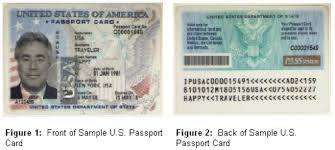
U. S. Passport Card

First and foremost, you do NOT need to purchase a passport.  For half the price ($55.00 adult, $40 child) this handy card lasts for a period of 10 years and allows ground transport between the US and Canada and Mexico. If you plan to fly, a passport will be required but most of us travel will plenty of hunting and fishing equipment so driving is much more common.

http://travel.state.gov/content/passports/english/passports/information/card.html

Also a note regarding those pesky DWI’s….if you have had one and it has been over 6 months, there is a good possibility you can still enter Canada!!  https://help.cbp.gov/app/answers/detail/a_id/402/~/entering-the-u.s.-and-canada-with-dui-offenses

Next, when choosing a trip, make a list of ‘must haves’ such as:  The resort MUST HAVE running water, indoor plumbing, somewhere to prepare food etc.  (We have that…shameless plug lol)

Next devise a budget.  Remember to calculate travel and food costs.  And also remember to find out if the cost is per person or an overall cost.  Always add an extra 15% to that number to ensure you have money for unexpected incidentals such as a flat tire etc.  Also, never forget to calculate the local taxes into the cost.

Once you have a targeted budget, begin your research.  Remember, most resorts do have varying rates depending on the season as well as various other specials during the year.

When utilizing specials, ensure that you understand the weather patterns and fishing patterns at that time of year.  Some places have a change over in ease of catching species or hunting migration patterns.  Make sure you ask about this so you aren’t disappointed.

Take us for example, in June our regular Housekeeping fishing rate is $625 per person but offer various discounts from July-Sept.  In July we offer 25% off for parents and children so the rate would drop to $468.75…quite a savings.  And for those of you who are paying attention, our lake is a closed off headwater, spring fed and our fish cant leave…they just tend to migrate from one part of the lake to another so fishing will only be affected by color, depth and presentation 🙂  Feel free to check us out http://wawangresort.com/HTML%20Pages/RATES/Fishing_Rates.pdf

Last and not least, get referrals!  There is nothing more disappointing that driving (or flying) all that way only to find it isnt what is what you were expecting.  Though no trip may be perfect, you should understand the basics of what to expect.  

Ensure that you also contact the lodge representatives with all questions and they should respond promptly, honestly and with as much information as possible…..remember, they should be looking forward to meeting you and be excited to share what they can provide for you.

Remember…this is YOUR vacation and it is within your control to make it the best possible!

← Back

Thank you for your response. ✨

Email Information regarding


Tags: , , , , ,

Field dressing a black bear

With the bear hunt just around the corner, we will cover the basics 🙂  Pictures have been withheld due to graphic nature.

Instructions

imagesFG3W4IGS 1. Clear an area surrounding the black bear. Make the area large enough to allow room to move around and roll the animal away from the entrails. The lowest part of the ground should be reserved for the entrails. Move the bear onto its back. Spread the rear legs and either have your partners hold them apart or secure them with ropes. Repeat with the front legs.

  1.  2. Insert one of your knives in the cavity at the base of the bear’s throat. Cut the blood vessels with a deep, crosswise motion to open the jugular vein and bleed the animal. Move the bear so the blood will flow away from it and clear the ground as needed.
  2. Cut the skin in a straight line from the breastbone — located just below the rib cage — to the base of the bear’s jaw. Cut the muscles along this area to the bone to expose the throat and windpipe. From the same starting point, cut the skin in a straight line down to the anus. Some areas require hunters to leave the genitals for sex identification; cut around the genitals slightly to preserve them.
  3. Split the breastbone.  This can be done with a bone saw, hack saw or a couple of axes.  If you choose to use axes, hold one axe against the breastbone and hammer it with the other axe; this will break the bone from the base of the rib cage up to and through the top ribs. Open the chest by pulling the front legs apart. Cut the windpipe and gullet close to the head. Lay them in the chest cavity for later.
  4. Cut through the abdominal muscles; start at the base of the rib cage. Take care not to puncture the intestines, the stomach or the bladder; doing so could taint the meat. Sever the muscles down to the pelvic bone. Enlist your partners to hold open the bear so you can work more smoothly.
  5. Break the pelvic bone by using the same technique implemented the breastbone. Do not cut the urinary tract as it may contaminate the meat. Start on one side of the chest cavity and use your knife to cut the diaphragm from the chest wall. Start at the base of the ribs and slice as far back into the cavity as possible. Have your partners pull the organs to the side so you can see and cut more easily. Repeat the process on the other side of the black bear.
  6. Cut the intestines and rectum from the split pelvic bone to where the rectum meets the muscle tissue at the anus. Cut a circle in the skin at the base of the tail; cut 1 to 2 inches from the anus. Cut the muscles to the top of the pelvic bone to free the anus and rectum. Pull the lower intestine, rectum and anus away from the cavity and hold clear. You must not puncture or cut the urinary tract or intestines.
  7. Hold the parts, roll the black bear away and allow the intestines and stomach to spill onto the ground. Grab the windpipe to pull the lungs and heart out onto the ground. Cut any remaining diaphragm tissue to free the organs. Complete the field dressing by draining as much blood from the bear as possible and wiping the body cavity with cloth rags to clean. Do not use water. At this point your main concern becomes to cool the cavity and prepare for transport which can be done by propping the cavity open with a tree branch.

    IMG_6110 - Copy

    Proper field care will ensure less weight and trouble with removal and transportation from the hunt site.

     For more information on black bear hunting, visit us at http://www.wawangresort.com

    Follow our FISHING BLOG

    WEB   RATES     FISH    HUNT    CABINS    PHOTOS
    TESTIMONIALS    BROCHURE    HUNT BOOKLET

    Enter your email address to subscribe to this blog and receive notifications of new posts by email.

    ← Back

    Thank you for your response. ✨

    Email Me....


Tags: , , , , , , ,

Black Bear…the basics.

Here is a fantastic and very basic overview of black bear, what they are and why we hunt them 🙂  In the case if Wawang Lake Resort, our outfitting is done in the fall, over bait and the average weight of our boars was 278lbs last year with 2 over 400lbs 🙂  Our sows, 180lbs with three over 300 🙂

Black Bear Hunting Basics

Black Bear Paw in Hunter's Hand

If you’re considering taking up black bear hunting or trying to decide if it’s right for you, it’s a good idea to get an overview of what it’s all about. There are a lot of misconceptions about black bear hunting floating around out there, so it pays to know exactly what you’re in for when you set out to hunt “America’s bear”.

In this article, we’ll cover the basics of black bear hunting, including population, seasons, weapons, meat, trophy items, and biology relevant to hunting.


Population, Seasons, and Weapons

Although the population of the black bear (Ursus americanus) is in decline in some areas of the U.S. (due to habitat loss), in other areas it is growing rapidly, and in still others it is at an all-time high. The total population of black bears in the lower 48 is estimated to be between 300,000 to 500,000, and the Alaska population is estimated to be 100,000 or more.

Black bear hunting is permitted in a little over half of the 50 states. Many Western states have black bear hunting seasons. In some of these states, hunters are allowed to take two black bears per year. Other popular areas include portions of the upper Midwest, the East coast, and the South. Even a handful of states in the East where black bear hunting has been prohibited for years have recently opened up limited seasons.

Black bears are hunted both in the spring and the fall. However, spring seasons are only allowed in about eight states, and spring hunting often requires applying for a lottery. Fall seasons are typically general seasons, and this is the time when most bears are hunted.

Black bears can be effectively taken with any of the typical weapons used for other big game, including rifle, bow, shotgun, muzzleloader, pistol, and crossbow. (As always, be sure to check your particular state’s game regulations.)

Meat and Other Items

Black Bear MeatBlack bear meat is considered by many to be a delicacy. In fact, even as recently as the late 19th century, bear dishes were some of the most expensive items on the menus at the finest, exclusive restaurants. “Bear bacon”, the whole, smoked hind quarter of a bear, was a prized staple in the diet of settlers on the American frontier. The meat is often compared to pork or lamb, but with a distinctive flavor all its own.

Interestingly, that flavor can vary quite widely depending on what the bear has recently been eating. The most highly prized meat comes from spring bears who have been consuming large quantities of grass and other vegetation as well as fall bears who have been feasting on berries, fruit, or nuts such as acorns.

Luckily, although they are omnivores, about 80-90% of a black bear’s diet consists of plant material, so your odds of having tasty meat are extremely good. Younger bears are also widely reported to have better meat than older bears. Assuming you take a younger bear that hasn’t been eating salmon or carrion, you’re in for quite a treat.

An important word of caution here: black bear meat often contains the parasite that causes trichinosis, an infection that usually results in either no symptoms or minor digestive discomfort but in rare cases can cause more serious complications and even death (although only in less than 0.3% of cases).

Fortunately, there is a simple remedy for this. All bear meat must be cooked completely through until there is no visible pink in the meat. Cooking the meat to an internal temperature of 137 degrees is hot enough to make it safe, although the USDA recommends an internal temperature of 160 degrees. Freezing the meat has not been shown to be adequate protection against trichinosis.

Another highly edible part of a black bear is the fat. Bear fat (which is quite plentiful in fall bears) can be rendered to produce a useful and particularly flavorful cooking oil. Even from a modestly sized bear, you can easily get a couple gallons of this precious liquid.

In addition to the meat and fat, there are also a few prized items to be had from a black bear. First, the fir is soft and luxurious, and many hunters keep the hide and turn it into a rug or even clothing such as a vest. Black bear skulls are fascinating thing to look at, and they’re a great conversation starter when displayed up on the mantle or other prominent location.

Biology Relevant to Hunting

Black bears can vary greatly in size, depending on genetics, the quality of the habitat in which they live, and their gender and age. Mature boars (male bears) can weigh in at over 800 pounds in rare cases. The average adult male, however, weighs between 180 and 300 pounds, while the average adult female weighs slightly less, between 140-250 pounds. You can expect to net about 30% of the live weight in meat. For example, a 200 pound bear may produce up to 60 pounds of meat.

Black bears possess impressive athletic abilities. They can sprint at speeds over 30 mph, can climb trees with ease, and are accomplished swimmers. They also have short, curved, sharp claws and canine teeth capable of ripping and tearing flesh. With these traits, it’s easy to see why they fit squarely into the classification of dangerous game.

While black bear attacks are exceedingly rare, even for bear hunters, they do happen. And tracking wounded bears means the danger increases exponentially. The tracking is bound to take you through dense cover, and the bear’s thick fir soaks up blood fast, making for sparse blood trails to follow. Bears have even been known to loop around and double back on their trail, lying in wait for pursuing hunters. However, with proper preparation and planning, as well as solid shot placement, most bears can be recovered safely and without incident.

Note: In regions where black bears share their range with grizzly bears, it’s important to know how to identify the two bears and tell them apart so you don’t accidentally shoot a grizzly bear, which is a violation of federal law. Here’s a handy bear identification training you can take online for free so you can know for sure before you pull the trigger.

The size of a black bear’s home range can vary greatly depending on the location of food sources in the area. It can be as small as a couple square miles or it can be much larger — a male’s home range may go all the way up to 75 square miles in extreme cases. Bears are opportunistic omnivores, which means their movements are often unpredictable. This wandering lifestyle requires specialized tactics, the most common being spot-and-stalk, baiting, hunting with hounds, and calling.

Regardless of which tactics you employ, you’ll need to defeat a bear’s considerable arsenal of finely tuned senses if you want to have any hope of getting close enough for a shot.

Sense of Smell

First and foremost is their sense of smell, which is thousands of times better than a human’s. In fact, it’s been shown that if you take a bloodhound’s nose and multiply it by about seven, you’ll get a sense of the black bear’s olfactory powers.

There are both defensive and offensive strategies you can use in order to overcome these powers and get within range of a bear without it smelling you. On the defensive side, it’s wise to use as many scent control measures as logistically possible. More importantly, always keep tabs on the wind and make sure you’re hunting into it. A windchecker device, such as a small spray bottle filled with unscented talcom powder comes in real handy for this, as does a fine, frayed string tied to the end of your gun or bow.

You can also go on the offensive and use the wind to your advantage. With good scouting and planning, it’s possible to hunt with the wind at your back, allowing your scent to move out ahead of you and drive bears toward another hunter in a treestand or other fixed position.

Sense of Hearing

Next up is their sense of hearing, which is thought to be significantly better than a human’s, although it’s not known exactly how much better. They can detect a human voice at 300 yards and the cocking of a gun at 50 yards.

Your best defense against a bear’s ears is to simply be quiet. Move slowly and carefully, wear quiet clothing, and speak in whispers to your hunting companions. On the offensive side, always keep your ears tuned for bear sounds. Bears make noise when feeding, such as turning over rotten logs looking for grubs, and they communicate with each other through woofs, sniffs, grunts, and growls.

Sense of Sight

Contrary to popular belief, bears do, in fact, see in color. Their vision is roughly equivalent to a human’s — better, if you include the fact that they have excellent night vision. Although they’re somewhat near-sighted, they are adept at detecting movement, even at long distances.

To win the battle of the eyes, you’ll need to have a solid defensive plan. It’s very important to wear full camouflage and choose a pattern that breaks up your outline and matches the local vegetation well. More importantly, always move slowly and cautiously, and never move when a bear is looking in your direction.

As for offense, always carry a pair of high quality binoculars. The black color of a bear’s fur can make them a little easier to spot than other big game like deer. Carry your binoculars on your chest with a harness or “bino bra”, and use them often. When hunting open country using spot-and-stalk tactics, you can also employ a high-power spotting scope to give your eyes even more reach.

More on this next time…………………

← Back

Thank you for your response. ✨

Email Information regarding


Tags: , , , ,