RSS

Tag Archives: ontario

Don’t Forget To Breath

Whether we are at the range shooting targets, or in the field hunting, breathing is important. We want our sight, scope or pin to be on its mark when we pull the trigger.

untitled

Education, shooting positions and firearms are all very important to shooters. Breathing is a very important factor as well. We all breathe. From the day we were born we have unconsciously learned to breathe in and out. That natural motion can help or hinder during shooting.

Controlled breathing is a necessity in shooting accuracy. When you breathe in and out your chest rises and falls. This movement can cause your gun barrel or arrow sight to float on its target. Your breathing may cause you to move at the exact moment you pull the trigger to fire.

Sometimes when you are hunting, you get excited and/or the terrain and conditions cause your heart rate to accelerate. Your breathing becomes more rapid and harder to control. If you hold your breath, you may become light headed and your shot may be off target. It is important to practice your breathing techniques as you practice shooting positions at the range.

There are multiple methods of breathing during a shot. The best thing to do is practice them and determine which works best for you. Once you’ve determined your breathing technique, practice it so it becomes instinctive when you are under pressure.

untitled4Exhale & Pause – When you are in shooting position, put your cheek against the stock of the gun. Take in a deep breath. Exhale just a portion of that breath, pause briefly and pull the trigger. The pause should allow you to hold your gun barrel and sights in perfect alignment on the target at the very moment the gun fires.

Inhale & Pause – Relax and practice steady breathing. Double check your shooting position. In your rythm of relaxed breathing, inhale. When your lungs are about half full, pause and pull the trigger. The inhale and pause is similar to the exhale and pause method. Your gun barrel and sights should be in perfect alignment on the target at the exact moment the gun fires.

Full exhale – Make sure you are in proper shooting position. Breathe slowly to relax. Focus on your target. As you breathe naturally, and you are at complete exhale, pause when your lungs are empty and squeeze the trigger.

untitled2Breathe Naturally – Breathing naturally takes the focus completely off of breathing technique. You do not  pause at all. Focus on your form and your target as you breathe naturally and squeeze the trigger. Sometimes being consciously focused on breathing can increase heart rate and breathing patterns. The natural breathing technique takes the focus off and you begin to unconsciously form a habit of correct shot timing.

When you are pausing, remember just that. It is a pause, not a hold. When a shooter holds their breath, their muscles tighten and their heart rate can change. This will dramatically change the accuracy of a shot.

While you are practicing, if you become short of breath, stop. Re-group and practice your natural, relaxed breathing. It is important to steady your breath to decrease the amount of movement your body is making. If you are able, step back. Take a deep breath in. Then exhale and then reacquire your target.

untitled3

Follow our FISHING BLOG

WEBSITE    RATES     FISH    HUNT    CABINS    PHOTOS
TESTIMONIALS    BROCHURE    HUNT BOOKLET

Enter your email address to subscribe to this blog and receive notifications of new posts by email.

← Back

Thank you for your response. ✨

Email Me....

 
Leave a comment

Posted by on December 14, 2014 in gun hunting, hunting, Wawang Lake Resort


Tags: , , , , , , , ,

Bear Baits – Consistency is Important

Consistent Baiting and Timing is Important
wawanglakebearbaitWe begin baiting two to three weeks prior to the hunters arrival as baiting is lucrative and can vary based on native food source availability, weather pattern and population.  If baiting is done too far in advance, bear can lose interest and become complacent.  The most impact for the hunter is when the food source is new and interesting yet dependable. The baits stations are checked regularly each day and documented as to its status:  whether it’s been hit or not.  This is also the ideal time to determine if the bait station has a sow with cubs or the size of the bear according to tracks.

wawanglakebearbait

Other animals frequent the baits as well.

All the information collected will determine if the bait station will be suitable for the hunter or not. Stations with sows will continue to be baited in order to confine that they remain in that specific area so they don’t wander and disturb the more suitable bait stations held for the hunters.

What Do We Use
Bears are omnivorous and will scarf down just about anything from produce to pastries, bread and meat scraps. The key is to make sure your offerings have a strong odor – sometimes the more putrid the smell, the better … at least when it comes to attracting them as we don’t place this directly on the bait.   However, during the fall bear do not especially like this strong scent on the bait therefore we use these attractants to drag the area ensuring to lure the bear to the bait station where more delectable bread, pastries and leftover good scraps are waiting. Visiting bear that walk trails and roads we’ve dragged will beneficially establish their own scent trail to and from the bait as well luring in even more bear.

The Set Up
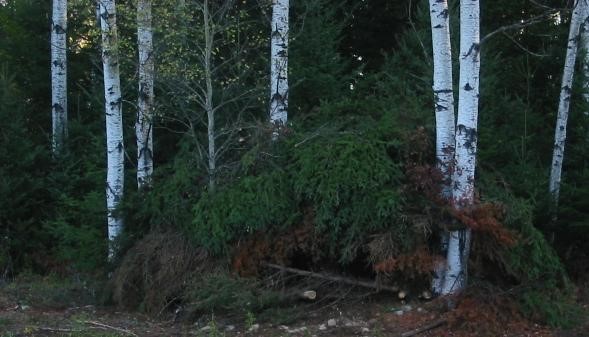
Our baits stations are naturally set up and made from logs and other forest fragments. These logs are large, very heavy and piled in a manner making them difficult for smaller animals to move.  When hunters walk into the bait and notice that logs have been tossed around they are certain that a bear hi the bait.

bait

Know the Rules
Study the Ontario hunting regulations.  Know what you can and can’t do, season dates, licensing guidelines, bring firearms into Canada.   We want our hunters to be comfortable while hunting in Ontario and it is also important to know that you will need to bring along a state/province license as proof of hunting experience to show the Ontario license issuer. Always ask if you don’t know that’s what we’re here for.

When to Sit Baits
Our hunters are required to bring their own tree stands.  This is not only for liability reasons, but, also because you will be more familiar with your own tree stand and the more at ease you are with equipment the more it will increase your odds – less to think about. Upon request we will setup ground stands for those that are not able to climb. If this is the case be sure to bring along a comfortable chair.  Evening hours are by far the proven time to encounter bear on the bait. This however is simply a higher percentage timeframe.   Approaching the bait cautiously is always a must due to the fact that hunters have stumbled upon bear contently feeding at all hours, including early morning and mid-day. You can bring along trail timers and cameras to satisfy your knowledge of the activity of your bait station.

Follow our FISHING BLOG

WEBSITE    RATES     FISH    HUNT    CABINS    PHOTOS
TESTIMONIALS    BROCHURE    HUNT BOOKLET

Enter your email address to subscribe to this blog and receive notifications of new posts by email.

← Back

Thank you for your response. ✨

Email Me....


Tags: , , , , , , , , ,

Top Ten Fire Starters

fire-starter-wawang-lake

Follow our FISHING BLOG

WEBSITE    RATES     FISH    HUNT    CABINS    PHOTOS
TESTIMONIALS    BROCHURE    HUNT BOOKLET

Enter your email address to subscribe to this blog and receive notifications of new posts by email.

← Back

Thank you for your response. ✨

Email Me....


Tags: , , , , , , , ,

Bear Hunt References

It’s always comforting when we know we can reach out and speak with fellow hunters AND especially about the outfitter they’ve chosen to go with.  At Wawang Lake Resort we certainly understand this
and have put together a few REFERENCES for you to contact.
 

Wawang440bear

Jon E. Haman – Tiffin, IA jonschaefferoil@southslope.net Cell (319) 930-0144

440 lb Black Bear 

“Tami and Terry Kaliska run an absolutely first rate operation. Not only do they have the knowledge and put the work in that’s necessary to give you a successful hunt, they share that knowledge and keep working for you until you tag your bear! It was my true honor and privilege to have taken a Pope & Young bear under the tutelage of Ontario legends…the Kaliska’s.  I can’t wait to take my sons to Wawang Lake Resort and live the adventure along side them as well!”


Season opens – 1st Saturday after August 15th and runs for three more weeks

WawangBear4

Follow our FISHING BLOG

WEBSITE    RATES     FISH    HUNT    CABINS    PHOTOS
TESTIMONIALS    BROCHURE    HUNT BOOKLET

Enter your email address to subscribe to this blog and receive notifications of new posts by email.

← Back

Thank you for your response. ✨

Email Me....


Tags: , , , , , , , ,

Ontario’s Ruffed Grouse

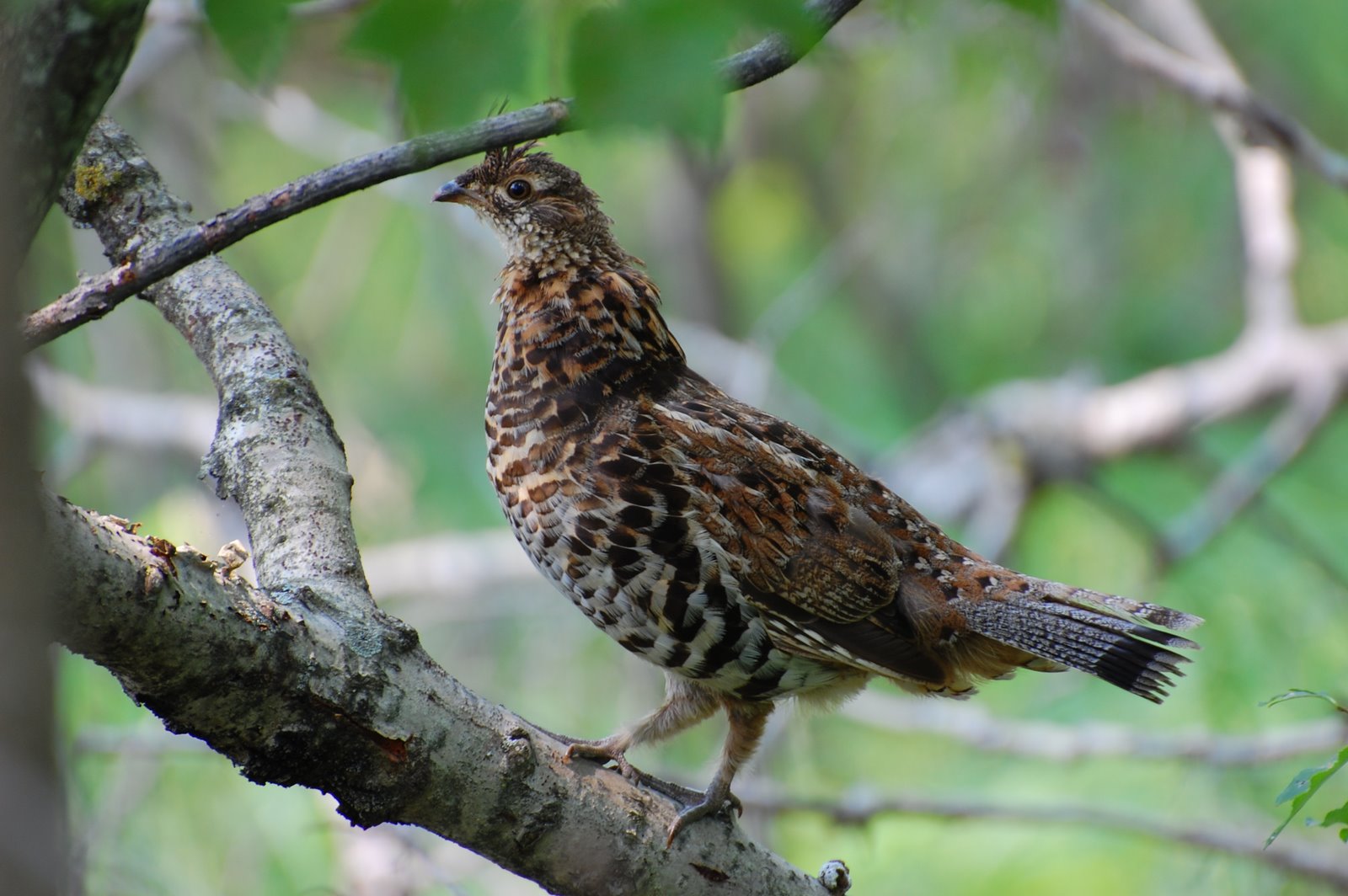
Ruffed GrouseAlthough sometimes regarded as “wilderness” birds, Ruffed Grouse have no aversion to living in close proximity to humans if the cover gives them adequate security. In some areas of Ontario, Canada –  Ruffed Grouse are more abundant in remote wilderness forests. They thrive best where forests are kept young and vigorous by occasional clear-cut logging, or fire, and gradually diminish in numbers as forests mature and their critical food and cover resources deteriorate in the shade of a climax forest.

Ruffed Grouse response to man varies greatly across their range, depending upon their experiences. In southern Ontario generally they are usually quite elusive and difficult to approach. Yet they can still be killed with a canoe paddle or thrown stones in NW Ontario wilderness forests.

When the ground is bare of snow, Ruffed Grouse feed on a wide variety of green leaves and fruits, and some insects. They have also been known to eat snakes, frogs as well. But when snow covers the ground as it does for most of the winter across the major portion of their natural range, Ruffed Grouse are almost exclusively “flower-eaters,” living on the dormant flower buds or catkins of trees such as birches and pin cherry bush’s.

Known as solitary in their social behavior they do not develop a pair-bond between males and females, although there is usually at least one hen in the woods for every male. Young birds, especially, collect in temporary, loose flocks in the fall and winter, but this is not equivalent to the covey organization of the quails and partridges.

Male Ruffed Grouse are aggressively territorial throughout their adult lives, defending for their almost exclusive use a piece of woodland that is 6-10 acres in extent. Usually this is shared with one or two hens. The male grouse proclaims his property rights by engaging in a “drumming” display. This sound is made by beating his wings against the air to create a vacuum, as lightning does when it makes thunder. The drummer usually stands on a log, stone or mound of dirt when drumming, and this object is called a “drumming log.” He does not strike the log to make the noise, he only uses the “drumming log” as a stage for his display.

The drumming stage selected by a male is most likely to be about 10-12 inches above the ground, in moderately dense brush, (usually 70 to 160 stems within a 10 ft. radius) where he can maintain unrestricted surveillance over the terrain for a radius of about 60 ft. Across much of the Ruffed Grouse range there are usually mature male within sight in the forest canopy overhead.

Drumming occurs throughout the year, so long as his “log” is not too deeply buried under snow. In the spring, drumming becomes more frequent and prolonged as the cock grouse advertises his location to hens seeking a mate. Listen to an example at the top of this page.

Courtship is brief, lasting but a few minutes, then the hen wanders away in search of a nest site, and there is no further association between the male grouse and his mate – or the brood of chicks she produces. A hen may make her nest more than 1/2 mile from the log of her mate.

Nests are hollowed-out depressions in the leaf litter, usually at the base of a tree, stump or in a clump of brush. The nest is usually in a position which allows the hen to maintain a watch for approaching predators. Sometimes hens will nest under logs or in brush piles, but this is less common, and a dangerous location.

A clutch usually contains 8 to 14 buff colored eggs when complete. Eggs are laid at a rate of about one each day and a half, so it may take 2 weeks for a clutch to be completed. Then incubation, which usually commences when the last egg is laid, takes another 24 to 26 days before the eggs hatch. A nest has to be placed so that it will not be discovered by a predator during a period of at least 5 weeks.

The chicks are prosocial, which means that as soon as they have dried following hatching they are ready to leave the nest and start feeding themselves. Grouse chicks are not much larger than a man’s thumb when they leave the nest. They are surprisingly mobile and may be moving farther than 1/4 mile a day by the time they are 3 or 4 days old. They begin flying when about 5 days old, and resemble giant bumble bees in flight. The hen may lead her brood as far as 4 miles from the nest to a summer brood range during its first 10 days of life.

Although grouse broods occasionally appear on roadsides, field edges or in forest openings, these are hazardous places for young grouse to be, and broods survive best if they can remain secure in fairly uniform, moderately dense brush or sapling cover.
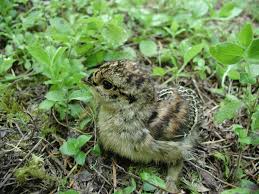
wawanggrouse1The growing chicks need a great deal of animal protein for muscle and feather development early in life. They feed heavily on insects and other small animals for the first few weeks, gradually shifting to a diet of green plant materials and fruits as they become larger. Chicks grow rapidly, increasing from about 1/2 ounce midgets when hatched to 17-20 oz. fully grown young birds 16 weeks later. That is a 38 to 46 fold increase in weight. At 17 weeks of age, a Ruffed Grouse is almost as large and heavy as it will ever be.

Biologists and others who want to age Ruffed Grouse rely upon certain peculiarities of the molt of the primary flight feathers. The booklet A Grouse in the Hand explains this aging procedure. And following the first complete molt by a 14 to 15 month old adult grouse, there are no known physical characteristics which reliably identify the age.

When about 16 to 18 weeks old, the young grouse passes out of its period of adolescence and breaks away to find a home range of its own. This is the second and last time that Ruffed Grouse are highly mobile. The young males are the first to depart, when they range out seeking a vacant drumming territory, or activity center, where they can claim a drumming log. Most young males find a suitable site within 1.8 mi. of the brood range where they grew up, although some may go as far as 4.5 mi. seeking a vacant territory. Many young cocks claim a drumming log by the time they are 20 weeks old; and once they have done so, most will spend the remainder of their lives within a 200 to 300 yard radius of that log.

Young females begin leaving the brood one or two weeks later than their brothers, and they normally disperse about three times as far. Some young hens move at least 15 miles looking for the place where they’ll spend the rest of their lives.

Occasionally a hen and her brood will remain together as late as mid-January, but this is unusual, and most groups of grouse encountered in the fall and winter are composed of unrelated individuals who gather together temporarily to share a choice food resource or piece of secure cover.

In fall and winter some inexperienced young grouse frightened by a predator or something else, crash into buildings, trees or through windows in a so-called “crazy-flight.” Sometimes they are evidently simply trying to take a short-cut when they can see through two large windows on the corner of a house. After all, young grouse in their first fall have never been confronted by something that can be seen through but not flown through, such as glass!

 WEBSITE    RATES     FISH    HUNT    CABINS    PHOTOS
TESTIMONIALS    BROCHURE    HUNT BOOKLET

Enter your email address to subscribe to this blog and receive notifications of new posts by email.

← Back

Thank you for your response. ✨

Email Me....


Tags: , , , , , ,

Black Bear Outfitters

Andy's 475 lb (dressed)

Andy’s 475lb (dressed)

Black  Bear  are  known  predators  and  Ontario  has  the  largest  population of black bear than anywhere in the world. Furthermore, north-western Ontario leads in the concentration of these animals than elsewhere in Ontario, and, rates highest in population concentration  for all of Ontario that also allows for bating practices.

Many deem baiting unfair, giving the hunter a considerable advantage. But contrary to what some would have us believe, it’s far from easy and holds no guarantees!  Bear can sneak in undetected, grab a morsel of food and disappear as fast as they arrived. Bear can also skulk around the bait for hours, never showing themselves. As experienced outfitters we’ve learned that many of our bear will move in cautiously to inspect the provisions. The advantage of hunting in the fall is bear are eager to fatten up for the winter.  The biggest advantage to baiting is that, if and when a bruin finally commits to the bait, it allows the hunter a  an opportunity to assess size, stature and time for shot placement.

About Bear
Black bear habitant range can span from two to 10 miles and resident populations often hold a variety of boars, sows and cubs, so it’s not uncommon to have multiple bears visiting the baited site.  Ontario only offers a FALL BEAR HUNT therefore the chance for the large TROPHY bear is increased dramatically.  Most hunters fear poor coats or hides due to the fall hunt but our area does not suffer that fate. With little to no burrs or ticks, our bear don’t succumb to ticks causing ‘rub’ or dry patchy fur.  We also are known for our high number of white chevrons (patches) to make your trophy even more unique. Black bear

Jon Hanson - Tiffin, IA 440 lb. black bear

Jon Hanson – Tiffin, IA 440 lb. black bear

Black bear have relatively poor eyesight, but outstanding hearing and acute sense of smell. Once they get a taste of your bait, and, as long as it is replenished regularly, they will be reluctant to leave the area.  In fact, once a site is established properly, you can and will see the same bruin day after day.

Location is Critical
Our bait stations have been established for many years (since 1972) and placed along the bear’s natural movement corridor. Heavily  timbered forests near cutovers and waterways often sustain good bear densities.  With berry crops like wild blueberries and raspberries nearby, black bear favor the accessibility and abundance of such forage and most often reside in the proximity.

Claw marks on deciduous trees and there may even be fresh markings, these lasting scars unveil a historical presence. Nomadic creatures, bear commonly travel traditional trails along waterways and natural movement corridors like valleys and ridges.  Finding fresh scat can instill further confidence that bear have frequented the bait.  Keep in mind that well established bait stations offer much more success than new stations since bear follow these game trails year after year.

 WEBSITE    RATES     FISH    HUNT    CABINS    PHOTOS
TESTIMONIALS    BROCHURE    HUNT BOOKLET

Enter your email address to subscribe to this blog and receive notifications of new posts by email.

← Back

Thank you for your response. ✨

Email Me....


Tags: , , , , , , ,

HUNT the HUNTER

The best timber wolf habitat in all of Ontario CANADA is located in the Boreal Forest
around………. Wawang Lake Resort

HUNT the HUNTER –  Ontario’s Timber Wolf

HUNT the HUNTER – Ontario’s Timber Wolf

Hunting a top predator is a challenge you will never forget. A timber wolf hunt is not for the novice hunter though.   In fact hunting for wolf will require more determination and patience than any other type of hunt.   If you’re the kind of hunter that can pride themselves with this type of stamina then wolf hunting is definitely something you’ll  want to experience.

Remaining aloof is what wolves do best and they are also extremely cautious and above all prefer not to be seen. They hunt small game, moose and bear for a living, so they are extremely resourceful. They

are shrewd, cautious, and have finely tuned senses. With this said remember that the wolf is the hunter’s top opponent when hunting in NW Ontario and up for any challenge man will present.

Our region of the Boreal Forest remains to be one of the most populated areas for the timber wolf with pack sizes reaching 30 or more and this is due mainly because of our small game, moose and bear population that are at its peak annually.

Wolves are nocturnal hunters, so getting a crack at one during legal daylight hours can be difficult, but, by precisely following the strategic technique of our expert guides it can be done.

WawangWolfHunts2Wolves are territorial and each pack occupies, hunts, and protects a specific area.   Once we know where a pack lives, we can learn more about them and that is the groundwork  for  our  hunts.  We  know  of  many different packs, in this vast area, and each year we gather information of each packs hunting patterns. A pack seems to hunt a particular route and often return to the same areas with unbelievable regularity.

Calling is helpful if the wolves are within earshot. Distressed small game calls such as rabbits (snowshoe hares) works well, as this and other small game are the wolves’ primary food source along with moose and bear. Also, howling can be effective. A wolf will almost always answer to a howl regardless of their distance from the person howling.

Hunting down live large prey like moose or bear takes a lot of energy so wolves are also opportunists. They can smell blood from many miles away and frequently visit our baiting stands for an easy meal so we know where they are, but, the wolf hunt is much more interesting than that. Outsmarting wolves means having an outfitter that knows their strategy and scouts out what game trails they are using.   Placing baits sites in proper places can mean the difference between success or not!

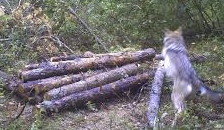
wawanglakeblind

A Typical Natural Hunt Blind

We hunt from natural ground blinds made from deadfall, but, because temperatures can be extreme we advise our hunters to bring along their own commercial ground blinds (aired out for at least two months in advance of the hunt) in order to be more comfortable, however, this can be risky and best to avoid this type of blind if at all possible as the wolves can be skittish of them and of course can reduce the hunter’s chances of success. It is always best to dress for the extreme outdoor  conditions  and  hunt  from the natural ground blinds we provide.

The color phases of the wolves seen in our area are varied, from the most common gray tones to blacks and whites, to medium tones of cream, gray, brown and orange.   The specs of our wolves are as follows:

  • Length: 4.9 ft – 6.7 ft.
  • Weight: up to 175 lb
  • Height: between 26” to 33”

There are very few guarantees in hunting, but we do offer you this . . . . .

That you will find the wolf hunt a challenging and enjoyable experience in some of the most beautiful terrain you’ve seen.
Your guides are passionate hunters and strive to provide the same hunting experience for you that

they would want for themselves.
Our resort is a comfortable with a homey environment to relax in after an enjoyable day in the field…..and we feed our Meal Plan guests very well!

So while the outcome of the hunt is never a guarantee, the quality of the hunt experience is. And when you hear that first ghostly howl in the distance you will know you are in timber wolf country and from that moment on you will be hooked!

For further information, or, to book your next bear hunt please contact us at:
1-888-534-9217 or EMAIL

 WEBSITE    RATES     FISH    HUNT    CABINS    PHOTOS
TESTIMONIALS    BROCHURE    HUNT BOOKLET

Enter your email address to subscribe to this blog and receive notifications of new posts by email.

← Back

Thank you for your response. ✨

Email Me....


Tags: , , , , , , , , , ,

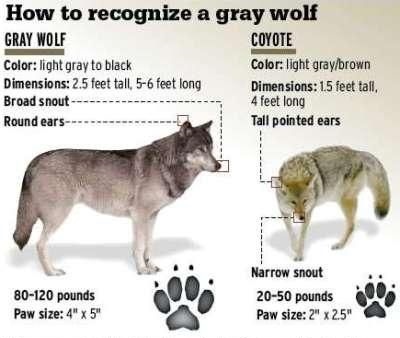
How to Identify a Gray Wolf

Identify a Wolf


wolf-track-wawang-lake

WEBSITE    RATES     FISH    HUNT    CABINS    PHOTOS
TESTIMONIALS    BROCHURE    HUNT BOOKLET

Enter your email address to subscribe to this blog and receive notifications of new posts by email.

← Back

Thank you for your response. ✨

Email Me....

 
Leave a comment

Posted by on December 2, 2014 in Wawang Lake Resort, wolf, Wolf Hunting


Tags: , , , , , , ,

How to Size a Black Bear

……… WHEN SIZING UP A BEAR

WawangLakeBear
A big bear swaggers and walks with attitude. He doesn’t jump at every sound like a small bear will.  A big bear doesn’t have to; he believes he’s got nothing to fear. Once you’ve spotted your bear on the bait site, it’s time to get serious about analyzing how that bear is behaving.

It is important to note that long before you judge the size of the bear, you must judge the sex of that bear and here are some things to take into consideration:

A big, old sow will have all, or more correctly, almost all of the physical characteristics of a big, old boar. She’ll have the nasty looking face that’s seen one too many years in the ring, the potbelly and the sway back.

Watch to see if the bear stands on his hind legs and rubs his back on a tree, that’s a boar.  If it walks along and straddles small trees, wiping its scent on that tree, it’s a boar.  If it stands up and breaks saplings over its shoulder, it’s a boar.  If it encounters another bear and gives chase, it’s a boar and if it is following a smaller bear, it’s a boar.

SCALE:  There is one last general appearance tip to judging black bear that makes the top three in importance, and that is scale.   A big bear looks big . . . but so does a closer, smaller bear.   Here’s a help tip on how to gauge more accurately.  If the bear is 150 yards away but the hunter thinks the bear is 200 yards away, the hunter will overestimate the bear’s relative size by somewhere near 25 percent.   In other words, the hunter is in for a serious case of ground shrink when he walks up to his bear.  TIP:  Let the bear get as close to you as possible and preferably on the bait itself.   The closer the bear, the less chance there is of misjudging the distance to relative size.

SPECIFIC TIPS FOR JUDGING BLACK BEARS: If the bear fails any one of the above general conditions, then it’s advisable to pass up on it or let the bear walk. It’s tough and you could be wrong, but at least there isn’t a dead small bear lying on the ground.   Call it a personal aversion to guilt.

BODY SHAPE:    Bigger bear are older bears, and like most of us, they don’t have the svelte bodies they once did. They tend to look “heavy” and out of shape. Remember, they monopolize the best feed and habitat, and therefore exert less energy to live.

HEAD SHAPE:   A big bear (boar) will have a deeper, wider and longer snout than a smaller bear or a female. His ears will appear to be wide apart and small. If he is aware of you and looking your way, his ears won’t stand up on top of his head like a dog’s ears, they’ll seem to be aimed out to the side of his head. A big bear will have well developed “bulging” muscles on the top of his head.


WawangBear2

LEGS:   A big bear will have massively developed front shoulders. His shoulders will look big and burly. A sow’s wrist will pinch in directly above the foot. Not so with a boar. The lower forearm, wrist and the foot on a big boar are all the same width. A big bear often appears to have shorter legs because the body is so much thicker, but keep in mind that the best-scoring bears for the records book are often the lankier looking, longer-bodied bears.

There are bear that have meatier heads; bear that look great and are great trophies, but that don’t score well.  There are others that have short skulls, block- headed beasts that look impressive, but that don’t score well at all and there are lanky, skinny bears with donkey faces that score like the devil, but that a hunter seriously looking for  a  records book bear wouldn’t walk across the street for. Black bear morphology is just too darn diversified to make a science out of judging.

The best way to hunt for a record boar is to simply shoot the bear that looks good to you and that hopefully  you’ll  appreciate all the time and effort you put in for the hunt.  If it’s got a nice hide, be happy with your animal. If it has long claws and weighs a ton, good for you and congratulations. If it isn’t as big as  you’d like, don’t fret, you’re not alone and the rug on your wall will still look great. If it happens to be one of those rare few bears that has grown a skull that qualifies for the record books, thank your guide for the good fortune that made that bear come to the bait site.

To easily judge, remember:

  • Check out the ear size in relation to the head
  • Mickey Mouse ears means a small bear.
  • Watch to see if the belly is low to the ground
  • Legs that appear short means big bear.

Watch the bear’s behavior around the bait – small bears will be skittish and afraid of a larger bruin in the area.

Look for a log around the bait and use it as a reference, check to see the length and height of the log before climbing into your stand. When the bear enters the bait site use the size of the log to help determine the overall size of the bear.


SKULL MEASURING


WawangSkull

Hope this information helps develop your judging skill on your next hunt, and,  good luck out in the field.

For further information, or, to book your next bear hunt please contact us at:
1-888-534-9217 or EMAIL

 WEBSITE    RATES     FISH    HUNT    CABINS    PHOTOS
TESTIMONIALS    BROCHURE    HUNT BOOKLET

Enter your email address to subscribe to this blog and receive notifications of new posts by email.

← Back

Thank you for your response. ✨

Email Me....


Tags: , , , , , , ,

2014 Black Bear Hunt Video

Our 2014 season was both rewarding for us as outfitters and successful for our hunters as well.  Our hunts consists of an average of 14 hunters annually and our guide Terry (owner of Wawang Lake Resort) works hard each season to provide active baits for each and every hunter.  His objective is for every hunter to harvest a bear – if they opt to do so – so is it any wonder that much of his day is spent out in the field during the black bear season to ensure a positive outcome..

The following video are of the highlights of our 2014 hunt.

ENJOY!


If you enjoyed this video please visit our page on YouTube for more clips on Wawang Lake Resort

WEBSITE    RATES     FISH    HUNT    CABINS    PHOTOS
TESTIMONIALS    BROCHURE    HUNT BOOKLET

Check out our 24 pg. HUNT BOOKLET

Hunt Booklet – Information

pg 01 Cover

Brochure (rates for the 2015 season)


Enter your email address to subscribe to this blog and receive notifications of new posts by email.

← Back

Thank you for your response. ✨

Email Me....


Tags: , , , , , , , ,